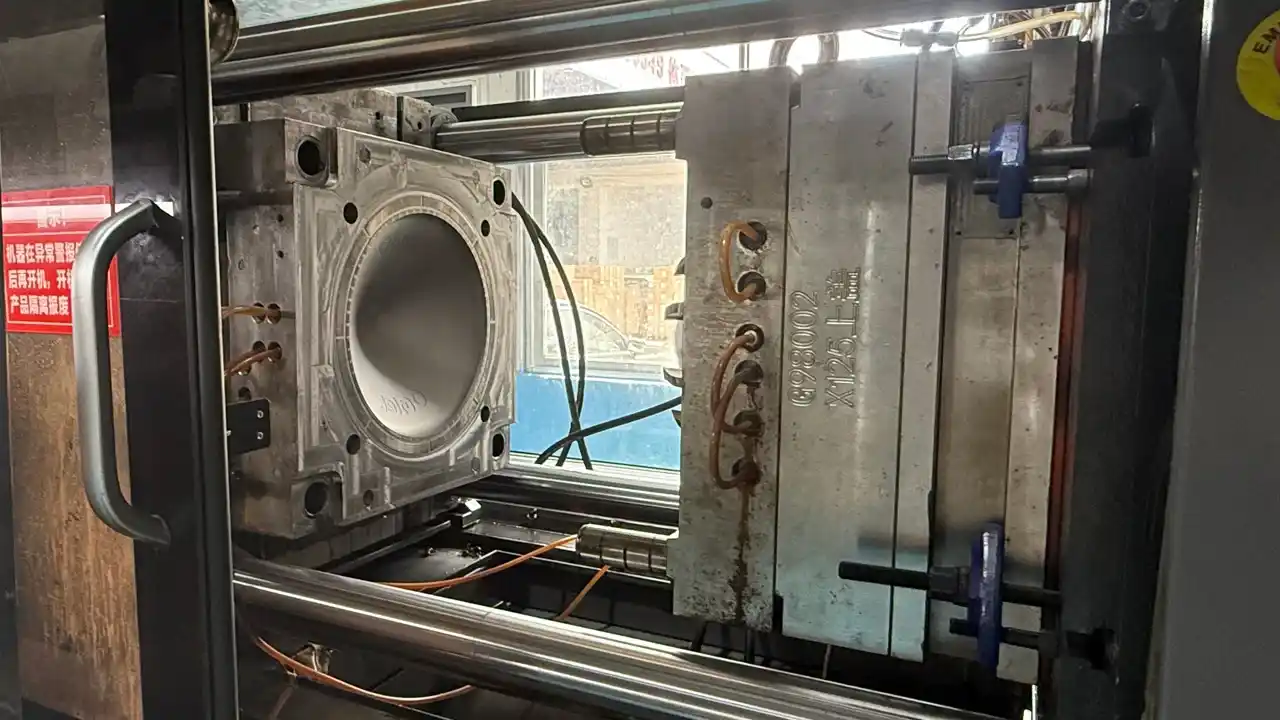

Your enclosure passed the drop test. The surface took paint without adhesion failures. The dimensional report came back clean on the first T1 submission. That’s what a well-executed ABS plastic program looks like — and it’s less common than it should be.
More often, engineers encounter a different sequence: parts that warp after ejection because nobody controlled mold temperature; splay marks caused by inadequate drying; cosmetic rejection on a plated part because the tool steel was wrong for plating-grade resin; or a compliance hold because the specified grade lacked a UL 94 flame rating the OEM required from day one.
The difference between these two outcomes is rarely the material itself. ABS plastic is one of the most forgiving, versatile, and well-characterized engineering thermoplastics available. The difference is whether the grade selection, mold design, process parameters, and quality systems were aligned before production started — or patched together afterward.
This guide is built around that alignment. It draws on Dimud's hands-on experience across automotive interior trim, consumer electronics enclosures, medical device housings, and robotics structure programs — providing the technical foundation for engineers, product managers, and procurement specialists who need to get ABS programs right the first time.
What Is ABS Plastic?
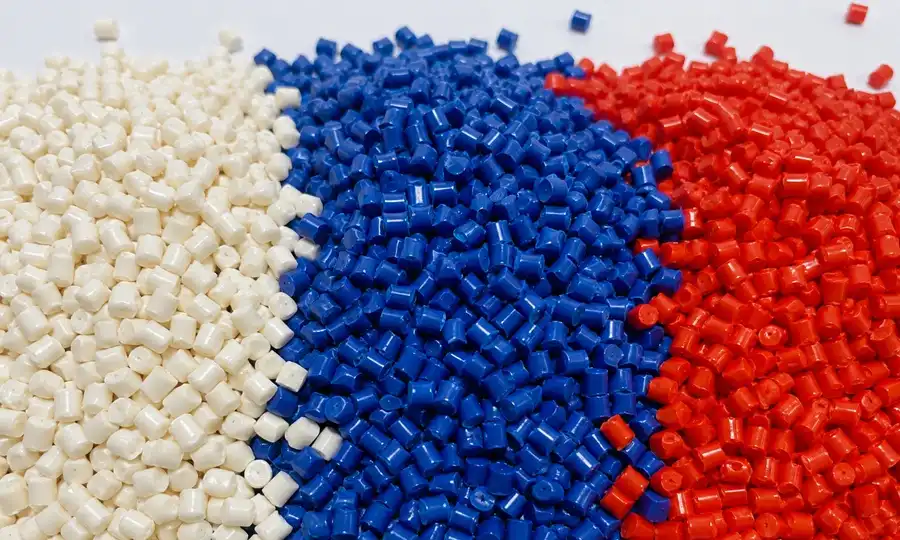
ABS plastic — acrylonitrile butadiene styrene — is a terpolymer engineering thermoplastic produced by combining three chemically distinct monomers into a two-phase microstructure. Each monomer contributes a specific performance dimension:
- Acrylonitrile (A) — typically 15–35% by weight. Provides chemical resistance, surface hardness, and thermal stability. The nitrile groups in acrylonitrile resist penetration by oils, greases, and dilute acids.
- Butadiene (B) — typically 5–30% by weight. The rubber phase. Polybutadiene particles (0.1–1.0 µm in diameter) are dispersed throughout the SAN matrix as discrete domains that absorb impact energy through cavitation and crazing, preventing brittle fracture propagation across the part.
- Styrene (S) — typically 40–60% by weight. Contributes rigidity, surface gloss, natural melt flow, and the processability that makes ABS one of the easiest engineering polymers to injection mold at production volumes.
The result of this three-way chemistry is a material that sits in a performance window no single-component polymer occupies: tougher than PS and HIPS, stiffer than PE and TPE, more processable than PC, and more economical than PA or PC/ABS blends. That balanced property profile — combined with exceptional surface finishing capability — explains why ABS plastic has become the dominant material for consumer-facing plastic enclosures globally.
What ABS plastic is not: It is not a high-temperature polymer. Standard grades soften at 85–100 °C. It is not inherently UV-stable. And it is not naturally flame-retardant — FR grades require compounding. Understanding these boundaries prevents specification errors before tooling begins.
At Dimud, ABS plastic programs represent one of our highest-volume material categories — spanning automotive door panel inserts, consumer electronics rear housings, medical device outer shells, and precision fixtures for robotic assembly lines. The breadth of that application experience informs every section of this guide.
ABS Grade Landscape
“ABS” covers a family of grades whose mechanical and regulatory performance profiles differ significantly. Treating all ABS resins as interchangeable is a common and costly mistake in injection molding programs.
General Purpose ABS (GP-ABS)
The baseline grade: balanced impact resistance, rigidity, and surface quality at the lowest material cost. Used for consumer goods, toys, appliance housings, and any application where the part faces moderate structural loads and no regulatory flame requirement.
GP-ABS is the specification starting point at Dimud for new programs where specific performance requirements have not yet been defined — it establishes the baseline from which grade upgrades are justified by application need.
High Impact ABS (HI-ABS)
Higher butadiene rubber content (20–30%) relative to GP-ABS. Notched Izod impact strength increases to 300–500 J/m at the cost of slightly reduced flexural modulus and surface gloss. Specified for protective equipment housings, automotive glove box assemblies, power tool casings, and any component that faces repeated drop loading or rough handling in the field.
Heat-Resistant ABS (HR-ABS)
Modified with alpha-methylstyrene or N-phenylmaleimide to raise the heat deflection temperature to 95–110 °C. Critical for applications near vehicle HVAC outlets, lighting fixtures, and any housing that must maintain dimensional stability under continuous thermal loading above standard ABS’s 85–95 °C HDT range.
Flame-Retardant ABS (FR-ABS)
Halogenated or non-halogenated FR additives are compounded into the base resin to achieve UL 94 ratings from HB through V-0. The FR-ABS grade hierarchy matters:
| UL 94 Rating | Self-Extinguishing Behavior | Typical Specification |
|---|---|---|
| HB | Burns slowly; no dripping | Consumer goods, basic housings |
| V-2 | Self-extinguishes; flaming drips permitted | General electronics |
| V-1 | Self-extinguishes; drips must not ignite | Electronics, automotive interior |
| V-0 | Self-extinguishes in ≤ 10 sec; no drips | Medical, high-end electronics, EV components |
| 5VA / 5VB | No burn-through on 5-in. plaque | Server enclosures, industrial controls |
For any mains-powered device, battery-adjacent component, or OEM-specified automotive interior part, FR-ABS at the correct UL 94 level is not optional — it is a regulatory prerequisite. Dimud’s DFM review includes a mandatory flame-rating check against the customer’s target market requirements before tooling quotation.
Plating-Grade ABS
Electroplating of ABS relies on a unique material property: the butadiene rubber phase can be selectively etched by chromic acid or alternative etchants, creating micro-pits that provide mechanical adhesion anchor points for the electroless copper seed layer. Plating-grade ABS is formulated with a controlled rubber phase morphology and particle size distribution that maximizes plating adhesion (typically 8–12 N/cm per automotive interior grade specifications).
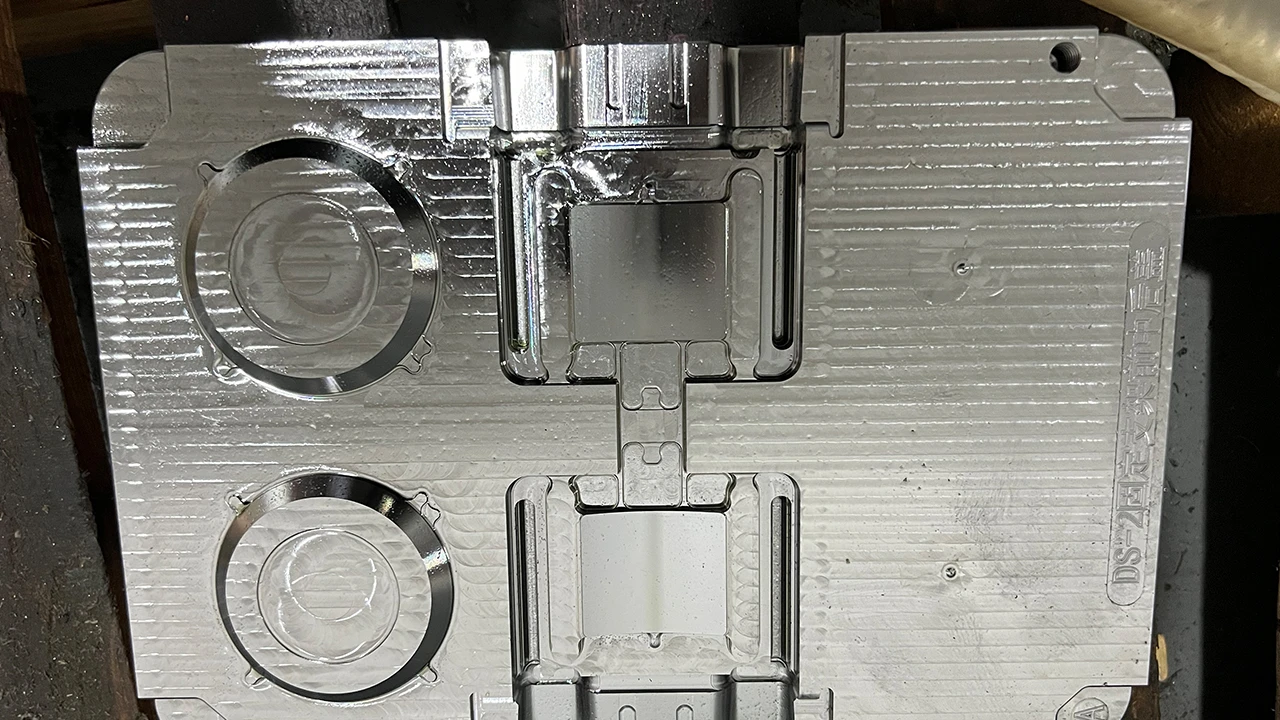
Standard GP-ABS produces inconsistent plating adhesion; dedicated plating grade is mandatory for any decorated metallic finish. Dimud specifies plating-grade resin from qualified suppliers (CHIMEI, SABIC, LG Chem) and uses S136 stainless or nickel-plated P20 cavity steel on all electroplating program tools to avoid corrosion pitting that would telegraph through the plated surface.
Other Specialized Grades
| Curso | Modificación | Aplicación principal |
|---|---|---|
| Glass-fiber reinforced ABS | 10–30% GF | Soportes estructurales, fijaciones de precisión |
| ABS/PC blend (PC+ABS) | PC alloyed for higher HDT + impact | Automotive B-pillars, laptop housings |
| ESD-dissipative ABS | Carbon additives | Electronics handling trays, clean-room fixtures |
| Medical-grade ABS | Low-extract, USP Class VI compatible | Device housings, diagnostic equipment shells |
| UV-stabilized ABS | HALS + UV absorbers | Outdoor enclosures, signage |
Propiedades físicas y mecánicas clave
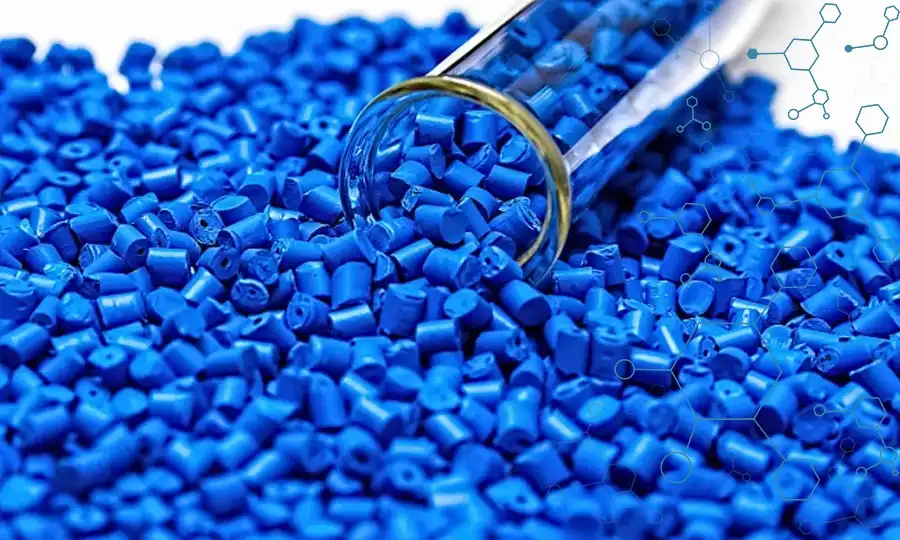
The property table below consolidates typical values across standard GP-ABS and key modified grades, referenced against the international test standards most commonly cited in engineering drawings and regulatory submissions.
| Propiedad | GP-ABS | HI-ABS | FR-ABS (V-0) | Norma de ensayo |
|---|---|---|---|---|
| Densidad | 1.03–1.06 g/cm³ | 1.01–1.05 g/cm³ | 1.15–1.20 g/cm³ | ISO 1183 |
| Resistencia a la tracción (límite elástico) | 40–55 MPa | 28–42 MPa | 35–50 MPa | ISO 527 |
| Módulo de flexión | 2,000–2,700 MPa | 1,600–2,200 MPa | 2,200–2,800 MPa | ISO 178 |
| Resistencia al impacto Izod con muesca | 100–300 J/m | 300–500 J/m | 80–200 J/m | ISO 180 |
| Alargamiento a la rotura | 10–30 % | 20–50 % | 5–15 % | ISO 527 |
| Temperatura de deflexión térmica | 85–100 °C | 75–90 °C | 80–95 °C | ISO 75 (1,82 MPa) |
| Punto de reblandecimiento Vicat | 95–108 °C | 85–98 °C | 88–102 °C | ISO 306 |
| Contracción del molde | 0,4–0,8 % | 0,5–0,9 % | 0.3–0.7 % | ISO 294-4 |
| Absorción de agua (24 h) | 0.2–0.4 % | 0.2–0.4 % | 0.2–0.4 % | ISO 62 |
| Rigidez dieléctrica | 14–16 kV/mm | 12–15 kV/mm | 14–17 kV/mm | IEC 60243 |
| Inflamabilidad | HB (standard) | HB | V-0 | UL 94 |
| Surface Gloss | Alta | Medium-high | Medio | — |
Dimud Engineering Note — Water Absorption and Drying
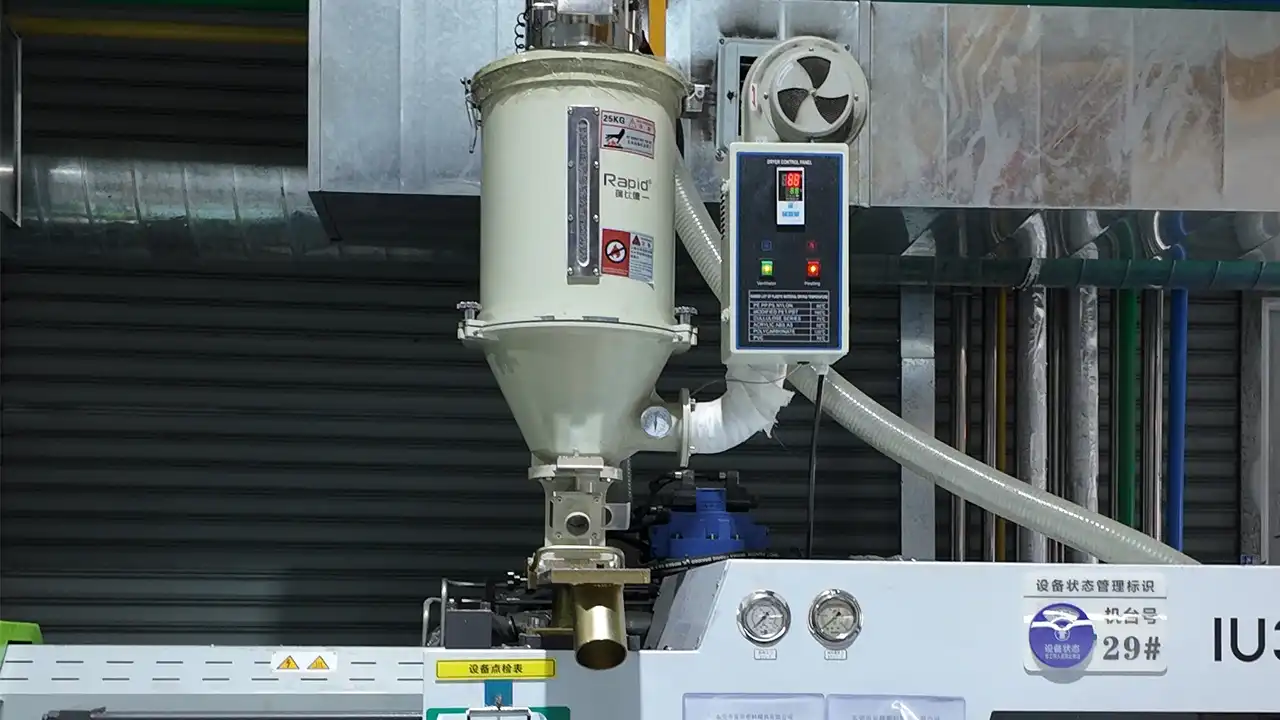
ABS plastic’s water absorption of 0.2–0.4% is significantly higher than PS or LDPE. Molding undried ABS generates steam pockets that produce silver streaks, splay marks, and degraded weld-line strength — all visible on cosmetic surfaces and structurally weakening on functional parts. Dimud’s standard protocol: 80–90 °C for 2–4 hours in a dehumidifying hopper dryer, targeting moisture content below 0.1% before every production run. This step is non-negotiable and is documented in every ABS process control plan.
ABS Injection Molding: Process Parameters
ABS plastic sits between PS and PC in melt viscosity — more viscous than PS, more processable than PC. Its broad processing window (melt temperature 200–270 °C) and compatibility with a wide range of machine configurations make it accessible to most moldeo por inyección operations. What separates good ABS programs from problematic ones is discipline in three areas: drying, temperature control, and packing.
Temperatura del cilindro y de la masa fundida
| Zona | General Purpose / HI-ABS | HR-ABS / FR-ABS | Notas |
|---|---|---|---|
| Trasera (alimentación) | 180–200 °C | 200–220 °C | Conservative; prevents premature softening |
| Intermedio (compresión) | 200–230 °C | 220–250 °C | Primary melting zone |
| Delantero (medición) | 220–250 °C | 240–265 °C | Final melt temp; viscosity target |
| Boquilla | 210–240 °C | 230–255 °C | Slightly lower; open-tip nozzle preferred |
Límite crítico: ABS plastic degrades above 270–280 °C, releasing volatile compounds and causing black specks, brown discoloration, and burnt odor. Residence time must be controlled — particularly on small-shot programs on large-barrel machines. Dimud verifies barrel residence time at machine selection and documents it in the process qualification report.
Temperatura del molde
Mold temperature for ABS: 40–80 °C
- 40–55 °C: Standard structural HIPS/ABS parts; faster cycle; acceptable gloss.
- 55–70 °C: Consumer electronics cosmetic surfaces; improved gloss and reduced weld-line visibility.
- 70–80 °C: High-gloss plating-grade parts; automotive Class A surfaces; maximum weld-line strength.
Higher mold temperature increases cycle time but reduces residual stress and warpage — a trade-off Dimud engineers evaluate explicitly against the part’s dimensional tolerance requirements and cosmetic specification.
Velocidad y presión de inyección
ABS’s moderate-to-high viscosity requires higher injection pressure than PS or LDPE, particularly for thin-wall sections:
- Injection pressure: 80–140 MPa
- Presión de mantenimiento: 50–70% de la presión de inyección
- Back pressure: 5–15 MPa — low back pressure preserves molecular weight; high back pressure generates heat and increases brittleness
- Injection speed: Moderate to fast — too slow causes premature freeze-off and weld lines; too fast causes jetting and gate blush on polished surfaces
Protocolo de secado
| Condition | Standard ABS | Plating-Grade ABS | Regrind ABS |
|---|---|---|---|
| Tipo de secadora | Tolva deshumidificadora | Tolva deshumidificadora | Tolva deshumidificadora |
| Temperatura | 80–85 °C | 80–85 °C | 80 °C |
| Duración | 2–4 horas | 3–4 hours (strict) | 2-3 horas |
| Humedad objetivo | < 0.1 % | < 0,05 % | < 0.1 % |
| Porcentaje máximo de material triturado | 20–30 % | 0 % (solo virgen) | — |
Defectos habituales y medidas correctoras
| Defecto | Causa raíz | Medidas correctivas |
|---|---|---|
| Rayas plateadas / dispersión | Moisture; degradation; excessive shear | Pre-dry to < 0.1%; reduce barrel temp; lower back pressure |
| Warpage / distortion | Non-uniform cooling; thick-thin transitions | Balance cooling; redesign wall uniformity; optimize gate |
| Marcas de hundimiento | Insufficient packing; thick sections | Increase hold pressure/time; core out thick areas |
| Líneas de soldadura (débiles / visibles) | Low melt temp; unfavorable gate position | Raise melt temp; relocate gate; increase mold temp |
| Limpieza a presión | Gate too small; excessive fill speed | Aumentar el tamaño de la boquilla; reducir la velocidad de inyección; utilizar una boquilla de abanico |
| Burn marks / black specks | Sobrecalentamiento de la masa fundida; tiempo de permanencia prolongado | Reduce barrel temp; purge regularly; rightsize barrel |
| Surface gloss variation | Inconsistent mold temp; contamination | Stabilize mold temp; clean runner system |
| Plating adhesion failure | Wrong resin grade; mold surface contamination | Specify plating-grade ABS; clean tool; verify etch process |
| Flash | Over-packing; worn parting line | Reduce hold pressure; check mold clamping; maintain tool |
Mold Design Considerations for ABS Plastic Components
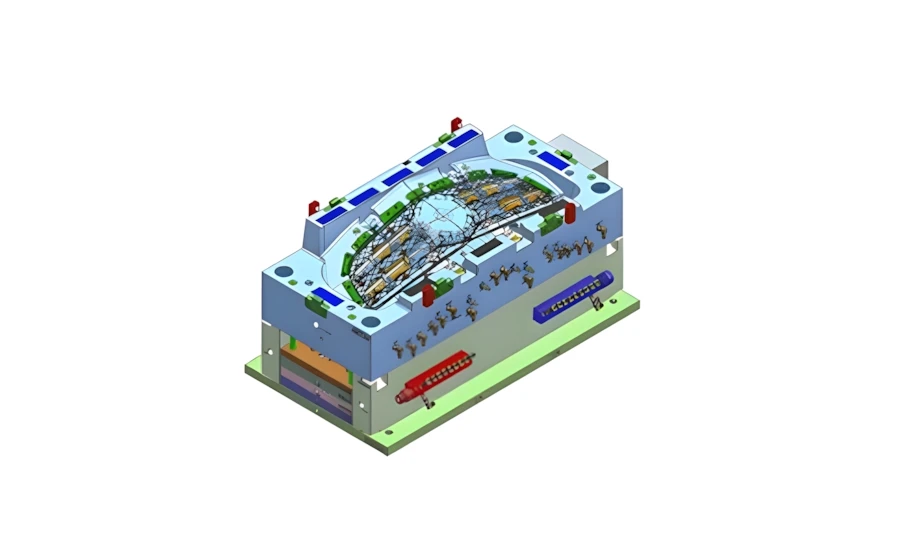
Diseño de la puerta
ABS accepts all standard gate types. Gate selection is driven primarily by cosmetic requirements, part geometry, and production volume:
- Puertas submarinas (túneles): Default for multi-cavity HIPS/ABS structural programs; automatic degating; minimal post-processing labor.
- Puertas para aficionados: Preferred for flat, cosmetically critical ABS panels — dashboards, appliance faceplates, display bezels — where uniform fill, minimal weld lines, and low residual stress are required.
- Válvulas de cierre para canales calientes: Standard on high-volume consumer electronics programs at Dimud; eliminates runner scrap, provides cosmetic gate location flexibility, and enables cycle time optimization on 16- to 128-cavity tools.
- Entradas directas (canal de colada): Used for single-cavity large parts; simple but requires manual degating.
Gate sizing for ABS: land length 0.5–1.5 mm; gate thickness minimum 60% of wall thickness at gate location to prevent premature freeze-off during packing.
Runner System
Full-round runners (5–8 mm diameter typical) minimize pressure drop. For balanced multi-cavity tools, Dimud uses H-pattern or radial runner layouts as standard. ABS’s moderate viscosity requires slightly larger runner cross-sections than PS for equivalent fill balance — a detail that is often undersized when converting PS tool designs to ABS production.
Selección del acero
| Acero | Solicitud | Expected Shot Life | Notas |
|---|---|---|---|
| P20 (preendurecido) | Standard GP/HI/FR-ABS production | 300,000–500,000 shots | Best balance of cost and machinability |
| H13 (hardened to 48–52 HRC) | Glass-filled ABS; high-volume programs | 800,000–1,000,000+ shots | Required for abrasive compounds |
| S136 / 420SS stainless | Plating-grade ABS; medical ABS | 500,000+ shots | Corrosion resistance critical for etch chemistry |
| 718H (acero inoxidable preendurecido) | Medical cosmetic surfaces | 300,000–500,000 shots | Combines polishability with corrosion resistance |
For plating-grade ABS programs specifically: cavity surface roughness must be maintained at Ra < 0.05 µm (SPI A1 polish) to prevent micro-pits that telegraph through copper, nickel, and chrome plate layers. Stainless steel cavity material prevents the corrosion pitting that occurs when chromic acid etchant contacts standard P20 during mold cleaning.
Diseño del sistema de refrigeración
ABS plastic’s moderate HDT (85–100 °C) and moderate shrinkage create a cooling design requirement focused on uniformity rather than maximum cooling rate. Non-uniform cooling is the primary driver of warpage in ABS enclosure programs — a failure mode that is far more expensive to correct after steel cutting than to prevent through upfront thermal analysis.
Dimud’s standard approach on ABS programs:
- Cooling channel diameter: 8–12 mm; pitch: 2–3× channel diameter from cavity wall
- Conformal cooling circuits for complex surface geometries (implemented via CNC-drilled baffles or additive-manufactured inserts on priority programs)
- Mold temperature differential between core and cavity: target ≤ 5 °C
- Moldflow thermal analysis completed before cavity sizing finalization on all ABS programs above two cavities
Sistema de expulsión
ABS’s toughness means it tolerates ejector pin forces better than PS, but cosmetic surface programs still require careful pin placement:
- All ejector pins located in non-cosmetic zones; documented and customer-approved before steel work
- Blade ejectors or sleeve ejectors used on thin-wall sections to distribute ejection force
- Stripper plate ejection on transparent or polished ABS parts where pin witness marks are unacceptable
- Ejection force calculated at DFM stage for parts with deep ribs or undercuts requiring sequential ejection
Desahogo
ABS plastic generates more gas during molding than LDPE or PS — the acrylonitrile component produces combustion volatiles at elevated temperatures that must be vented to prevent burn marks and diesel effect:
- Vent depth: 0.03–0.05 mm
- Espacio de ventilación: 3–5 mm
- Peripheral parting-line venting plus ejector pin clearance venting on all deep rib features
- For FR-ABS: additional venting capacity recommended — flame-retardant additives generate additional off-gassing during processing
Surface Finishing: ABS Plastic's Defining Advantage
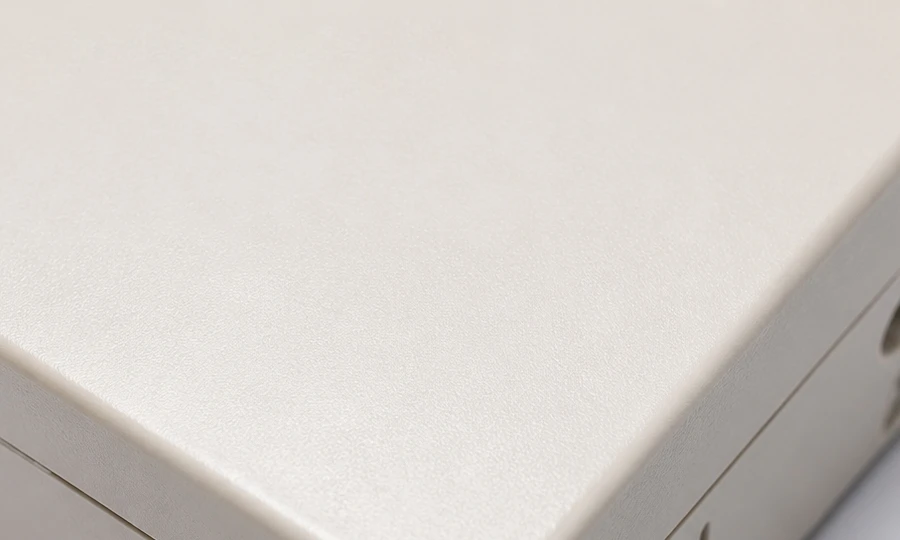
No engineering thermoplastic matches ABS plastic’s breadth of surface finishing options. This capability is not incidental — it is a designed-in consequence of the terpolymer’s chemistry and microstructure. Understanding the full surface treatment menu prevents product designers from specifying more expensive materials simply because they are unaware of what ABS can achieve.
Painting and Coating
ABS bonds reliably with both solvent-based and water-based paint systems without primer in most applications. Key considerations:
- Ketone-based solvents (acetone, MEK) and aromatic solvents (toluene) attack the styrene phase and must not be used as carriers in coating systems — surface crazing results within hours of application.
- UV-cured topcoats on ABS achieve high scratch resistance (pencil hardness > 3H) and are standard in consumer electronics cosmetic programs.
- Two-coat primer + topcoat systems on automotive HIPS/ABS trim achieve Class A surface quality meeting OEM paint adhesion specifications (cross-hatch adhesion: 0/100 per ISO 2409).
Galvanoplastia
ABS plastic’s unique butadiene rubber phase — selectively dissolved by chromic or permanganate etchants — creates a micro-porous anchor layer that provides mechanical adhesion for electroless copper deposition. The plating build sequence is:
Etch → Neutralize → Electroless copper → Electroless nickel → Electrolytic copper → Semi-bright nickel → Bright nickel → Chrome
Final chrome thickness: 0.25–0.5 µm. The result is a part that visually and tactilely replicates die-cast zinc or machined aluminum at a fraction of the cost and mass. Electroplated ABS plastic is the dominant material for automotive interior knobs, handles, badge surrounds, mirror covers, and consumer electronics decorative trim rings.
Dimud’s electroplating capability: Our electronics plant operates an integrated plating qualification process — including plating-grade resin verification, cavity surface inspection before steel release, and adhesion testing (thermal cycling -40 °C to +85 °C, 10 cycles; peel strength minimum 8 N/cm) as standard acceptance criteria on all plated ABS programs.
Texture and Grain Finishing
ABS accepts chemical texture etching (VDI scale, Mold-Tech, Yick Sang) more faithfully than most commodity polymers. Surface texture transfers from the mold cavity directly to the part surface without secondary operations. For consumer electronics programs, MT-11010 to MT-11050 fine-texture patterns are standard on HIPS/ABS housings to manage fingerprint visibility and perceived quality. For automotive interior programs, VDI 27–33 leather-grain textures comply with OEM specification books.
Pad Printing, Hot Stamping, and Ultrasonic Welding
- Pad printing: Dimud’s electronics plant applies pad-printed graphics, brand marks, and regulatory symbols directly to molded ABS surfaces as a standard secondary operation.
- Hot stamping (heat transfer foil): Gold, silver, and custom metallic finishes on ABS without electroplating cost or lead time.
- Ultrasonic welding: The primary joining method for ABS housing assemblies; weld strength typically reaches 90–95% of parent material tensile strength with correct joint geometry design.
Aplicaciones industriales
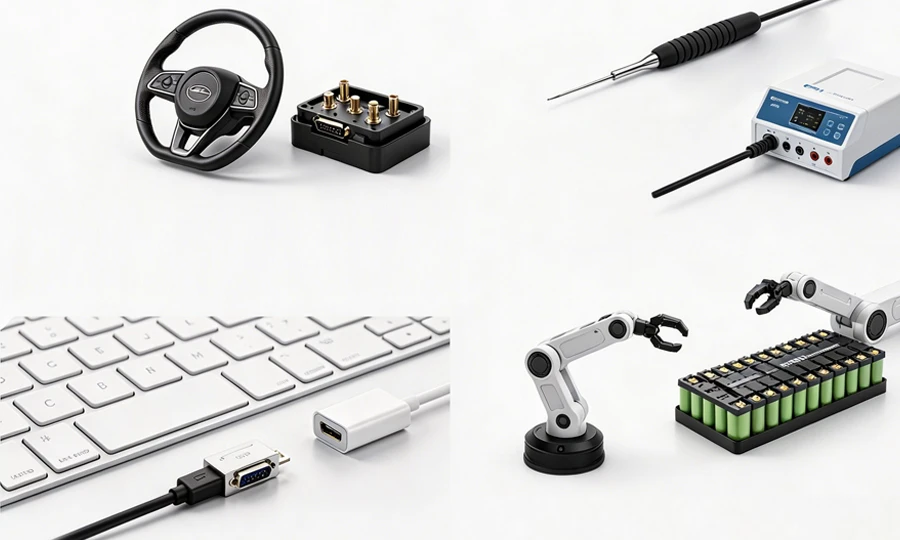
Electrónica de consumo
Electrónica de consumo is the largest single-volume application for ABS plastic injection molding globally — and the sector that most fully exploits ABS’s surface finishing capability. The combination of dimensional stability (0.4–0.8% shrinkage), impact resistance, and finishing versatility makes ABS the default enclosure material for a vast range of products.
Television and monitor housings (FR-ABS): Rear shells and stand components for flat-panel displays. FR-ABS at UL 94 V-1 or V-0 is the regulatory baseline for any mains-powered display product sold in North America, Europe, or the Middle East. Dimud has produced multi-million-unit volumes of FR-ABS display housings for customers across these export markets, with UL 94 compliance documentation and cross-hatch paint adhesion test reports as standard program deliverables.
Router, switch, and IT enclosures (FR-ABS): Networking equipment housings combine flame-retardant compliance with dimensional precision for snap-fit assembly — a pairing where ABS’s low shrinkage and broad finishing options are decisive.
Keyboard and peripheral housings (GP-ABS): The stiffness, texture retention, and color stability of GP-ABS make it the historical and current dominant material for computer keyboard frames, mouse shells, and desktop peripheral enclosures.
Wearables and handheld device shells (HI-ABS / PC+ABS): Where drop performance requirements intensify, high-impact ABS or PC/ABS blends replace GP-ABS. Dimud’s DFM review for handheld device programs includes a drop simulation assessment and grade recommendation as a standard deliverable.
Automotive Interior
Automoción interior trim is the second major application domain for ABS plastic, where the combination of dimensional stability, paint and texture adhesion, and electroplating capability aligns with OEM requirements for perceived quality at cost-competitive price points.
Instrument panel inserts and trim rings (plating-grade ABS): Chrome-plated ABS trim surrounds for instrument clusters, HVAC controls, and gear shift bezels. These components must pass OEM thermal cycling (-40 °C to +90 °C, 100 cycles) and humidity cycling (95% RH, 80 °C, 240 hours) adhesion tests before production approval. Dimud’s plating program qualification process includes all specified OEM test sequences.
Door panel inserts and armrest surfaces (HI-ABS / textured): HIPS or HI-ABS door panel components with chemical-etched leather-grain textures replicate premium trim appearance at commodity material cost. Draft angles of 3° minimum are specified for textured ABS automotive components to ensure consistent texture depth across production.
Infotainment bezel surrounds and switch panels (FR-ABS / HR-ABS): Center console and dashboard electronics surrounds combine thermal resistance (HR-ABS for proximity to heating elements) with flame rating compliance (FR-ABS for OEM interior flammability requirements per FMVSS 302).
Under-hood electrical connectors (GF-ABS): Glass-fiber reinforced ABS at 15–20% GF content is specified for under-hood connector housings where the elevated HDT (100–110 °C) and improved creep resistance justify the higher material cost versus GP-ABS.
Productos sanitarios
Medical-grade ABS occupies a specific and well-defined role in device manufacturing — primarily for the outer structural housings of diagnostic equipment and handheld devices, where impact resistance, dimensional stability, and surface finishing capability are required but direct tissue contact does not occur.
Diagnostic equipment outer shells (medical-grade ABS): MRI-compatible (non-ferrous) ABS housings for bedside monitoring equipment, infusion pump enclosures, and portable diagnostic device shells. Medical-grade ABS resins certified to USP Class VI and processed in controlled manufacturing environments are specified for any component that may contact cleaning agents, disinfectants, or patient-adjacent surfaces.
Handheld medical device housings (HI-ABS): Blood glucose meters, peak flow monitors, and point-of-care test readers require housings that survive repeated dropping by patients without fracture. HI-ABS at notched Izod impact strength > 300 J/m is the standard specification for handheld medical devices in Dimud’s medical program portfolio.
Laboratory instrument enclosures (GP-ABS / FR-ABS): Centrifuge housings, PCR instrument shells, and spectrophotometer enclosures — instruments where dimensional stability, chemical resistance to laboratory cleaners, and flame-retardant compliance (UL 94 V-0 for heated instruments) drive material selection.
Dimud maintains ISO 13485-compatible process controls for medical ABS programs, with full material traceability, batch CoC, and documented cleaning agent compatibility testing available as program deliverables.
Robótica y almacenamiento de energía
El robotics and energy storage sector has rapidly become one of Dimud’s most active ABS plastic application domains, driven by the intersection of structural precision, electrical insulation, and surface quality requirements that characterize both sectors.
Robotic arm link covers and structural housings (GP-ABS / GF-ABS): Robot link covers in collaborative robot (cobot) platforms must be dimensionally precise to maintain sensor clearances, lightweight to minimize arm inertia, and cosmetically consistent for customer-facing deployments. ABS’s low shrinkage and superior surface quality make it the default material for visible cobot enclosure components.
Battery management system (BMS) housings (FR-ABS, UL 94 V-0): BMS controller enclosures in lithium-ion battery modules require V-0 flame rating, dimensional stability under thermal cycling (−20 °C to +70 °C), and sufficient creep resistance to maintain fastener torque over service life. FR-ABS at V-0 meets all three requirements at a cost point well below PC or PA alternatives.
ESD-dissipative handling trays and fixtures (ESD-ABS): Component handling trays, PCB test fixtures, and robotic end-effector contact surfaces in electronics manufacturing environments. Carbon-loaded ESD-ABS maintains surface resistivity within the ANSI/ESD S20.20 control range (10⁶–10¹¹ Ω/sq) throughout service life.
Control panel enclosures and HMI housings (FR-ABS): Industrial robot control pendants and human-machine interface housings in factory automation equipment. FR-ABS V-0 with textured surface finish (MT/VDI texture for operator grip) is Dimud’s standard recommendation for this application category.
ABS Plastic vs. Competing Materials
| Property / Factor | ABS | HIPS | PP | PC | PC/ABS |
|---|---|---|---|---|---|
| Resistencia a los impactos | ★★★★★ | ★★★★☆ | ★★★★☆ | ★★★★★ | ★★★★★ |
| Estabilidad dimensional | ★★★★★ | ★★★★★ | ★★★☆☆ | ★★★★☆ | ★★★★☆ |
| Surface Finish / Gloss | ★★★★★ | ★★★★☆ | ★★★☆☆ | ★★★★☆ | ★★★★☆ |
| Electroplating Capability | ★★★★★ | ★★☆☆☆ | ★☆☆☆☆ | ★★☆☆☆ | ★★★★☆ |
| Heat Resistance | ★★★☆☆ | ★★☆☆☆ | ★★★★☆ | ★★★★★ | ★★★★☆ |
| Resistencia química | ★★★☆☆ | ★★★☆☆ | ★★★★★ | ★★★☆☆ | ★★★☆☆ |
| Facilidad de elaboración | ★★★★★ | ★★★★★ | ★★★★☆ | ★★★☆☆ | ★★★☆☆ |
| UV / Outdoor Durability | ★★☆☆☆ | ★★☆☆☆ | ★★★☆☆ | ★★★☆☆ | ★★★☆☆ |
| Coste de las materias primas | $$ Medio | $ Bajo | $ Bajo | $$$ Alto | $$$ Alto |
| Weld-Line Strength | ★★★★☆ | ★★★☆☆ | ★★★★☆ | ★★★★★ | ★★★★☆ |
ABS vs. HIPS: ABS costs more but delivers meaningfully better impact resistance, weld-line strength, and electroplating adhesion. For any housing that faces drop risk, assembly stress, or decorative metallic finishing, ABS is the justified upgrade from HIPS.
ABS vs. PC: PC provides higher impact resistance (particularly at low temperatures), superior heat resistance, and optical clarity — at 2–3× the material cost and with a significantly narrower processing window. For applications where PC’s performance margins are not fully utilized, ABS is the rational cost-down material.
ABS vs. PC/ABS blend: PC/ABS alloys (e.g., Bayer Bayblend, Sabic Cycoloy) bridge the gap — better low-temperature impact and HDT than ABS, better processability and lower cost than PC. For automotive B-pillar trims, laptop shells, and premium consumer electronics, PC/ABS is the premium tier above ABS. Dimud processes both ABS and PC/ABS across our automotive and electronics programs.
DFM Guidelines for ABS Plastic Parts
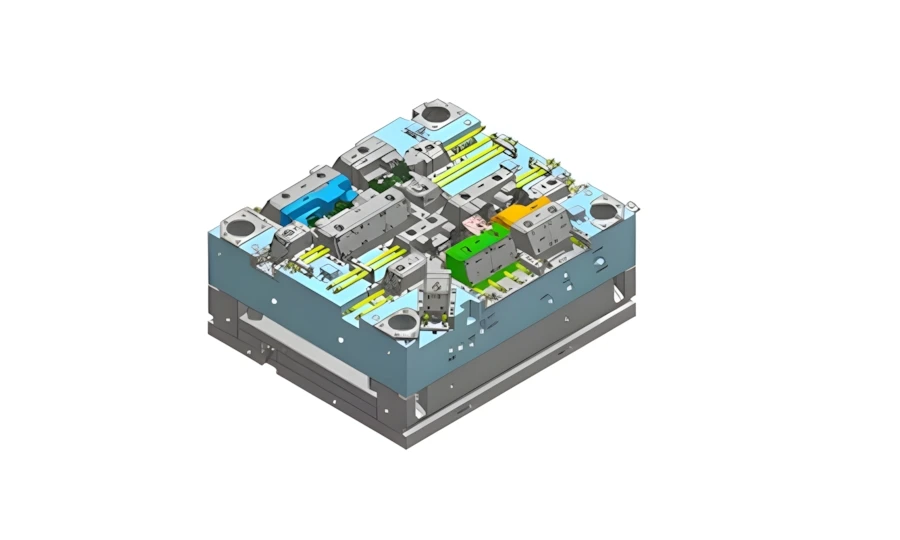
Espesor de pared
Recommended range: 1.5–3.5 mm for structural enclosures; 1.0–2.0 mm for thin-wall consumer electronics with high-flow grades.
Uniform wall thickness is the single most impactful DFM variable for ABS warpage prevention. Wall-thickness variation above 2:1 ratio creates differential shrinkage that warps parts out of specification even with optimized cooling. Where thick/thin transitions are unavoidable, taper over a minimum distance of 3× the thickness change.
Rib and Boss Design
- Rib thickness: 50–60% of nominal wall (prevents sink marks on opposite surface)
- Rib height: maximum 3× nominal wall; gusset support on taller ribs
- Boss outer diameter: maximum 2× nominal wall; hollow coring on bosses deeper than 10 mm
- Boss-to-wall connection: always filletted at base; minimum 0.5 mm radius
- Boss-to-rib intersection: avoid creating locally thick cross-sections that generate sink marks
Radios de las curvas
ABS’s toughness is more forgiving than PS at sharp corners, but stress concentration at zero-radius internal corners still causes fatigue failure under repeated loading and stress-whitening under snap-fit deflection. Minimum internal corner radius: 0.5 mm; recommended: 1.0 mm or 25–50% of wall thickness.
Snap-Fit Design
ABS plastic is one of the best materials for integral snap-fit assembly design — its combination of stiffness, toughness, and predictable dimensional behavior allows reliable interference specification. Dimud’s snap-fit design standard for ABS:
- Maximum cantilever deflection: 2% of cantilever length for repeated-engagement snaps; 4% for single-assembly snaps
- Snap return angle: 45° for removable; 90° for permanent
- Minimum fillet radius at snap root: 1.0 mm to prevent stress-whitening at maximum deflection
- Tolerance stack-up analysis required on all multi-component snap assemblies before tool design freeze
Tolerancias alcanzables
ABS plastic’s low shrinkage enables tight tolerances across part dimensions:
- Standard: ±0.10–0.20 mm on controlled dimensions
- Fine (process-optimized): ±0.05–0.10 mm on short dimensions < 50 mm
- Plating-grade programs: allow +0.05–0.10 mm on plated surfaces for plating build-up (copper 15–25 µm, nickel 5–15 µm, chrome 0.25–0.5 µm)
Quality Standards, Compliance, and Sustainability
Quality Management at Dimud
Dimud’s three-plant manufacturing network applies a unified quality management system across all ABS plastic programs:
- IATF 16949-aligned procedures for automotive ABS programs: PPAP Level 3 submission, FMEA, control plans, SPC on critical dimensions, dimensional reports with Cpk ≥ 1.67 on CTQs.
- ISO 13485-compatible process control for medical-grade ABS components: resin lot traceability, batch CoC, cleaning agent compatibility records.
- UL 94 compliance verification on all FR-ABS programs: production coupon sampling per UL 94 protocol, documentation suitable for customer UL file submission.
- CMM dimensional inspection on all first articles and ongoing production sampling per customer-approved control plans.
- RoHS / REACH compliance declarations on all ABS resin lots as standard documentation.
Regulatory Compliance Reference
| Solicitud | Applicable Standard | ABS Grade | Critical Requirement |
|---|---|---|---|
| Consumer electronics (mains-powered) | UL 94 V-1 or V-0 | FR-ABS | Flame rating certificate required |
| Automotive interior | FMVSS 302, OEM spec | FR-ABS / HR-ABS | Flammability + PPAP Level 3 |
| Medical device housing (non-contact) | ISO 10993, USP Class VI | Medical-grade ABS | Virgin resin; batch traceability |
| Food-contact adjacent applications | FDA 21 CFR 180.40 | Food-grade ABS | Additive compliance verified |
| ESD-sensitive environments | ANSI/ESD S20.20 | ESD-ABS | Surface resistivity 10⁶–10¹¹ Ω/sq |
| EU market electronics | RoHS Directive 2011/65/EU | All ABS | Declaration of compliance required |
Sustainability Considerations
ABS plastic carries recycling identification code #7 (Other). While ABS is technically thermoplastically recyclable, post-consumer collection infrastructure is less developed than for HDPE o PP. The practical sustainability levers in ABS injection molding programs are at the production stage:
- Closed-loop regrind: Dimud recycles 100% of ABS production scrap (sprues, runners, rejected parts) as regrind up to 20–30% blend ratios in appropriate applications. Plating-grade and medical-grade ABS programs use virgin resin only.
- Hot-runner tooling: Eliminating cold runners reduces resin consumption per part by 5–15% on typical multi-cavity programs — a direct material efficiency and cost advantage.
- Energy efficiency: ABS’s processing temperature range (200–260 °C) is lower than PC or PA, reducing energy consumption per kilogram of molded material.
- Mass reduction: ABS’s high stiffness-to-weight ratio enables thinner walls than lower-modulus alternatives, reducing part mass and transport emissions over product lifetime.
Dimud's ABS Plastic Injection Molding Capabilities
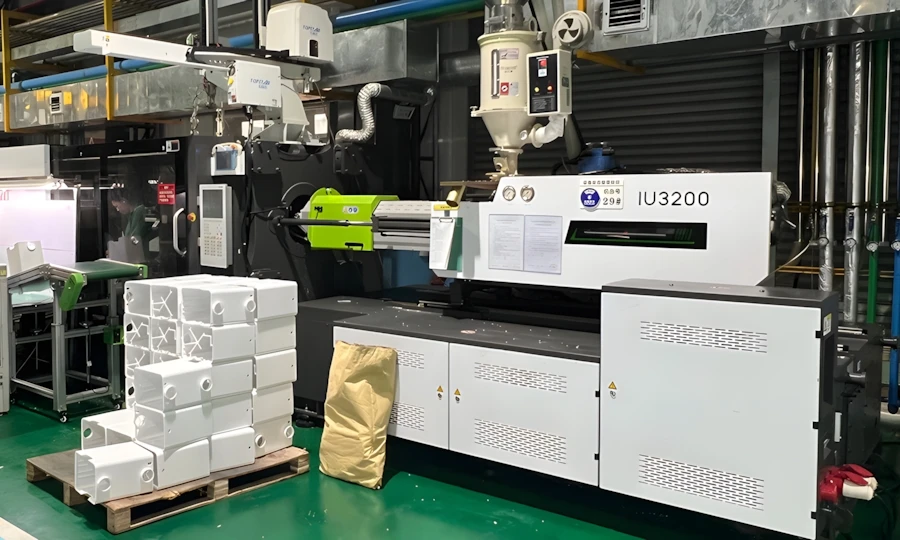
Dimud is a vertically integrated manufacturing partner — not a single-service mold shop. Three coordinated manufacturing plants cover every stage from design concept to shipped finished assembly:
| Fase de servicio | Capacidad de Dimud | Ventajas para el cliente |
|---|---|---|
| Revisión del diseño para la fabricación (DFM) y de la calificación | Free DFM analysis; grade recommendation; flame-rating and compliance check | Eliminate regulatory and design failures before tooling commitment |
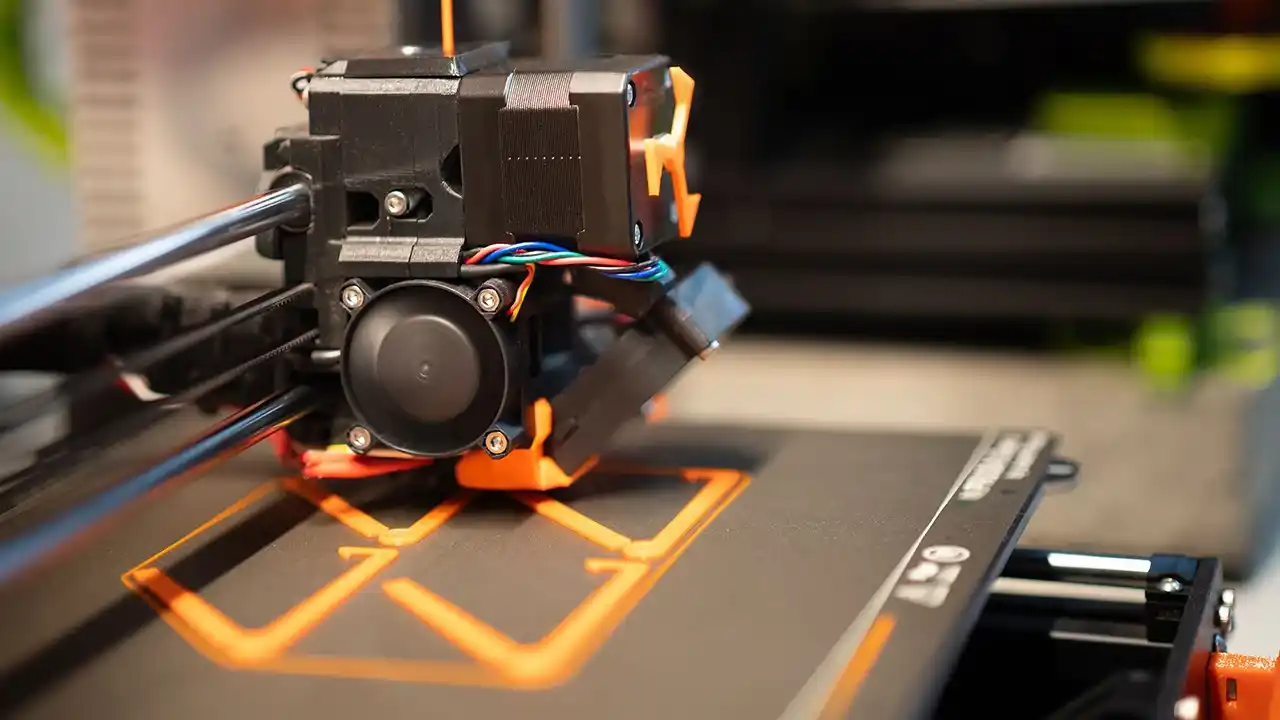
| Prototipado rápido | SLA/SLS 3D printing + aluminum soft tools in GP-ABS or FR-ABS | Functional samples in 10–15 working days |
| Desarrollo del moho | P20 / H13 / S136 / 718H; hot-runner valve gate; 1–128 cavity tools; Moldflow pre-validated | Production-ready tooling with guaranteed minimum shot life |
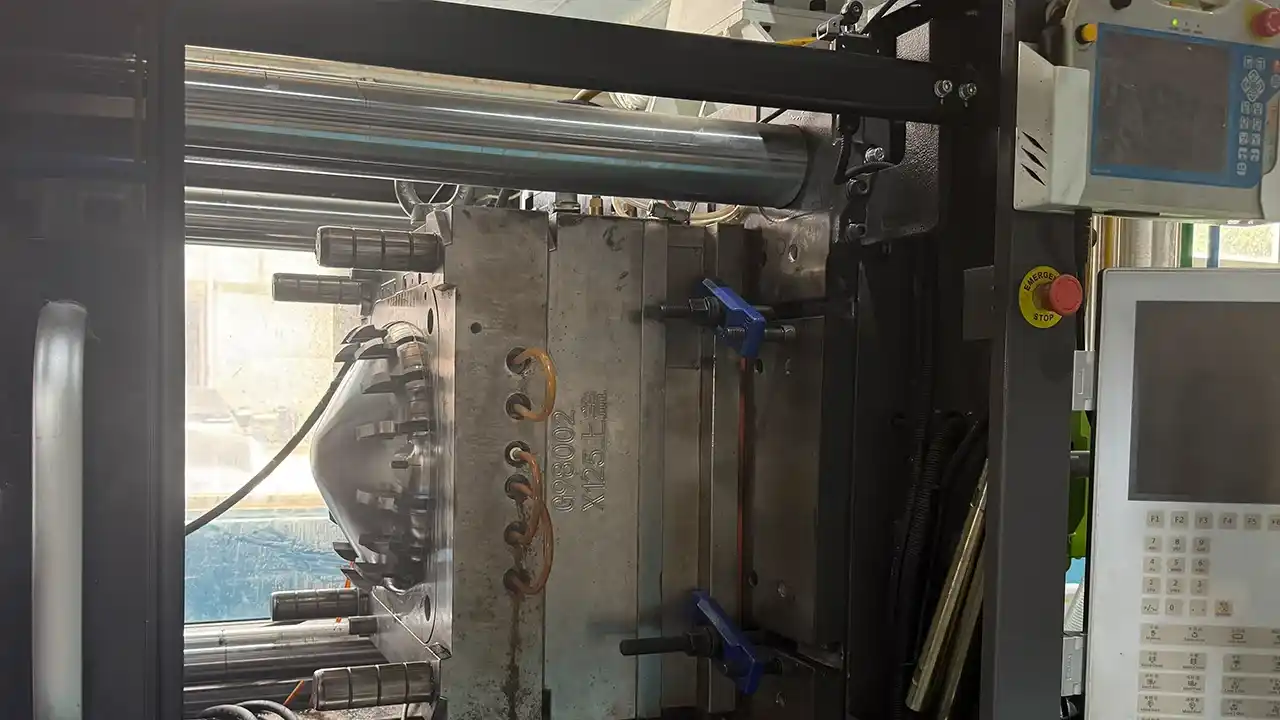
| Moldeo en serie | 50T–1,600T machines; FR-ABS, plating-grade, ESD, medical-grade capable | Pilot quantities to multi-million annual run rates |
| Acabado de superficies | Pad printing, hot stamping, electroplating qualification, ultrasonic welding | Complete cosmetic and functional sub-assemblies under one quality system |
| Documentación de calidad | PPAP, CoC, CMM reports, UL 94 test certificates, SPC charts, material traceability | Audit-ready documentation for automotive, medical, electronics customers |
| Gestión de la cadena de suministro | Resin sourcing, incoming QC, outbound dimensional inspection, DDP logistics | Predictable lead times; single point of accountability |
Our primary export markets — Europe, North America, and the Middle East — set the quality documentation standard for Dimud’s operations. PPAP, CE compliance support, RoHS declarations, and English-language engineering communication are not add-ons; they are baseline program deliverables.
Preguntas frecuentes
Yes — always. ABS has a water absorption rate of 0.2–0.4%, and moisture above 0.1% at the time of molding generates steam pockets that produce silver streaks, surface splay, and weakened weld lines. The standard Dimud drying protocol is 80–85 °C for 2–4 hours in a dehumidifying hopper dryer. This step is documented in every ABS process control plan and is verified through periodic moisture analyzer testing on resin samples at machine-side.
Standard (unmodified) ABS plastic achieves UL 94 HB — the lowest classification, indicating a controlled (but not self-extinguishing) burn rate on a horizontal specimen. For any mains-powered device, battery-adjacent component, or application covered by IEC 60950 / IEC 62368-1 equipment safety standards, FR-ABS at V-2 minimum (and typically V-1 or V-0) must be specified. Dimud's DFM review flags applications where the standard-grade specification would fail regulatory testing before any tooling investment is made.
Yes — ABS plastic (specifically plating-grade formulations) is one of the few thermoplastics that can be decoratively electroplated with chrome, nickel, and gold finishes at automotive interior quality levels. The process requires a dedicated plating-grade resin (formulated for controlled rubber phase morphology), a high-polish stainless or nickel-plated P20 cavity, and a validated etch-activate-plate process sequence. Dimud qualifies ABS plating programs with thermal cycling adhesion testing (minimum 8 N/cm peel strength after -40 °C to +85 °C cycling) as standard acceptance criteria.
PC/ABS blends (such as Covestro Bayblend or Sabic Cycoloy) deliver meaningfully higher low-temperature impact strength, better HDT (typically 105–120 °C versus ABS's 85–100 °C), and improved weld-line strength compared to straight ABS — at 30–50% higher material cost and with a narrower processing window that requires more disciplined temperature control. For automotive instrument panels, A-pillar covers, and center console trim, PC/ABS is the premium-tier specification where OEM performance criteria exceed what GP-ABS can achieve. For lower-stress interior trim (door pocket inserts, trunk liners, small bezels), ABS provides equivalent perceived quality at lower system cost.
For standard GP-ABS or HI-ABS programs in P20 pre-hardened steel: 300,000–500,000 shots with scheduled preventive maintenance. H13 hardened steel extends life to 800,000–1,000,000+ shots and is specified for high-volume consumer electronics programs. Glass-filled ABS grades impose additional gate and cavity wear — H13 with nitrided gate inserts is Dimud's standard specification for reinforced ABS tools. All Dimud tooling contracts include a minimum guaranteed shot-life commitment and a preventive maintenance schedule with cavity inspection records.
Conclusión
ABS plastic is the workhorse of precision injection molding — not because it is the cheapest option in any single performance dimension, but because it balances more engineering requirements simultaneously than any competing commodity material. Impact resistance, dimensional stability, surface finish quality, electroplating capability, flame-retardant availability, and processing economy coexist in a single material family at a cost point that production programs can sustain at volume.
The engineers who consistently succeed with ABS treat it as a system: the right grade matched to the right mold design, processed with the right temperature and drying discipline, finished with the right surface treatment, and documented to the right regulatory standard for the target market.
Dimud is built to manage that entire system. Three integrated plants, a cross-industry ABS application portfolio spanning automotive, electronics, medical, and robotics programs, and a quality infrastructure calibrated for European, North American, and Middle Eastern customer expectations mean that your ABS program arrives at volume with the performance, appearance, and compliance documentation your customers require.