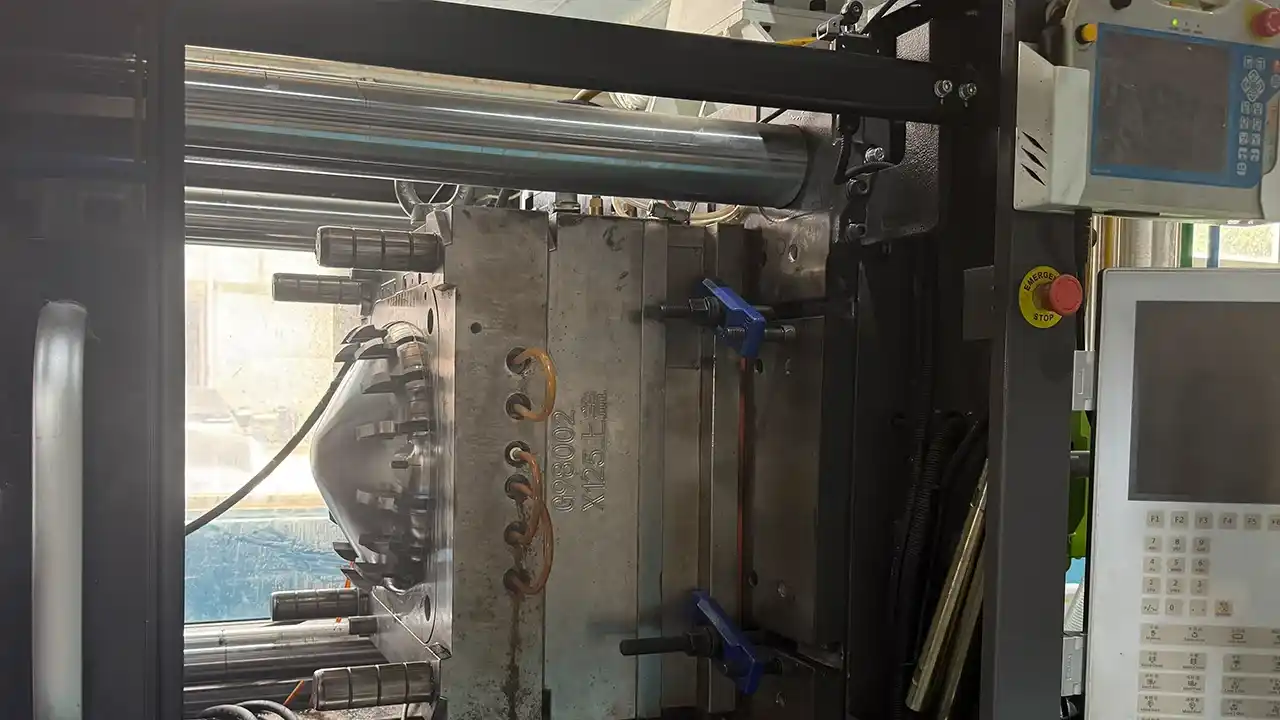

Polypropylene (PP) — one of the most widely used thermoplastic polymers in the world. Since its commercial introduction in 1957, polypropylene has become a cornerstone material in industries ranging from automotive and consumer packaging to medical devices and electronics.
In injection molding, this material stands out as a top choice for manufacturers seeking a balance of lightweight construction, chemical resistance, and cost efficiency. Its combination of processability, mechanical versatility, and low density makes polypropylene one of the most injection-molded materials globally.
At Dimud, we work with PP resin on a daily basis across a wide range of projects — from high-volume consumer packaging to precision automotive components. This guide provides a comprehensive look at polypropylene: its chemistry, properties, processing parameters, applications, and how to select the right PP grade for your project.
Chemical Structure of Polypropylene
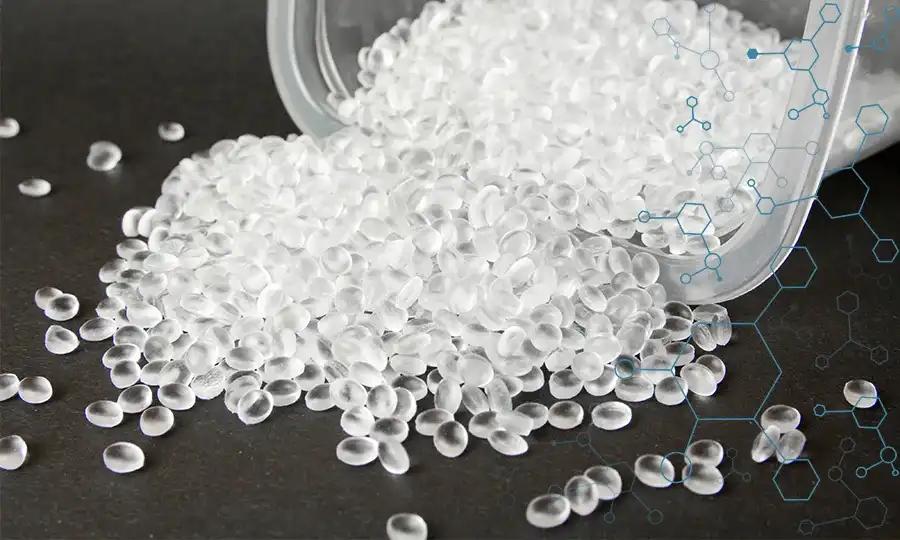
Polypropylene is a semi-crystalline thermoplastic polymer derived from the polymerization of propylene (propene) monomers — a byproduct of petroleum refining and natural gas processing.
The backbone of polypropylene material consists of repeating propylene units:
— CH₂ — CH(CH₃) — CH₂ — CH(CH₃) —The arrangement of the methyl side groups along the polymer chain determines the tacticity of the PP resin, which in turn governs its physical and mechanical behavior:
- Isotactic PP (iPP): Methyl groups arranged on the same side of the backbone. This is the most common commercial form of the material — highly crystalline, stiff, and strong.
- Syndiotactic PP (sPP): Methyl groups alternate sides. Less common; offers improved clarity and impact resistance.
- Atactic PP (aPP): Random arrangement; soft, waxy, and amorphous. Generally used as an additive rather than a structural material.
PP Homopolymer vs. PP Copolymer
Commercial PP resins fall into two primary structural categories:
PP Homopolímero is made entirely from propylene monomers. It offers higher rigidity, better surface hardness, and excellent fatigue resistance — making it the preferred PP grade for rigid parts, living hinges, and applications requiring good stiffness-to-weight ratio.
PP Copolymer incorporates ethylene units into the polypropylene chain, either in a random distribution (random copolymer PP) or in block segments (impact copolymer PP / block copolymer PP):
- Random copolymer PP (PPR): Improved clarity and impact performance at room temperature; commonly used in food containers, medical packaging, and pipe systems.
- Impact copolymer PP (ICP) / Block copolymer PP: Enhanced toughness, especially at low temperatures. Preferred for automotive bumpers, outdoor products, and applications exposed to cold environments.
Key Properties of PP Plastic
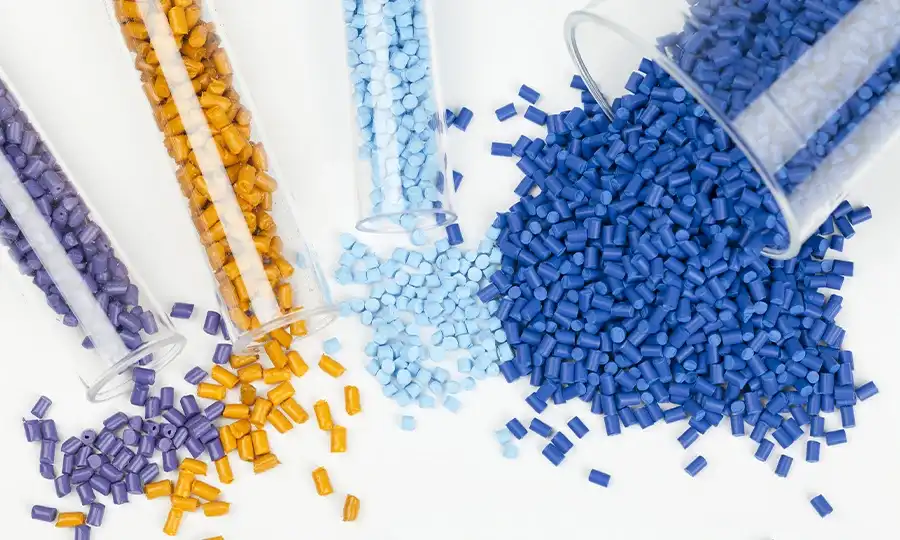
Understanding the physical and mechanical properties of polypropylene is essential for determining whether PP is the right material for your injection-molded part.
Propiedades mecánicas
| Propiedad | Typical Value (Homopolymer) | Unidad |
|---|---|---|
| Resistencia a la tracción | 30 – 40 | MPa |
| Módulo de flexión | 1,300 – 1,800 | MPa |
| Resistencia al impacto Izod (entallado) | 20 – 80 | J/m |
| Dureza Rockwell | R80 – R100 | — |
| Alargamiento a la rotura | 100 – 600 | % |
PP copolymers, especially impact-grade types, offer significantly higher impact values — often exceeding 400 J/m — at the cost of some rigidity.
One of the most celebrated mechanical characteristics of polypropylene resin is its exceptional fatigue resistance. Polypropylene can withstand millions of flex cycles without failure, which is the physical basis for the famous PP living hinge — a thin, integral hinge formed directly in the injection-molded PP part, eliminating the need for separate metal or mechanical hinges.
Propiedades térmicas
| Propiedad | Valor | Unidad |
|---|---|---|
| Punto de fusión | 160 – 175 | °C |
| Heat deflection temperature (HDT) at 0.45 MPa | 100 – 115 | °C |
| Heat deflection temperature (HDT) at 1.80 MPa | 55 – 65 | °C |
| Punto de ablandamiento Vicat | 150 – 155 | °C |
| Continuous use temperature | hasta 100 | °C |
| Clasificación de inflamabilidad según la norma UL94 | HB (estándar) | — |
Standard PP compound has a relatively modest heat deflection temperature under load. For applications requiring higher thermal stability, mineral-filled or glass-fiber-reinforced PP grades can push HDT values significantly higher.
Physical Properties
| Propiedad | Valor | Unidad |
|---|---|---|
| Densidad | 0.90 – 0.91 | g/cm³ |
| Absorción de agua (24 h) | < 0.02 | % |
| Contracción del molde | 1.0 – 2.5 | % |
| Índice de refracción | 1.49 | — |
With a density of approximately 0.90 g/cm³, polypropylene polymer is one of the lightest commercial thermoplastics — lighter than water. This makes polypropylene an ideal material for applications where weight reduction is a priority, such as automotive interior components and consumer products.
El low water absorption of the resin (less than 0.02%) means polypropylene parts maintain their dimensions and mechanical properties in humid environments, and — importantly for injection molding — standard PP resins typically do not require pre-drying before processing.
Chemical Resistance of PP Plastic
Polypropylene’s chemical resistance is one of its most commercially important properties. The material demonstrates excellent resistance to:
- Dilute and concentrated acids (sulfuric acid, hydrochloric acid, nitric acid at room temperature)
- Alkalis and bases
- Alcohols, ketones, and esters
- Aqueous solutions, salt solutions, and detergents
- Many oils and greases
However, this material is attacked by or swells in the presence of:
- Strong oxidizing acids at elevated temperatures
- Aromatic hydrocarbons (toluene, xylene)
- Disolventes clorados
- Strong UV exposure (unless stabilized)
This broad chemical resistance makes polypropylene a go-to material for chemical storage containers, laboratory equipment, food-contact parts, and fluid-handling components.
Propiedades eléctricas
PP resin is an excellent electrical insulator:
| Propiedad | Valor | Unidad |
|---|---|---|
| Resistividad volumétrica | > 10¹⁶ | Ω-cm |
| Rigidez dieléctrica | 20 – 30 | kV/mm |
| Constante dieléctrica (1 MHz) | 2.2 – 2.6 | — |
These properties make polypropylene material a common choice for electrical connectors, cable insulation, and electronic housings.
PP Plastic Injection Molding: Processing Parameters
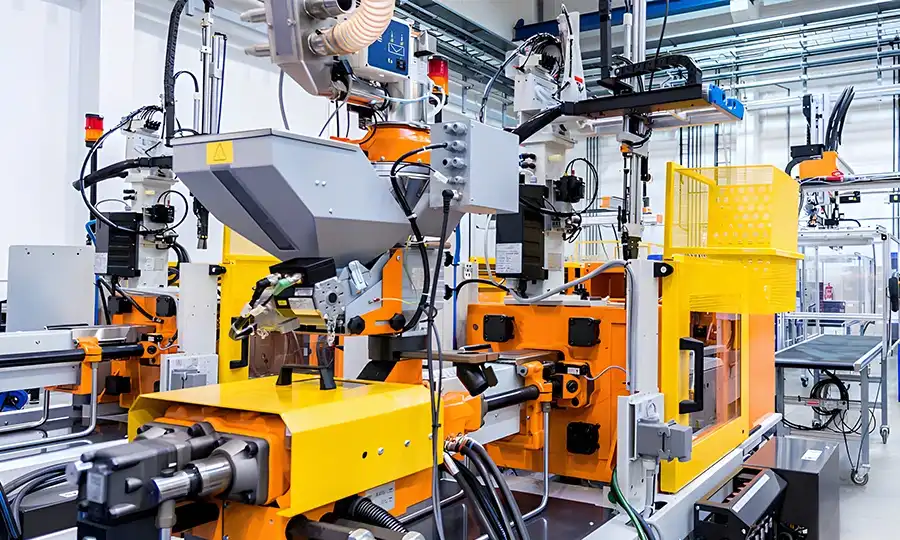
Parameters
Proper injection molding of the material requires careful control of process parameters. Deviations can result in surface defects, warpage, sink marks, and inconsistent dimensional accuracy.
Requisitos de secado
One of the advantages of PP in injection molding is that standard grades are hygroscopic to a very low degree. In most cases, pre-drying is not required for PP resin unless the material has been stored in very humid conditions or for extended periods. If drying is needed, a temperature of 70–80°C for 1–2 hours is sufficient.
However, glass-fiber-reinforced PP grades or specialty compounds may have different requirements — always consult the material datasheet.
Temperatura de fusión
The recommended melt temperature range for polypropylene resin injection molding is 220 – 280°C, with most standard applications processed at 230 – 260°C. Processing at the lower end of the range is preferred for thin-walled parts to minimize thermal degradation and color shift.
Temperatura del molde
Mold temperature significantly influences the surface finish, crystallinity, and mechanical properties of injection-molded polypropylene parts:
- Standard applications: 20 – 60°C
- High gloss surface finish: 40 – 80°C
- Improved crystallinity / dimensional stability: 50 – 80°C
Lower mold temperatures increase cycle time efficiency but may result in higher residual stress. Higher mold temperatures improve surface aesthetics and reduce warpage in thicker sections.
Presión y velocidad de inyección
| Parámetro | Gama recomendada |
|---|---|
| Presión de inyección | 80 – 160 MPa |
| Presión de mantenimiento | 40 – 80% of injection pressure |
| Velocidad de inyección | Medium to fast |
| Contrapresión | 5 – 20 MPa |
PP compound flows well and is generally considered easy to process in injection molding. Its melt flow index (MFI) ranges from < 1 g/10 min (high-MW grades for extrusion) to > 60 g/10 min (high-flow grades for thin-wall injection molding), so the right grade must be selected to match the part geometry and wall thickness.
Mold Shrinkage of Polypropylene
Polypropylene has a relatively high and anisotropic mold shrinkage of 1.0 – 2.5%, which is a critical consideration in PP mold design. Key factors:
- Unfilled PP shrinks more than mineral-filled or glass-fiber-reinforced PP
- Shrinkage is higher in the flow direction for reinforced grades
- Thick sections shrink more than thin sections, potentially causing sink marks
- Mold temperature and packing pressure both influence final shrinkage
Precise mold cavity compensation is essential when designing PP injection molds for tight-tolerance parts. At Dimud, our engineering team performs detailed shrinkage compensation analysis during the mold design phase to ensure dimensional accuracy in the final part.
Gate Design for PP Plastic Molds
Polypropylene is compatible with most gate types used in injection molding:
- Compuertas submarinas (de túnel) — suitable for most PP parts; allow automatic degating
- Pin gates — ideal for multi-cavity PP molds in hot runner systems
- Edge / fan gates — used for flat, large-area PP parts to control flow front and minimize warpage
- Sistemas de canal caliente — highly effective for high-volume PP production, minimizing waste and improving cycle times
Gate location should be positioned at the thickest section of the part to facilitate proper packing and reduce sink marks.
Common Defects in PP Injection Molding
| Defecto | Common Cause | Solución |
|---|---|---|
| Deformación / distorsión | High internal stress, uneven cooling, insufficient packing | Balance gate location, optimize mold cooling, increase holding pressure |
| Marcas de hundimiento | Insufficient packing pressure, thick-to-thin transitions | Increase holding time/pressure, redesign rib geometry |
| Flow marks / tiger stripes | Melt hesitation, unstable flow front | Increase melt temperature, injection speed |
| Stress whitening | Excessive mold-open speed, sharp corners | Round corners, reduce ejection speed |
| Tiro corto | Insufficient fill, cold mold, incorrect MFI grade | Increase injection pressure/speed, check gate size |
| Delaminación | Material contamination, moisture | Check material lot, clean barrel and screw |
PP Plastic Grades and Modifications
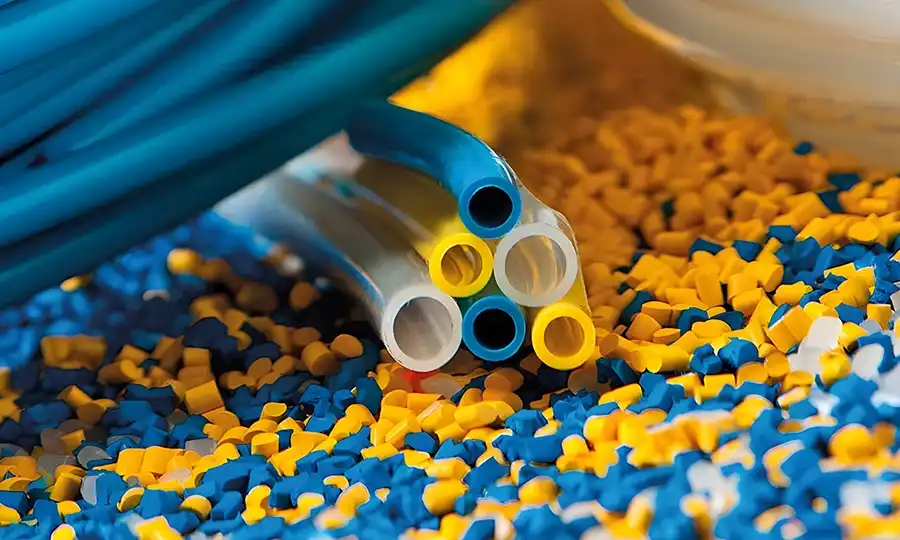
Pure PP resin is versatile, but commercially available PP resin encompasses a wide range of grades tailored for specific performance requirements:
Glass Fiber Reinforced PP (PP-GF)
Adding 10–40% glass fiber to PP significantly improves:
- Tensile strength (up to 2–3× unfilled PP)
- Flexural modulus and stiffness
- Heat deflection temperature
- Dimensional stability and reduced warpage
Trade-off: lower impact resistance compared to impact copolymer PP, reduced ductility, increased abrasiveness on mold surfaces.
Mineral Filled PP (PP + Talc / PP + CaCO₃)
Talc-filled or calcium carbonate-filled PP is widely used in automotive applications:
- Improved stiffness with minimal weight penalty
- Better HDT performance
- Improved nucleation → faster crystallization → shorter cycle times
- Talc-filled PP is the standard material for automotive instrument panels, door panels, and bumper fascias
Flame Retardant PP (PP-FR)
Standard polypropylene burns readily (UL94 HB). Flame-retardant-grade PP is modified with halogenated or halogen-free FR additives to achieve UL94 V-0 or V-2 ratings. Used in electrical enclosures, connectors, and appliance housings.
UV-Stabilized PP
Natural PP degrades rapidly under UV exposure, yellowing and becoming brittle. UV-stabilized PP grades incorporate HALS (hindered amine light stabilizers) and UV absorbers, extending outdoor service life to 5–10+ years. Essential for outdoor furniture, automotive exterior trim, and garden equipment.
Conductive / ESD PP
Carbon black or carbon fiber-filled PP grades provide electrostatic discharge (ESD) protection. Used in electronic component packaging, semiconductor equipment housings, and cleanroom applications.
Long Fiber Reinforced PP (PP-LFT)
Long glass fiber-reinforced PP offers superior impact resistance, fatigue performance, and creep resistance compared to short-fiber PP-GF. Increasingly used in structural automotive components as a lightweight alternative to metal and short-fiber reinforced plastics.
Applications of PP Plastic
Polypropylene’s combination of chemical resistance, flexibility, low cost, and processability makes it one of the most broadly applied materials in injection molding.
Automotive Applications
Polypropylene is the dominant thermoplastic in modern automotive design. Common injection-molded polypropylene automotive parts include:
- Bumper fascias and bumper beams — impact copolymer PP or talc-filled PP
- Instrument panels and dashboard components — talc-filled PP
- Door panels and pillar trim — mineral-filled PP
- Air intake manifolds and ducts — glass-fiber reinforced PP
- Battery cases and covers — flame-retardant or standard PP
- Fluid reservoirs (washer fluid, coolant expansion) — PP homopolymer or copolymer
Automotive-grade PP resin must meet strict dimensional tolerances, thermal cycling requirements, and surface appearance standards. Dimud’s automotive manufacturing capabilities are specifically designed to deliver the consistency and precision required by Tier 1 and Tier 2 automotive suppliers.
Packaging Applications
The largest global market for polypropylene material is packaging:
- Thin-wall food containers — high-MFI random copolymer PP
- Bottle caps and closures — PP homopolymer or impact copolymer
- Hinged packaging (clamshells, lunchboxes) — PP living hinge designs
- Medical packaging — gamma-radiation-stable PP grades
- Industrial containers and drums — high-density impact copolymer PP
Consumer Products
- Household appliances: Washing machine parts, dishwasher components, vacuum cleaner housings
- Furniture: Outdoor chairs, storage boxes, garden products
- Sports and leisure: Bicycle parts, sports equipment, luggage
- Personal care: Cosmetic packaging, razor handles, toothbrushes
Medical Device Applications
Polypropylene is widely used in medical and diagnostic devices due to its:
- Steam autoclave sterilizability (up to 134°C)
- Chemical resistance to disinfectants
- Regulatory compliance (FDA, USP Class VI grades available)
- Low extractables
Common medical the material applications include syringes, IV connectors, diagnostic device housings, centrifuge tubes, and specimen containers.
Electronics and Electrical Applications
- Cable conduits and wire management systems
- Terminal blocks and electrical connectors
- Appliance internal components
- Battery housings for consumer and industrial applications
PP Plastic vs. Other Common Injection Molding Materials
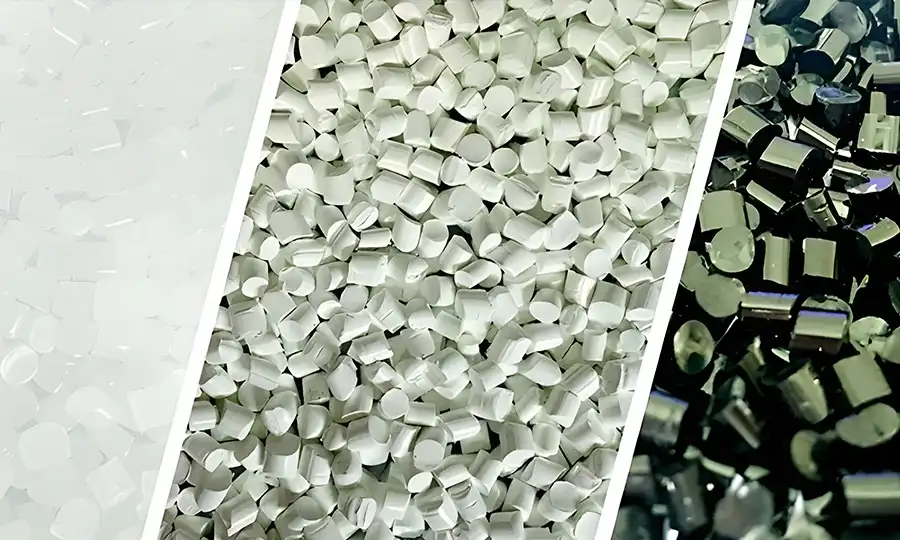
Selecting between PP and alternative materials is one of the most common decisions in injection mold design. The following comparisons highlight when polypropylene is the preferred choice — and when it is not.
PP vs. PE (Polyethylene)
Both polypropylene resin and PE (HDPE / LDPE / LLDPE) are polyolefins with excellent chemical resistance and low cost. Key differences:
| Propiedad | PP Plastic | HDPE |
|---|---|---|
| Rigidity | Más alto | Baja |
| Temperature resistance | Mejor | Worse |
| Resistencia a la fatiga | Much better (living hinge) | Pobre |
| Densidad | ~0.90 g/cm³ | ~0.95 g/cm³ |
| Clarity | Clearer (random coPP) | Hazy |
Choose PP when: you need stiffness, fatigue resistance, or higher temperature performance. Choose HDPE when: you need a softer, more flexible part with maximum chemical resistance to strong solvents.
PP vs. ABS
| Propiedad | PP Plastic | ABS |
|---|---|---|
| Coste | Baja | Más alto |
| Resistencia a los golpes | Good (impact coPP) | Excelente |
| Acabado superficial | Bien | Excelente |
| Resistencia química | Mejor | Moderado |
| Paintability / adhesion | Difficult (needs primer) | Easy |
| Temperature resistance | Moderado | Moderado |
Choose PP when: cost is a priority, chemical resistance is needed, and surface aesthetics are secondary. Choose ABS when: you need superior surface finish, easier secondary operations (painting, plating), or higher impact performance at room temperature.
PP vs. PA (Nylon)
| Propiedad | PP Plastic | PA6 / PA66 |
|---|---|---|
| Moisture absorption | Very low (< 0.02%) | High (2–8%) |
| Resistencia y rigidez | Baja | Más alto |
| Wear resistance | Moderado | Excelente |
| Resistencia química | Better to acids | Better to solvents |
| Coste | Baja | Más alto |
Choose PP when: low moisture absorption, chemical resistance, and cost efficiency are priorities. Choose PA when: structural performance, wear resistance, and high-load applications are required.
Advantages and Limitations of PP Plastic
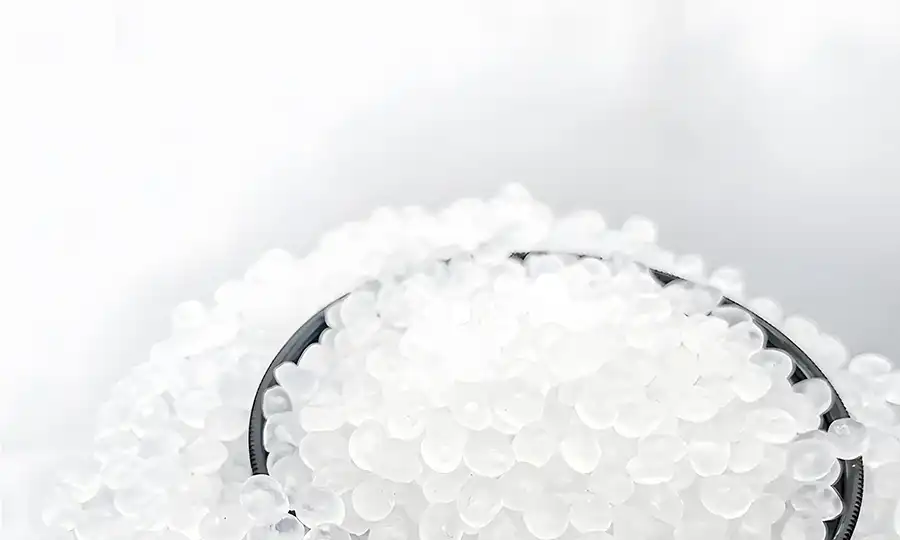
Ventajas
Low cost and wide availability: PP resin is one of the most affordable engineering-grade thermoplastics globally, with a mature supply chain and broad availability of specialty grades.
Lightweight construction: With a density of ~0.90 g/cm³, polypropylene parts are lighter than comparable parts made from ABS, PC, or PA — reducing material cost and product weight simultaneously.
Excellent chemical resistance: PP compound withstands a broad spectrum of chemicals, making it suitable for contact with cleaning agents, food products, pharmaceutical substances, and industrial chemicals.
Living hinge capability: The outstanding fatigue resistance of PP homopolymer enables the integration of living hinges directly into injection-molded parts, eliminating assembly steps and reducing part count.
Easy processing: polypropylene polymer has a wide processing window, low moisture sensitivity (no pre-drying typically required), and good flowability — contributing to efficient injection molding cycles and low scrap rates.
Reciclabilidad: the resin is fully recyclable (resin identification code #5) and increasingly incorporated into circular economy initiatives. Many PP grades are also compatible with mechanical recycling streams.
Regulatory compliance: Food-contact-grade and medical-grade PP resins are available with FDA, EU 10/2011, and USP Class VI compliance.
Limitaciones
Low-temperature brittleness: Standard PP homopolymer becomes brittle below approximately 0°C. For cold-temperature applications, impact copolymer PP or rubber-toughened PP grades must be specified.
High mold shrinkage and warpage tendency: The relatively high shrinkage of polypropylene (1.0–2.5%) demands careful mold design, particularly for flat or large-area parts where differential shrinkage can cause significant warpage.
Poor UV resistance (unstandardized grades): Unmodified this material degrades rapidly under UV exposure. UV-stabilized grades resolve this limitation but at additional cost.
Difficult bonding and painting: The non-polar, low-surface-energy nature of PP resin makes adhesive bonding, painting, and overmolding more challenging than with polar polymers like ABS or PC. Surface pretreatment (flame treatment, plasma treatment) or adhesion promoters are typically required.
Creep under sustained load: Like most semi-crystalline polymers, polypropylene material exhibits creep (slow dimensional change) under sustained stress, particularly at elevated temperatures. Designs involving sustained mechanical loads should account for this behavior.
Limited transparency: While random copolymer PP offers reasonable clarity for packaging, standard PP grades are translucent to opaque. For truly transparent applications, PC, PETG, or SAN may be more appropriate.
Sustainability and Regulatory Compliance
Recyclability of PP Plastic
Polypropylene carries resin identification code #5 and is one of the most widely recycled thermoplastics in the world. Recycled PP (rPP) is used in a growing number of applications, from automotive interior components to consumer packaging.
the material does not contain BPA, phthalates, or halogens in its base polymer — making it one of the more environmentally favorable conventional plastics in terms of toxicological profile.
Bio-Based Polypropylene
Bio-based PP (derived from sugarcane ethanol or other biomass sources rather than petroleum) is an emerging development in sustainable materials. It offers chemically identical performance to fossil-based PP while reducing carbon footprint. Several global resin producers now offer commercial quantities of bio-PP grades.
Regulatory Compliance
- FDA: Many PP grades comply with FDA 21 CFR regulations for food contact
- EU 10/2011: European food contact materials regulation
- Clase VI de la USP: For medical device applications
- RoHS / REACH: Standard PP is generally RoHS and REACH compliant
- UL recognition: Available for flame-retardant PP grades (V-0, V-2, HB)
Always verify the specific grade and lot compliance with your resin supplier before use in regulated applications.
How to Select the Right PP Grade for Injection Molding
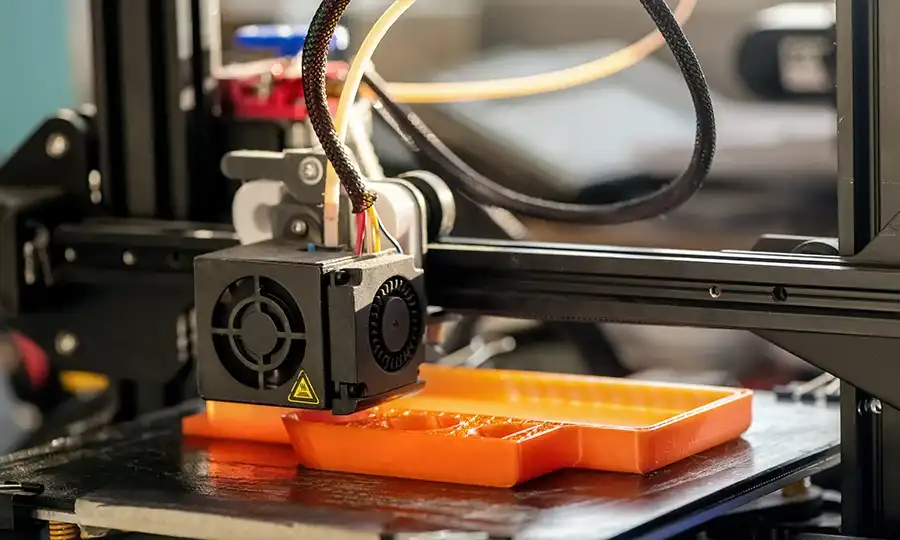
With hundreds of commercially available PP grades, grade selection is one of the most impactful decisions in polypropylene resin part design. Key selection criteria:
1. Structural requirements: If high stiffness and strength are needed, consider glass-fiber-reinforced PP (PP-GF10 to PP-GF40). For standard rigidity, PP homopolymer is the baseline.
2. Impact performance: For parts subject to low-temperature impact or repeated dropping, specify impact copolymer PP or rubber-toughened grades.
3. Wall thickness and flow path: Thin-walled parts (< 1.5 mm) with long flow paths require high-MFI PP grades (MFI > 20 g/10 min). Thicker structural parts benefit from lower MFI grades for better mechanical performance.
4. Temperature exposure: If the part will be exposed to sustained temperatures above 80°C, consider talc-filled or GF-reinforced PP, or evaluate engineering plastics such as PA or PC.
5. Surface and appearance: For high-gloss or class-A surface applications, select low-filler PP grades and optimize mold temperature. For painted surfaces, ensure compatibility with the specified primer or surface treatment process.
6. Regulatory environment: For food-contact, medical, or electrical applications, verify regulatory compliance of the specific PP grade, not just the base polymer family.
7. Cost target: Balance performance requirements against resin cost. Unfilled PP homopolymer is among the lowest-cost structural thermoplastics; specialty grades (LFT-PP, conductive PP, FR-PP) command a significant premium.
PP Plastic Injection Molding at Dimud
At Dimud, polypropylene injection molding is one of our core manufacturing competencies. As a one-stop professional injection molding solutions provider, we support clients from the early stages of product development through to mass production and supply chain management.
Our PP compound injection molding capabilities include:
- Design for Manufacturability (DFM) for PP parts: Wall thickness optimization, rib design, living hinge integration, draft angle analysis, and shrinkage compensation planning
- Custom PP mold development: High-precision, long-life injection molds designed specifically for polypropylene’s processing characteristics, including optimized cooling channel layouts to control PP warpage
- Multi-cavity and hot runner PP molds: For high-volume PP production with minimized cycle times and material waste
- Specialty PP compound processing: Glass-fiber reinforced PP, talc-filled PP, flame-retardant PP, and UV-stabilized PP
- Secondary operations: Ultrasonic welding, assembly, surface treatment, and packaging for polypropylene polymer parts
- Quality control: Dimensional inspection, mechanical testing, and material verification for all PP injection-molded components
We serve clients in the automotive, medical, consumer electronics, robotics, and industrial sectors across Europe, North America, and the Middle East.
If you are developing a new product requiring the resin injection molding — from prototype to mass production — contact the Dimud team to discuss your project requirements.
Frequently Asked Questions About PP Plastic
polypropylene stands for polypropylene — a semi-crystalline thermoplastic polymer produced by the polymerization of propylene monomers.
Yes — food-grade PP resins that comply with FDA 21 CFR and/or EU 10/2011 regulations are widely used for food containers, bottle caps, and food-processing equipment.
Standard this material can be used continuously up to approximately 100°C. Under short-term or no-load conditions, PP can tolerate temperatures up to its melting point (~160–175°C). For sustained high-temperature applications, filled or reinforced PP grades offer improved heat deflection temperatures.
Yes. PP resin is recyclable under resin code #5. It is one of the most recycled thermoplastics globally, with established collection and reprocessing infrastructure in many countries.
polypropylene material has a low surface energy (~29–31 mN/m) due to its non-polar, hydrocarbon nature. This makes it difficult for conventional paints and adhesives to bond. Effective painting of PP requires surface pretreatment (flame treatment, plasma, or corona treatment) or the use of PP-compatible adhesion promoters.
PP homopolymer consists entirely of propylene units, offering higher stiffness and better fatigue resistance. PP copolymer incorporates ethylene units to improve impact resistance, particularly at low temperatures. Impact copolymer PP is the preferred grade for outdoor, automotive, and cold-temperature applications.
Warpage in the material parts is primarily caused by differential shrinkage — uneven cooling rates across the part, or variations in wall thickness leading to inconsistent crystallization. Solutions include balanced gate design, optimized cooling channel layout, uniform wall thickness, and in some cases switching to talc-filled PP for reduced and more uniform shrinkage.