
3D Printing Services
Validate your design before tooling investment — reduce risk, accelerate development, and transition seamlessly to injection molding when you’re ready.
- Delivery as fast as three days
- FDM · SLA · SLS
- Prototype → Mass Production
An NDA can be signed if needed before the quotation.
Our 3D Printing Services
Three technical approaches that cover all requirements from proof of concept to functional testing. Based on your precision requirements, material properties, and delivery schedule, we will match you with the most suitable industrial-grade 3D printing solution.
Fused Deposition Modeling(FDM)
Our FDM 3D printing service is ideal for teams that need fast, affordable parts without compromising on structural integrity.
Low-cost and fast turnaround, ideal for early-stage structural validation and concept prototyping
Molding accuracy
±0.2 mm
Ideal Use Cases
- Product structural validation
- Assembly interference testing
- Low-cost, iterative prototyping
Typical Turnaround Time
1–3 business days
Stereolithography(SLA)
SLA prototyping delivers surface quality close to injection-molded parts — ideal for client presentations and design sign-off.
High-precision and smooth surfaces—the ideal solution for verifying product appearance and fine details
Molding Accuracy
±0.1 mm
Ideal Applications
- Product appearance review samples
- Transparent parts and optical components
- Precision prototypes with high-detail features
Typical Lead Time
2–4 business days
Selective Laser Sintering(SLS)
SLS rapid manufacturing eliminates support structures, enabling complex geometries that other industrial 3D printing methods cannot achieve.
Industrial-grade solutions for complex geometries and functional parts that require no supporting structure.
Molding accuracy
±0.15 mm
Optimal Use Cases
- Functional assembly test pieces
- Complex internal cavities and hollow structures
- Small-batch industrial-grade functional parts
Typical delivery time
3–5 business days
Not sure which technology fits your project? Our engineers will review your design and recommend the right process — at no cost.
Engineering-Grade Material Library—Finding the Right Material for Every Application
The choice of material directly determines the value of your prototype for testing. Our 3D printing services cover a full range of materials, from concept models to functional prototypes, ensuring that you receive not just a “shape” but a truly testable engineering part.
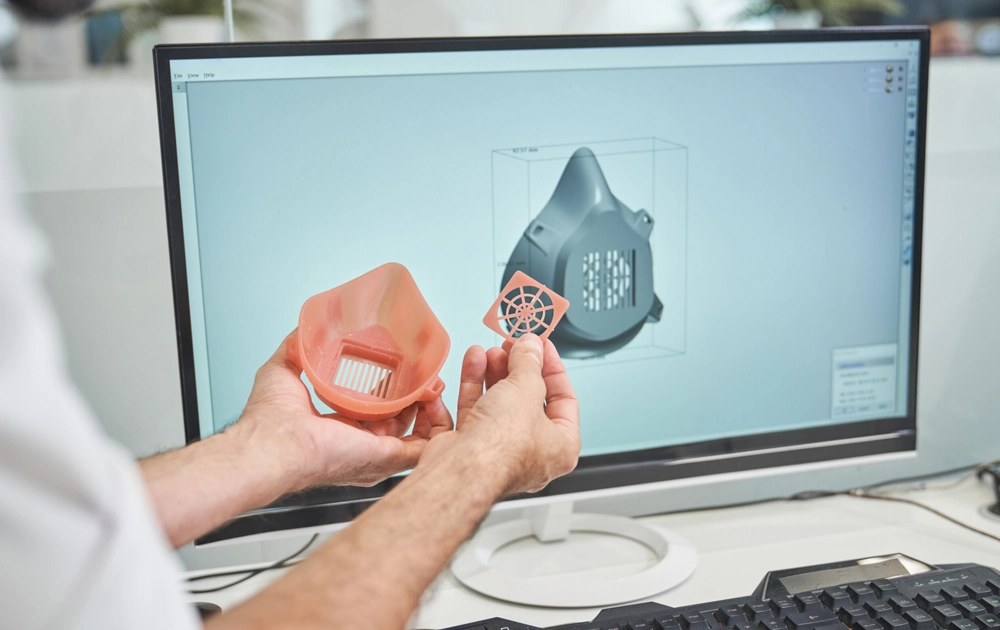
ABS
Key Properties:
- High-impact resistance and excellent toughness
- Heat resistance: approx. 85°C
- Post-processing options: sanding, painting, bonding
Recommended Applications:
- Structural component assembly testing
- Housing functional validation
- Tooling and fixtures
PETG
Key Properties:
- Chemical resistance, high transparency
- Heat resistance: approx. 80°C
- Low shrinkage, good dimensional stability
Recommended Applications:
- Parts in contact with liquids
- Translucent structural components
- Food-grade prototyping
Nylon(PA6/PA12)
Key Properties:
- High toughness, wear-resistant
- Heat resistance: approx. 120°C
- Slightly hygroscopic; storage conditions must be monitored
Recommended Applications:
- Gears
- Latches
- Moving parts
- Functional components requiring wear resistance
TPU
Key Features:
- High toughness, wear-resistant
- Abrasion- and oil-resistant
- Available in various hardness levels (Shore 85A–95A)
Recommended Applications:
- Seals
- Shock-absorbing pads
- Soft-touch housings
- Elastic connectors
Standard Resin
Key Properties:
- Smooth surface with high-fidelity detail reproduction
- Hard and brittle, suitable for static display
- It can be dyed, electroplated, or spray-painted
Recommended Applications:
- Appearance Review Samples
- Customer Prototype Demonstration
- Detailed Structure Verification
ABS-Like Resin
Key Properties:
- Combines hardness and toughness, making it resistant to breakage
- Heat resistance: approx. 65–75°C
- Surface quality comparable to injection-molded parts
Recommended Applications:
- Functional enclosure prototype
- Snap-fit structure validation
- Assembly interference testing
Clear Resin
Key Properties:
- High transparency; can be polished to optical clarity
- Suitable for verifying optical paths and fluid channels
- Transparency of 90%+ after post-processing
Recommended Applications:
- Transparent housing
- Lens cover
- Visualization prototype of fluid channels
PA12 Nylon
Key Properties:
- Excellent overall mechanical properties, comparable to injection-molded parts
- Heat resistance: approx. 150°C
- No support structures are required; complex structures can be printed as a single piece
Recommended Applications:
- Functional assemblies
- Complex geometric components
- Small-batch industrial parts
Glass-Filled Nylon(PA12-GF)
Key Properties:
- Significantly higher rigidity and strength than standard PA12
- Heat resistance: approx. 175°C
- Minimal thermal deformation and high dimensional accuracy
Recommended Applications:
- High-rigidity structural components
- Components for high-temperature environments
- Prototypes for automotive and industrial equipment
Cross-industry manufacturing experience and a profound understanding of prototype validation standards in each industry
Different industries have significantly varying requirements for 3D printing services—with differing standards for precision, material compliance, and testing conditions. We provide tailored solutions based on industry-specific characteristics, rather than offering a one-size-fits-all printing service.
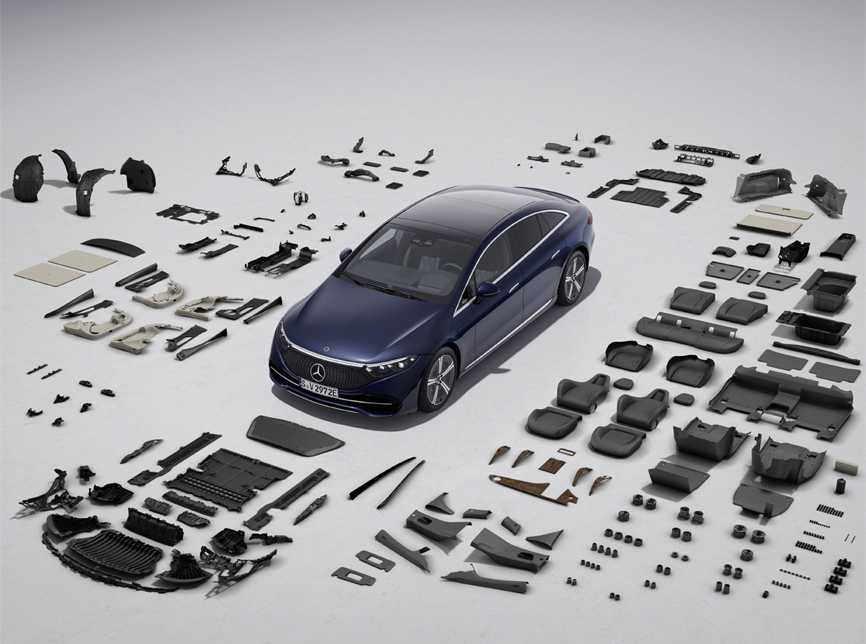
Automotive parts development involves long cycles and frequent design revisions, and traditional prototype manufacturing often slows down the overall project timeline. Components such as interior trim and electronic system housings have strict requirements for dimensional accuracy and assembly consistency.
Our Solutions:
- Assembly interference verification for interior structural components to confirm fit accuracy before tooling
- Functional prototyping of electronic control unit (ECU) housings and wiring harness mounting brackets
- Rapid customization of tooling and fixtures to support assembly process optimization on production lines
Key Applications
Dashboard component prototypes / Door panel snap-fit structural components / Sensor brackets / Wiring harness protective sleeves / Lighting assembly housing verification parts
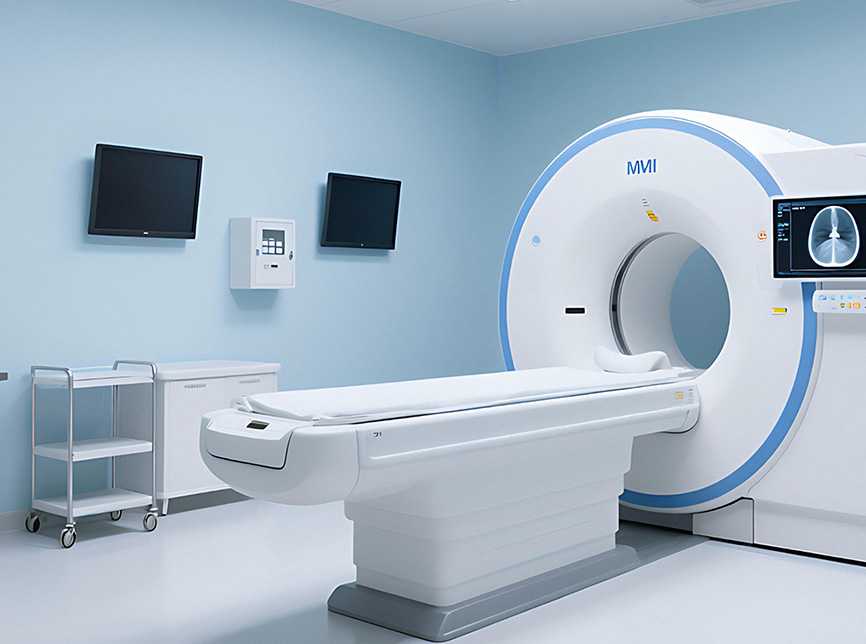
Medical device R&D is subject to strict regulatory requirements, and prototype production must meet cleanliness and biocompatibility standards. At the same time, product iterations occur frequently, and traditional mold-making methods cannot support the high-frequency design validation needs.
Our Solutions:
- Ergonomic validation of diagnostic device housings and the grip sections of handheld instruments
- Production of functional prototypes using medical-grade resin materials that meet cleanroom standards
- Preparation of samples required by regulatory authorities before formal injection molding
Key Applications
Diagnostic instrument housings / Prototypes of surgical aids / Components for in vitro diagnostic devices / Structural parts for medical carts / Housings for wearable medical devices

Robotics and energy storage products are currently undergoing rapid iteration, characterized by complex structural designs and frequent updates. During the transition from R&D to small-batch validation, sufficient production flexibility is required without compromising the mechanical properties of components.
The challenges we address
- Integral molding of complex structures for robotic arm end-effectors and joint connectors, eliminating the need for assembly
- Temperature resistance validation for battery module mounting brackets and thermal management structural components
- Support for rapid delivery ranging from single R&D prototypes to small batches of hundreds of units, with no minimum order quantity (MOQ) restrictions
Key Applications
Robotic joint structural components / End-effector housings / Battery pack mounting brackets / Energy storage system cable management assemblies / Custom fixtures for automation equipment
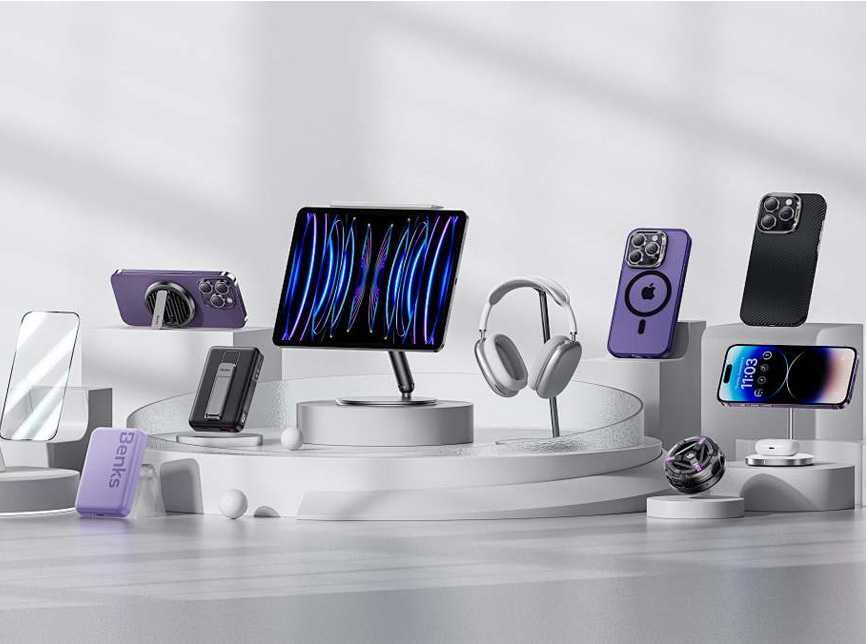
Consumer electronics have extremely short time-to-market windows, and their appearance and structure require multiple rounds of review; functional components such as connectors and thermal management structures have strict dimensional tolerance requirements, and discovering issues only after tooling has been produced results in significant losses.
What We Solve
- Production of CMF (Color, Material, Finish) appearance review samples for consumer electronics enclosures
- Prototypes for insertion and extraction force testing of connectors and interface structures
- Verification of airflow paths for thermal management and heat dissipation structures, supporting thermal management design optimization
Key Applications
Smart hardware enclosures / Charger and adapter enclosures / PCB mounting brackets / Industrial control panels / Structural components for wearable devices
No matter what specific requirements your industry has for prototype validation, our engineering team possesses the relevant industry experience and materials expertise to get involved from the project’s inception and provide professional recommendations on the manufacturing process.
Why choose Dimud for 3D printing?
More than just printing—we’re your manufacturing partner from prototyping to mass production.
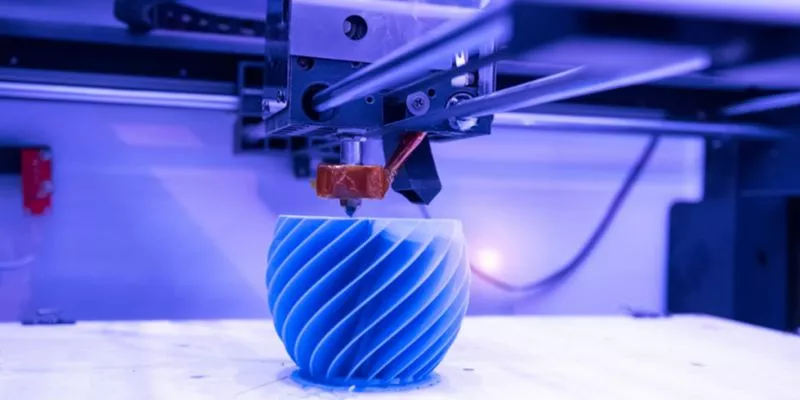
Dimud’s 3D printing services cover the entire process, from custom prototypes to low-volume production—one team, supporting you every step of the way.
Three-factory collaboration, no need to switch suppliers throughout the process
Mold shop + CNC shop + electronics assembly shop: Once 3D printing validation is complete, mold making and mass production proceed directly within the same system.
Engineers get involved, rather than simply executing the print
After each project is submitted, the engineering team proactively conducts a DFM review to identify structural risks and provide optimization recommendations before production.
No MOQ; orders start at a single unit
We can accommodate orders ranging from 1 to 500 units. This is ideal for R&D teams in the validation phase who do not want to bear the burden of inventory.
Quotes within 24 hours, delivery in as little as 3 days
We review submissions and provide quotes within 24 hours of receiving your documents. Standard parts are delivered within 3 business days, and the progress timeline is transparent and trackable.
Quality Control in Compliance with Export Standards
Every batch of delivered items undergoes dimensional inspection, and inspection reports are provided for critical components to meet the quality traceability requirements of the European, North American, and Middle Eastern markets.
Material Selection Aligned with Mass Production Specifications
Based on your target material for future injection molding, we recommend prototype solutions that most closely resemble mass production conditions, ensuring that test results are truly useful for mass production decisions.
3D Printing vs Injection Molding
Most of our clients start with 3D printing to validate — then transition to injection molding for mass production. We support both in one place.
| Dimension | 3D Printing | Injection Molding |
|---|---|---|
|
Suitable quantity |
Items 1–500 |
1,000 or more |
|
Mold costs |
None |
High |
|
Delivery Time |
1–7 days |
3–6 weeks |
|
Design modifications |
No cost |
Requires new tooling |
|
Material Types |
Diverse |
Limited by the injection molding process |
|
Surface finish |
Medium |
High |

Frequently Asked Questions about 3D Printing Services
We accept STL, STEP, IGES, and OBJ files. We recommend submitting files in STEP format whenever possible, as it preserves complete geometric information and helps engineers accurately assess structural details.
It depends on the process: FDM has an accuracy of approximately ±0.2 mm, SLA approximately ±0.1 mm, and SLS approximately ±0.15 mm. If you have strict tolerance requirements, please specify critical dimensions when submitting your files, and we will handle them accordingly.
The raw surface finish of 3D-printed parts varies depending on the process. We offer post-processing options such as sanding, painting, electroplating, and sandblasting, and we can customize the surface finish to meet aesthetic or functional testing requirements.
Standard FDM/ABS parts have a heat resistance of approximately 85°C, SLA parts approximately 65–75°C, SLS PA12 parts up to 150°C, and glass-fiber-reinforced SLS parts up to 175°C. For high-temperature applications, we recommend the SLS process combined with reinforced materials.
After submitting your files, our engineers will conduct a free DFM review to assess printability issues such as wall thickness, overhangs, and fine details, and provide feedback on findings and optimization recommendations within 24 hours.
In some cases, yes—for example, small-batch industrial jigs or internal structural components. However, for mass-produced consumer products, we recommend using 3D printing services for validation, followed by injection molding for large-scale production to achieve more consistent quality and lower unit costs.
Yes. An NDA can be signed before formal production, and all customer design files, product structures, and project information are subject to strict confidentiality protocols.
Standard orders include visual inspection and basic dimensional verification. For parts with critical dimensions or orders with specific inspection requirements, we can provide formal dimensional inspection reports to meet customer internal review and supplier qualification requirements.
This is one of Dimud’s core advantages that sets us apart from ordinary rapid prototyping services. Once prototype validation is complete, our mold engineers step in directly to advance mold development based on the validated design, eliminating the need to onboard new suppliers or renegotiate technical requirements.
After production is complete, standard express shipping (DHL/FedEx) typically takes 3–5 business days to reach Europe and North America. We coordinate customs clearance documents in advance to ensure a smooth process and prevent delays caused by documentation issues.