

CNC Prototyping Services
Your prototype is the first step to production. We make sure both happen under one roof.
- ±0.01mm Tolerance
- 3–7 Days Lead Time
- 50+ Materials
- Prototype → Mass Production

What is CNC Prototyping?
CNC prototyping is a manufacturing process that uses computer-numerically controlled (CNC) machine tools
to perform precision subtractive machining on solid materials, thereby producing high-precision prototype parts.
Unlike additive manufacturing, CNC machining starts with a solid block of raw material and removes excess material through multiple processes such as milling,
turning, and drilling, ultimately producing a solid part that conforms to the design dimensions.
This process accurately reproduces the product’s geometric structure, material mechanical properties, and surface
finish, enabling prototype parts to achieve reliability comparable to
production parts in terms of appearance, fit accuracy, and functional testing—a core
advantage that other rapid prototyping processes struggle to match.
Core Technical Principles of CNC Prototyping
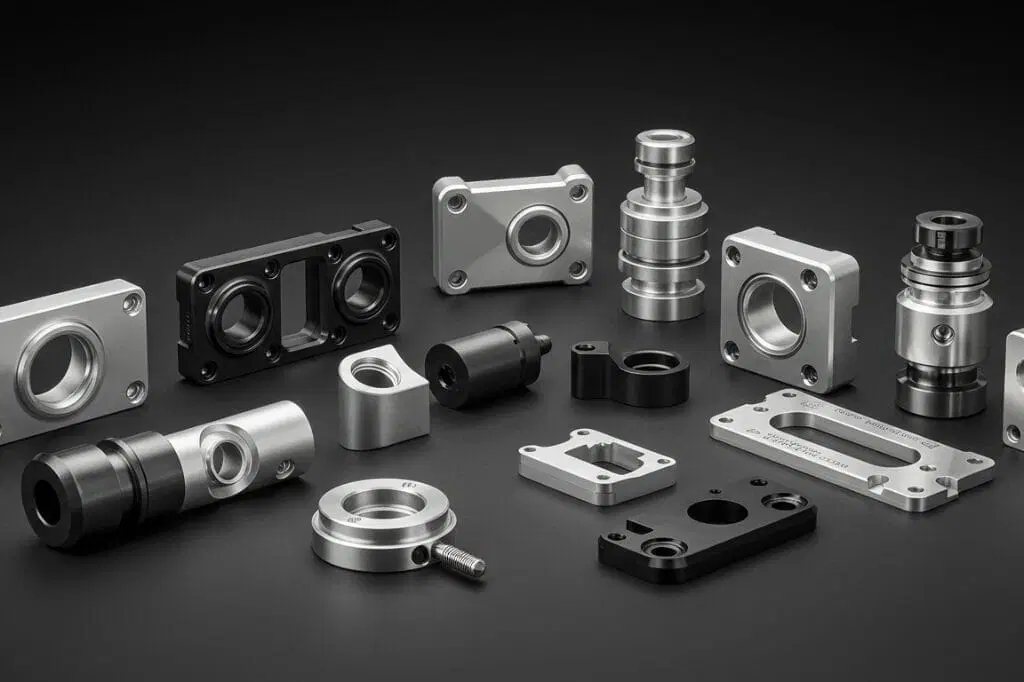
Subtractive Manufacturing
Precisely remove excess material from the workpiece to preserve the intended shape.
Unlike the layer-by-layer build-up of 3D printing, this process results in more uniform residual stresses,
and the internal structure is closer to that of the final product.
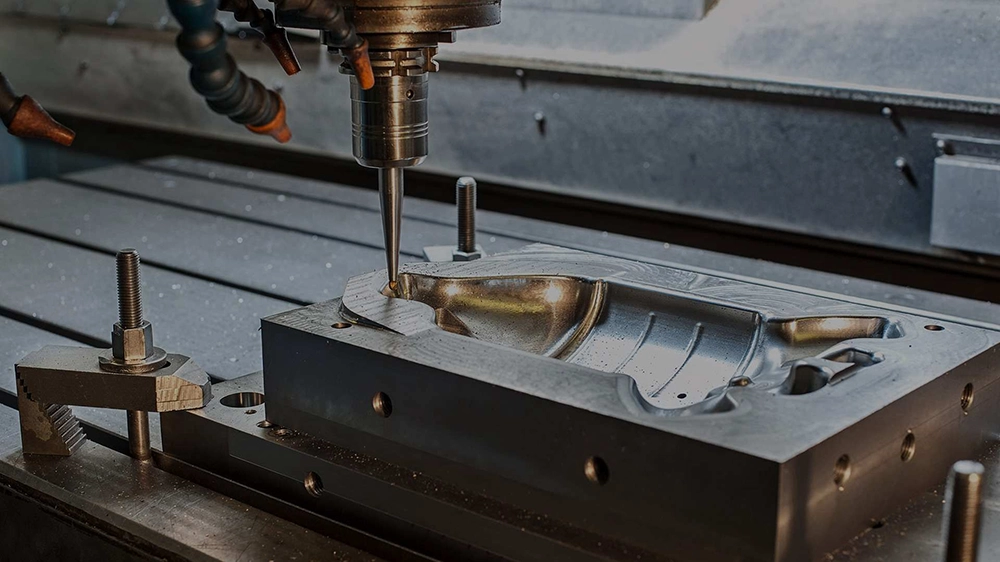
CNC Program Control
Engineers generate machining paths using CAD models,
and the machine tool performs high-precision motion control according to the program instructions,
eliminating human operational errors.
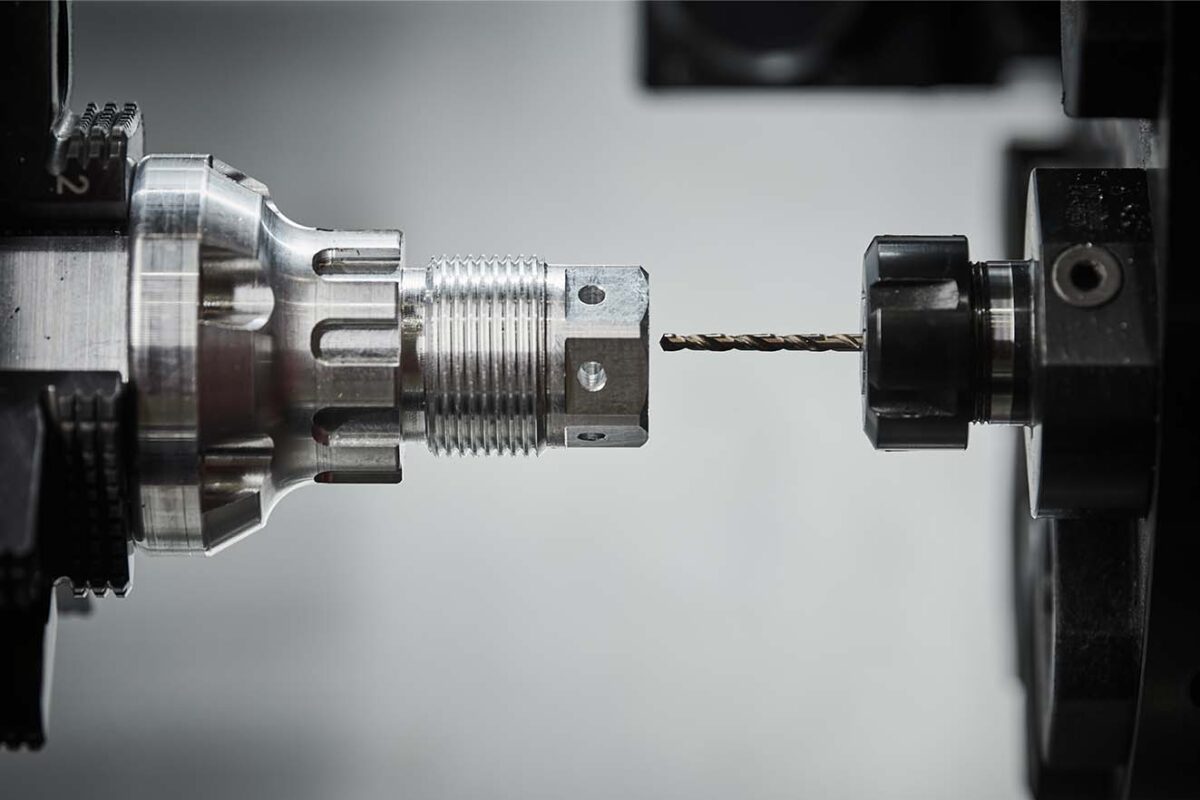
Multi-axis machining capability
3-axis → 4-axis → 5-axis: The higher the number of axes,
the greater the geometric complexity that can be machined,
allowing for the machining of more surfaces in a single setup,
and reducing the accumulation of positioning errors.
At Which Stage of Product Development Is CNC Prototyping Suitable?
Stage 1
Concept Validation
Verify the rationality of the exterior design and basic structure
Suitable for: exterior components, housing-type parts
Stage 2
Functional Prototype
Verify assembly fits, motion mechanisms, and structural loads
Requirements: Real materials + precise tolerances
CNC prototyping is the preferred process for this stage
Stage 3
Engineering Validation
For EMC / Environmental Testing / Regulatory Submission
Requirements: Performance equivalent to production parts
CNC prototyping can directly provide samples that meet testing requirements
Stage 4
Pilot Run
Conduct small-batch market validation before tooling development
CNC can quickly deliver small-batch parts without the need for tooling
CNC Prototyping Capabilities Built for Complex, Precision Parts
Behind every complex part lies a comprehensive test of machining capabilities.
A single machining method often means compromises—compromises in structure,
compromises in precision and compromises in lead time.
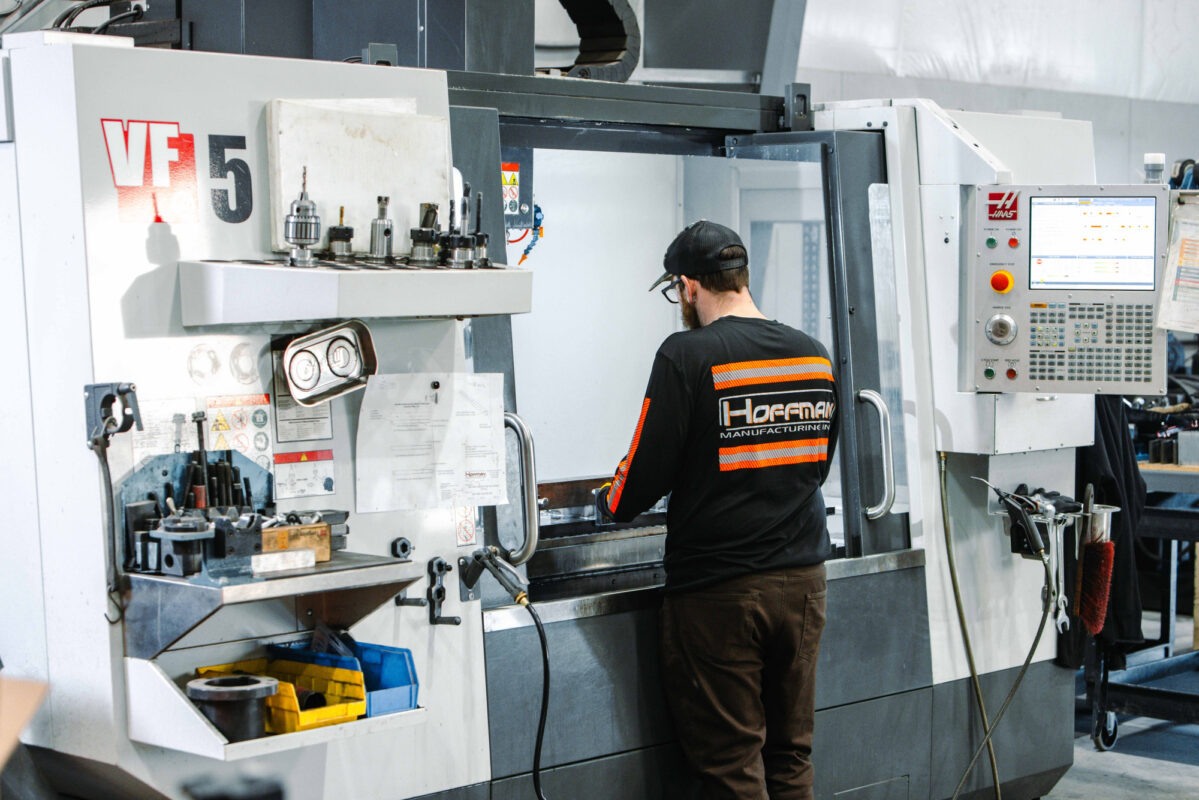
Dimud is equipped with a wide range of CNC machining capabilities, covering milling, turning,
grinding, and multi-axis machining. Whether your parts feature irregular curved surfaces, deep-hole structures,
high-hardness materials or stringent surface finish requirements,
We can complete the entire process in-house without outsourcing.
This means you only need to submit a single file—we take care of the rest.
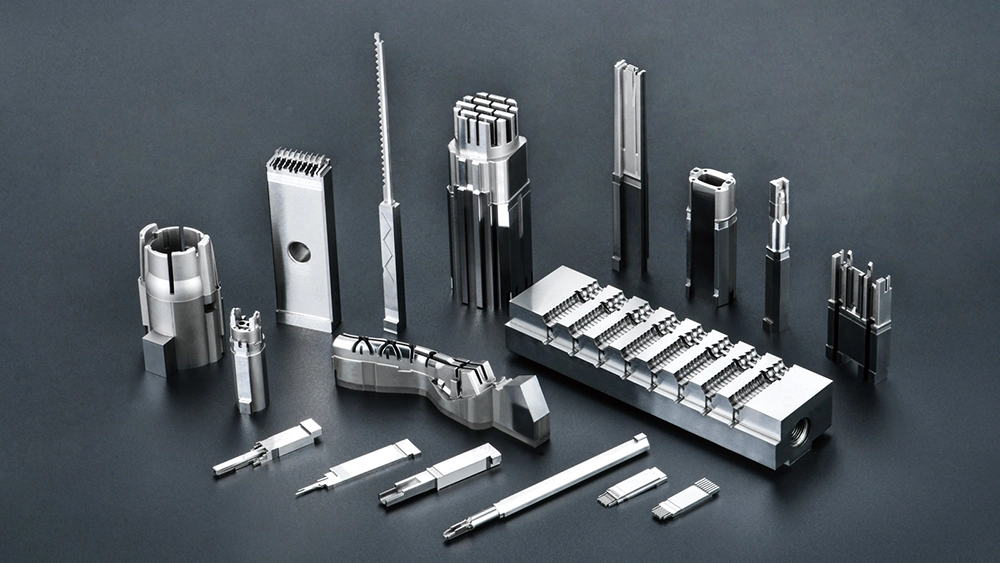
Applications:
Flat contours, cavities, contour machining, and hole pattern machining
Supports 3-axis, 4-axis, and 5-axis simultaneous milling, enabling multi-surface simultaneous machining,
reducing the number of setups, and effectively ensuring positional tolerances between surfaces.
Suitable for high-precision machining of structural components, housings, and bracket-type parts.
Applications:
Rotary parts such as shafts, sleeves, and discs
Suitable for precision machining of rotationally symmetric structures, including cylindrical surfaces, tapered surfaces, threads, and grooves.
Supports turning-milling combination operations, allowing both turning and milling processes to be completed in a single setup,
thereby avoiding coaxiality deviations caused by multiple setups.
Applications:
High-hardness materials, high-precision mating surfaces, and extremely low surface roughness requirements
For high-hardness materials such as hardened steel and tool steel, or for functional mating surfaces with extremely high requirements for dimensional accuracy and
surface roughness, CNC grinding
is a process that cannot be replaced by milling or turning.
It can control surface roughness to below Ra 0.2 μm, meeting the demanding machining requirements of precision mating surfaces,
sealing surfaces, and guideway surfaces.
5-Axis CNC Machining
Applications:
Complex surfaces, deep cavities, and aerospace-grade irregular parts
Five-axis machining allows the tool to approach the workpiece from any angle, enabling
complete machining of complex geometries in a single setup without the need for flipping or repositioning.
Compared to 3-axis solutions, this significantly reduces cumulative errors caused by multiple setups,
making it particularly suitable for high-precision irregular parts used in medical devices and electronic components.
Deep Hole Drilling
Applications:
Cooling channels, hydraulic circuits, and small-diameter precision holes
Deep-hole machining with a depth-to-diameter ratio exceeding 10:1 places extremely high demands on tool rigidity,
coolant control, and chip evacuation capabilities.
Dimud possesses specialized deep-hole machining capabilities,
making it suitable for cooling channels in molds, hydraulic valve bodies, and flow path structures in medical devices.
CNC Tapping & Threading
Applications:
Standard/non-standard threads, internal/external threads, and precision threaded fits
Supports precision machining of metric, imperial, pipe threads, and custom-pitch threads,
meeting the stringent requirements for thread accuracy
and fit grades in structural fasteners, fastening systems, and sealing structures.
Our Equipment Capabilities
| Parameter Items | Scope of Services |
|---|---|
|
Maximum processing dimensions |
1200 × 600 × 500 mm |
|
Minimum feature size |
0.3mm |
|
Positioning accuracy |
±0.005mm |
|
Repeatability |
±0.003mm |
|
Maximum number of machining axes |
5-axis simultaneous machining |
|
Surface roughness (milling) |
Ra 0.8 μm |
|
Surface roughness (grinding) |
Ra less than 0.2 μm |
|
Deep-hole drilling depth-to-diameter ratio |
Up to 20:1 |
|
Supported part material hardness |
Maximum HRC 65 (grinding process) |
The above specifications represent the standard performance range. Please consult an engineer regarding any special requirements.
Materials for CNC Prototyping — Matched to Your Application
The choice of materials directly determines the upper limit of a part’s performance.
Even with the same structural design, using the wrong material—
insufficient strength, dimensional drift, or surface failure—
can render validation results meaningless.
Dimud offers a comprehensive range of materials, including metals and engineering plastics.
Each material has been validated through machining processes,
ensuring that performance data is verifiable from raw material to finished product.
| Material | Grade / Alloy | Key Properties | Typical Applications |
|---|---|---|---|
| Aluminum | 6061 / 7075 | Lightweight · High thermal conductivity · Excellent machinability | Electronic heat sinks · Aerospace structures · Consumer product enclosures |
| Stainless Steel | 304 / 316L / 17-4PH | Corrosion resistant · High strength · Biocompatible | Medical instruments · Food equipment · Chemical valve bodies |
| Steel | 1045 / 4140 | High strength · High toughness · Heat-treatable | Drive shafts · Structural brackets · Jigs & fixtures |
| Tool Steel | D2 / H13 / S7 | High hardness · Excellent wear resistance · Thermal stability | Mold inserts · Stamping dies · Precision tooling |
| Titanium | Grade 2 / Grade 5 | High strength-to-weight ratio · Corrosion resistant · Biocompatible | Aerospace parts · Medical implants · High-end structural components |
| Brass | C360 | Excellent machinability · Electrically conductive · Wear resistant | Electrical connectors · Precision fittings · Decorative parts |
| Copper | C101 / C110 | Exceptional electrical & thermal conductivity | Heat sinks · Electrical contacts · Electrodes |
| Inconel | 625 / 718 | High-temperature resistance · Oxidation resistant · Strength retention at elevated temps | Aerospace engines · High-temperature hot-section components |
| Material | Key Properties | Typical Applications |
|---|---|---|
| PEEK | High-temp resistant (up to 260°C) · High strength · Excellent chemical resistance | Medical devices · Semiconductor equipment · Aerospace structural parts |
| Delrin (POM) | Low friction · High rigidity · Outstanding dimensional stability | Gears · Sliding components · Precision fit structures |
| Nylon (PA) | High toughness · Wear resistant · Self-lubricating | Moving parts · Structural components · Industrial accessories |
| Polycarbonate | High optical clarity · High impact strength · Dimensional stability | Optical parts · Electronic enclosures · Transparent functional parts |
| ABS | Easy to machine · Balanced mechanical performance | Consumer product housings · Functional validation parts |
| PTFE | Extremely low friction coefficient · Resistant to most chemicals · Wide operating temp range | Seals · Chemical bushings · Electrical insulating components |
| Ultem (PEI) | High-temp resistant · Flame retardant · High strength | Aerospace interiors · Medical devices · Electrical components |
| HDPE | Chemical resistant · Food-grade safe | Liquid containers · Food processing equipment · Chemical parts |
| Material | Key Properties | Typical Applications |
|---|---|---|
| Carbon Fiber CFRP Sheet / Plate | Exceptional strength-to-weight ratio · Ultra-lightweight · Anisotropic structure | Aerospace components · Racing structures · UAV / drone frames |
| G10 / FR4 Glass-epoxy laminate | Electrical insulation · High-temp resistant · Stable dimensions | PCB support brackets · Electrical insulation structures |
| Engineering Ceramic Al₂O₃ / ZrO₂ | Ultra-high hardness · Wear resistant · Electrically insulating | Semiconductor equipment · Precision wear-resistant parts |
Our CNC Prototyping Process
Frequently Asked Questions About CNC Prototyping
CNC machining can achieve an accuracy of ±0.01 mm, while injection-molded parts are subject to factors such as mold wear and shrinkage, resulting in tolerances typically ranging from ±0.1 to 0.3 mm. For validation parts requiring high fitting accuracy, CNC machining is the more reliable choice.
Full functional testing is possible. By using the same engineering materials as the final product (such as aluminum alloy, PEEK, or PC), the machined prototypes are virtually identical to mass-produced parts in terms of strength, hardness, and thermal performance. They are suitable for assembly verification, pressure testing, EMC testing, and other scenarios.
Yes. You can obtain a reference price range by providing existing 3D sketches or STEP files. A formal quote requires complete 3D files plus key dimensional annotations (GD&T). Our engineers will provide DFM recommendations during the quoting stage.
3-axis machining is suitable for parts with primarily flat features and simple geometries, offering lower costs; 5-axis machining is used for parts with complex surfaces, multi-surface machining, deep cavities, or strict positional tolerance requirements, as a single setup reduces cumulative errors. We will automatically recommend the appropriate number of axes based on your design.
The following standard process is followed for each production batch: 100% inspection of the first piece → in-process sampling → final CMM inspection before shipment. Grinding parameters, grinding wheel specifications, and dressing intervals are recorded and archived throughout the process. Process parameters are strictly replicated from batch to batch to ensure that mass-production dimensions remain consistent with the prototype standards.
Standard options include natural finish, sandblasting, anodizing (for aluminum parts), electroplating, spray painting, and brushed finish. Sandblasting and natural finish do not affect the standard lead time; post-processing such as anodizing and electroplating typically adds 2–3 business days, which we will clearly specify in our quote.
Yes. We support mixed-batch quoting for multiple part numbers and coordinate production and shipping as a single shipment. A common scenario is prototyping multiple components of a product set simultaneously, which saves on logistics and communication costs associated with placing separate orders.
Es. During the CNC prototyping phase, we simultaneously conduct a design for manufacturability (DFM) assessment to identify issues such as wall thickness, draft angles, and undercuts in advance. Once the prototype is validated, the 3D files are used directly for mold development without the need for remodeling.
We re-tool and perform First Article Inspection (FAI) before each production run; conduct in-process sampling via online measurement; and perform full or random inspections using a CMM before shipment, with reports provided with the shipment. For customers requiring confidentiality for custom-designed parts, we sign an NDA agreement.
We can sign a mutual NDA before receiving any documents; we implement a tiered access control system for internal documents; and we do not retain original CAD files after processing is complete (if requested by the client). We do not share client design data with any third parties. Furthermore, we can provide a stamped NDA template for the client’s review.