Custom Overmolding Services for Complex Parts
High-precision overmolding solutions that combine multiple materials into durable, functional, and production-ready parts.

A confidentiality agreement can be signed before a quote is provided.
What is overmolding?
Overmolding is a multi-material composite injection molding process in which one or more layers of a different material—typically a soft elastomer or another type of plastic—are injection-molded onto the surface of a pre-formed substrate (usually a rigid plastic or metal). This process enables the two materials to bond at either a molecular or mechanical structural level, ultimately resulting in a single, integrated functional component.
The working principle of overmolding
Overmolding is, in essence, a multi-material sequential injection molding process. Its core principle involves utilizing two or more injection cycles to achieve the structural bonding and functional integration of materials with distinct properties, all within a single mold system or a transfer mold system.
Substrate molding and structural prefabrication
First, the primary substrate is manufactured using standard injection molding or insert molding processes. This substrate typically serves the following functions:
- Structural framework
- Dimensional stability
- Mechanical strength
Commonly used materials include:
- ABS
- PC
- PA (Nylon)
- PBT
- Metal inserts (aluminum, stainless steel, etc.)
At this stage, key control points include:
- Shrinkage control
- Dimensional tolerance accuracy
- Surface condition (surface energy / roughness)
The substrate must satisfy the bonding or mechanical interlocking requirements of the subsequent overmolding materials.
Mold positioning and secondary molding preparation
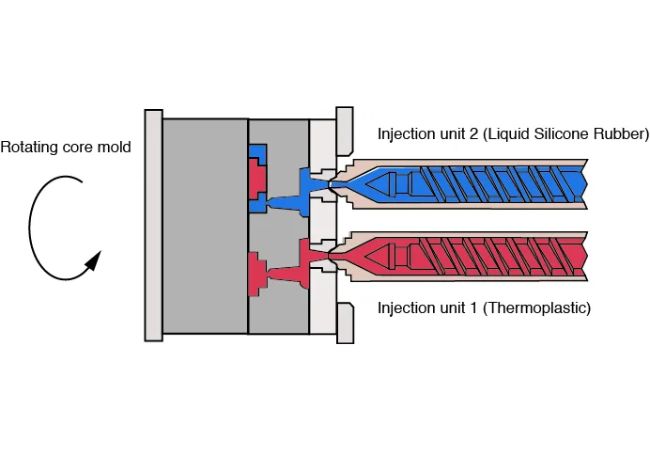
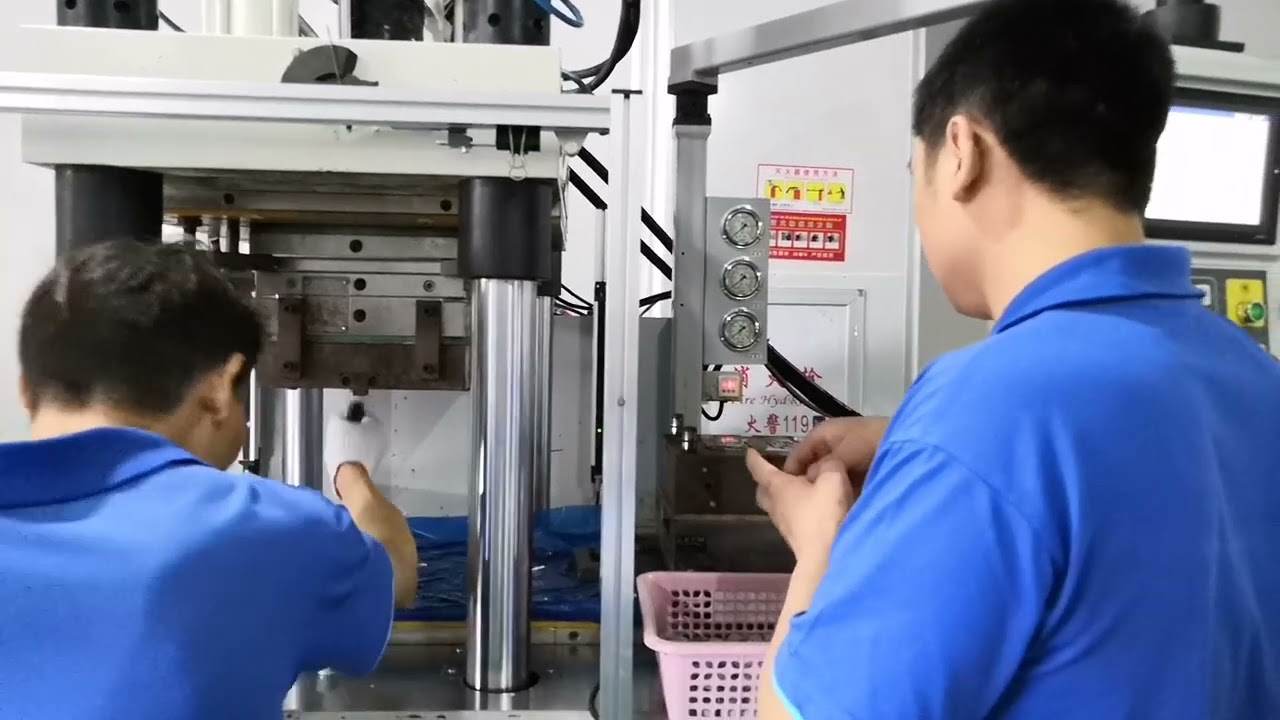
Prior to the second injection, the pre-molded substrate is precisely positioned within a second mold set—or within a single rotating or transfer mold system.
The core objectives of this step are:
- Ensuring high-precision positioning of the substrate within the mold
- Guaranteeing consistency in the overmolding area
- Allocating adequate space for material flow (flow channel design)
Common process methods include:
- Two-shot molding
- Insert Molding
- Rotary platen systems
Key technical considerations for this stage:
- Control of positioning errors (typically ≤ 0.02–0.05 mm)
- Prevention of displacement and warpage
- Ensuring the sealing integrity of the overmolding area
Secondary Injection Molding and Material Coating
Once the substrate has been secured, a secondary injection is performed, in which the overmold material is injected into the mold cavity to cover or partially encapsulate the surface of the substrate.
Common overmolding materials include:
- TPE (Thermoplastic Elastomer)
- TPU (Thermoplastic Polyurethane)
- Soft modified compounds
At this stage, the materials bond primarily through two mechanisms:
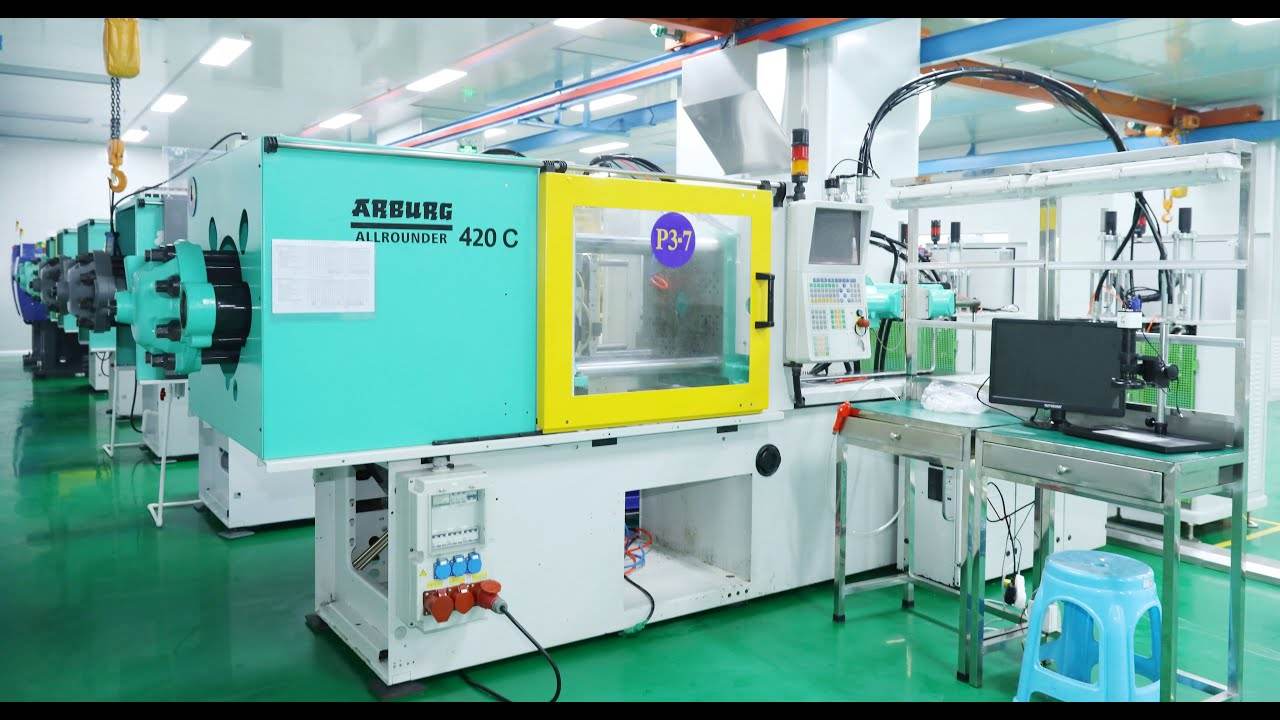
Chemical Bonding
When two materials exhibit a certain degree of compatibility, the molecular chains undergo partial diffusion and entanglement under the influence of high temperature and pressure, thereby forming an interfacial diffusion layer.
Key Features:
High adhesion strength
Absence of distinct interfacial delamination
Particularly suitable for high-end consumer electronics and medical products
Key Influencing Factors:
- Material polarity compatibility
- Processing temperature window
- Surface energy
Mechanical Interlocking Mechanism
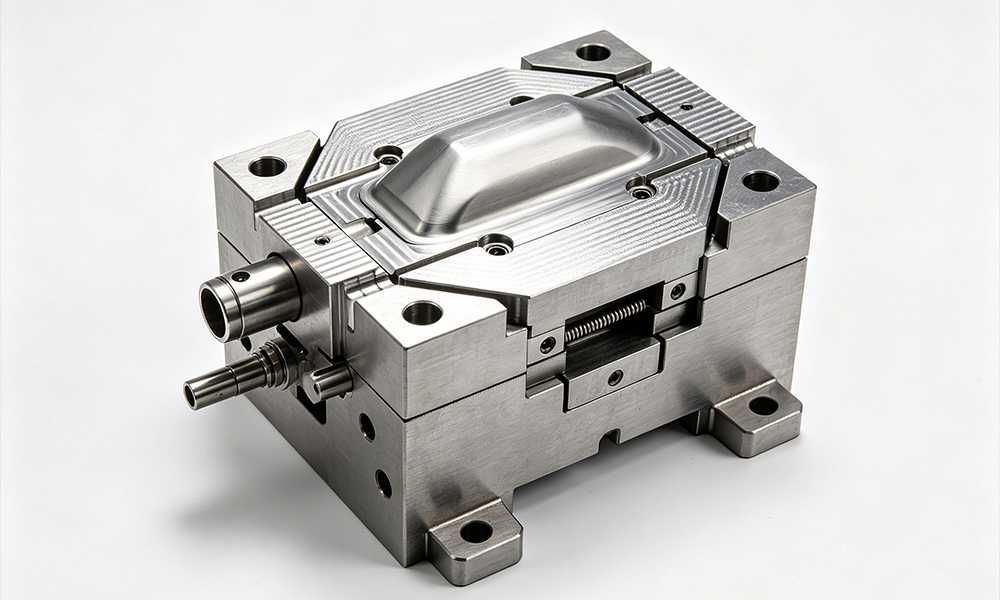
When materials lack good chemical compatibility, physical interlocking can be achieved through structural design—for example, by utilizing:
- Grooves
- Undercuts
- Through-holes
Key Features:
- Does not rely on chemical bonding between materials
- Accommodates a wider range of materials
- Imposes higher requirements on mold design
Cooling, curing and integral molding
Upon completion of the injection molding process, the mold system undergoes cooling, allowing both materials to solidify simultaneously and form the final structure.
During this process:
- Thermal stress is gradually relieved (thermal stress relaxation).
- Interfacial bonding strength is further stabilized.
- Differential material shrinkage is counteracted by structural constraints.
The result is a composite component characterized by the following features:
- An integrated structure.
- A combination of multi-material functionalities.
- No need for secondary assembly (assembly-free).
When Should You Choose Overmolding?
Overmolding is not just a manufacturing option—it’s a design strategy for improving product performance, usability, and integration. You should choose overmolding when your product requires multi-material functionality, enhanced user experience, or reduced assembly complexity.
Title
Overmolding
Insert Molding
Two-Shot Injection Molding
Our Core Strengths in Overmolding
Enhance Product Functionality
Anti-slip (Handles, Tool Grips)、Shock Absorption (Electronic Device Protection)、Sealing (Waterproof Structures)
Replaces Traditional Assembly Structures
Reduces reliance on screws and adhesives、Lowers assembly costs、Enhances consistency
Enhances Product Aesthetics and Tactile Feel
Hybrid Soft-and-Hard Design、Improved Ergonomics、Elevated Premium Texture
Enhance Product Reliability
Reduce the risk of loose parts、Improve structural stability、Extend service life
Overmolding in Industry Applications
Overmolding is widely used across industries where products require multi-material performance, improved ergonomics, sealing capability, or structural integration. By combining rigid and soft materials into a single component, it helps manufacturers achieve better functionality, durability, and user experience.
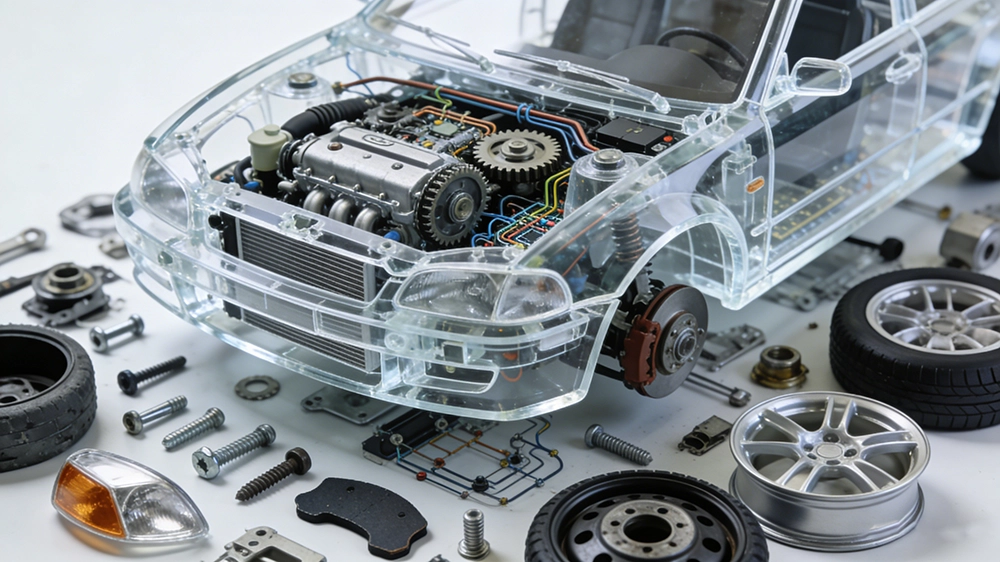
In automotive applications, overmolding is used to improve safety, comfort, and durability while reducing assembly complexity.
Typical applications:
- Steering wheel grips
- Dashboard control buttons
- Door handles and armrests
- Electrical connectors and seals
Why overmolding is used:
- Improves grip comfort and tactile feel
- Enhances vibration and impact resistance
- Provides sealing against dust and moisture
- Reduces multi-part assembly costs
Medical devices require high precision, safety, and reliability. Overmolding helps achieve hygienic, ergonomic, and patient-friendly designs.
Typical applications:
- Surgical instrument handles
- Diagnostic device housings
- Injection device grips
- Wearable medical device enclosures
Why overmolding is used:
- Improves grip control for medical staff
- Enhances patient comfort
- Supports clean, seamless surfaces (easy to clean)
- Enables precise and consistent manufacturing
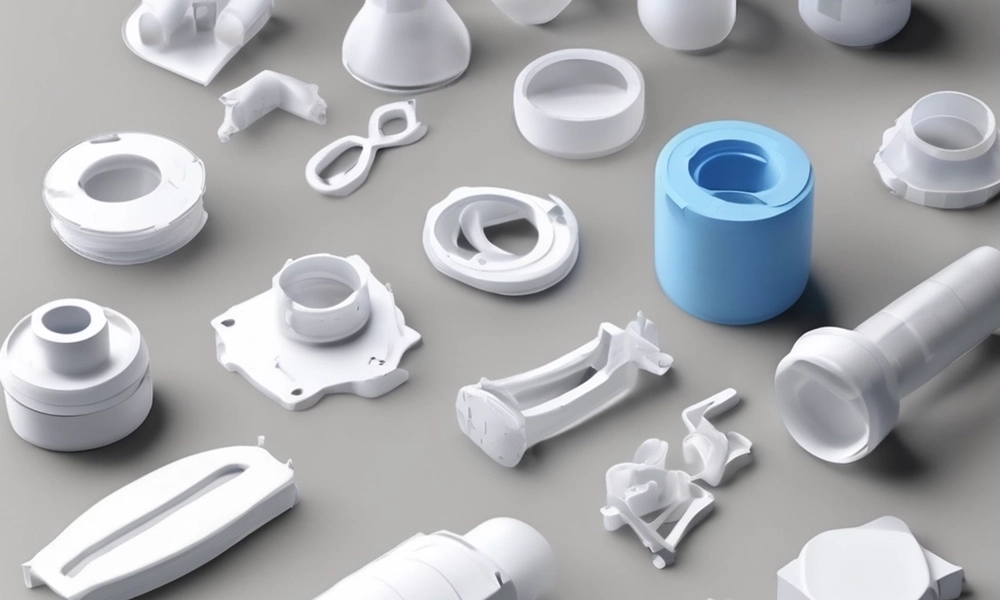

Consumer electronics rely heavily on overmolding for aesthetics, protection, and user interaction.
Typical applications:
- Smartphone protective housings
- Wearable device straps
- Remote controls and button interfaces
- Laptop and accessory components
Why overmolding is used:
- Provides soft-touch and premium feel
- Improves drop resistance and shock absorption
- Enhances product appearance and branding
- Enables compact integrated designs
Robotics and industrial systems require durable and functional components that can withstand demanding environments.
Typical applications:
- Robot arm grips
- Control handles and interfaces
- Protective housings for sensors
- Industrial tool coverings
Why overmolding is used:
- Improves operator safety and grip control
- Enhances durability in harsh environments
- Reduces mechanical assembly complexity
- Supports long-term operational stability

Overmolding FAQ
Common combinations include TPE or TPU over ABS, PC, or PA. Material compatibility is key to ensure strong bonding.
Cost depends on tooling and material selection. It is usually more cost-effective in medium to high-volume production due to reduced assembly steps.
Bond strength can be very high when materials are compatible, often reaching near permanent adhesion under proper processing conditions.
Yes. Overmolding can eliminate adhesives and mechanical fasteners by integrating parts into a single structure.
It is typically suitable for medium to large production runs, but low-volume prototyping is also possible depending on tooling setup.
A well-designed mold can last hundreds of thousands to over a million cycles, depending on material and maintenance.
Yes. Metal inserts are commonly used as substrates in overmolding for added strength and structural support.
Common issues include poor adhesion, flash, and warping. These are usually caused by improper material selection or mold design.
Yes. Overmolding is widely used for small precision components such as buttons, connectors, and electronic housings.
Yes. It is highly suitable for complex geometries, especially when combining soft and rigid features in one part.