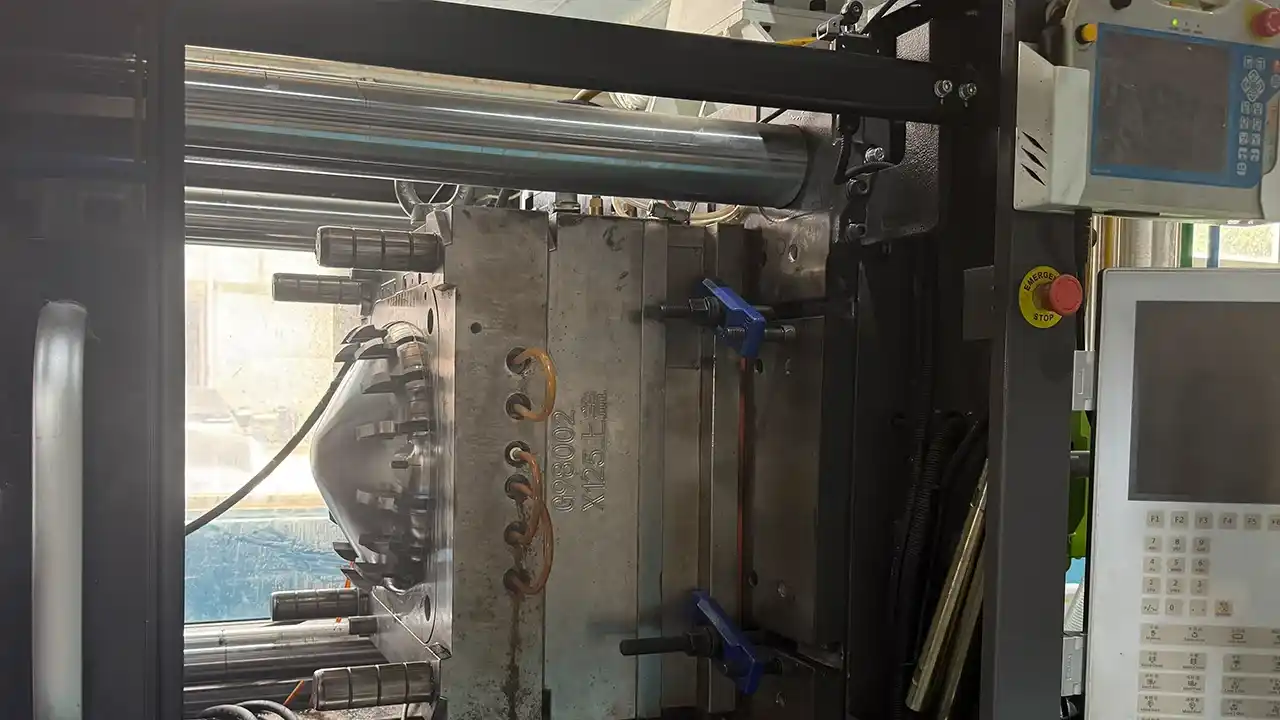

Sie haben sich aus guten Gründen für LDPE-Kunststoff entschieden – Flexibilität, Chemikalienbeständigkeit, Niedrige Kosten, einfache Verarbeitung. Dennoch verformten sich die Teile. Der Lieferant hielt die Lieferfrist nicht ein. Die Maße bestanden zwar die Prüfung, passten aber bei der Montage nicht. Und im Rahmen der Nachbesprechung konnte sich niemand darauf einigen, ob das Problem bei der Werkstoffauswahl, der Formkonstruktion oder den Prozessparametern lag. Das sind keine Ausnahmefälle. So etwas passiert, wenn Materialkenntnisse, Formbau und Produktionsprozesssteuerung nicht aufeinander abgestimmt sind.
In Dimud, … haben wir LDPE-Kunststoff in Hunderten von kommerziellen Werkzeugprogrammen verarbeitet – von dünnwandigen Verkleidungsclips für die Automobilindustrie bis hin zu flexiblen Gehäusen für medizinische Geräte und Kabelmanagementkomponenten für Batteriepakete. Dieser Leitfaden vereint diese praktischen Erfahrungen mit den neuesten materialwissenschaftlichen Daten, um Ingenieuren eine einzige, maßgebliche Referenz an die Hand zu geben.
Was ist LDPE-Kunststoff?
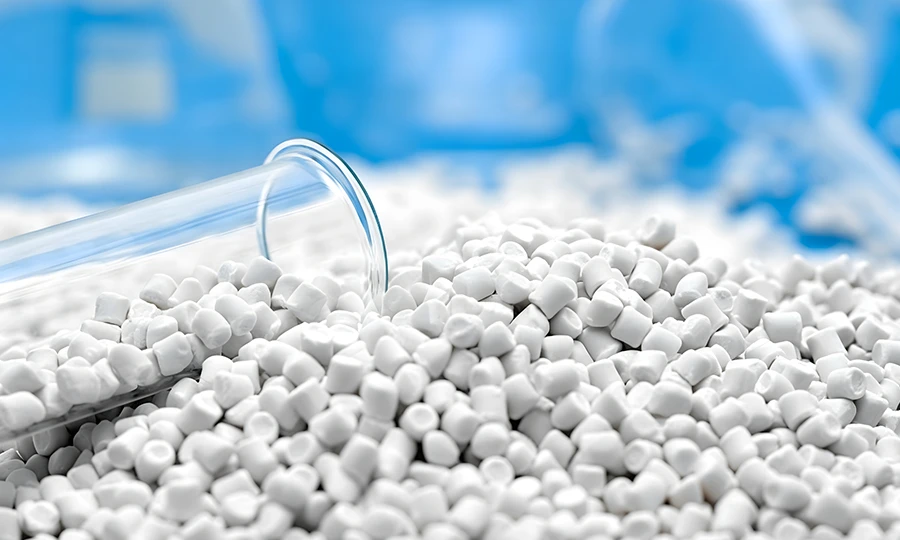
Polyethylen niedriger Dichte – allgemein bekannt als LDPE-Kunststoff — ist einer der weltweit am häufigsten hergestellten Thermoplaste, dessen jährliche globale Produktion 20 Millionen Tonnen übersteigt. In den 1930er Jahren wurde er erstmals in den Labors von ICI mittels Hochdruck-Radikalpolymerisation synthetisiert, hat es sich von einem Kabelisoliermaterial aus Kriegszeiten zu einem unverzichtbaren Ausgangsmaterial für präzisionsgespritzgossene Bauteile entwickelt, die in Fahrzeuginnenräumen, medizinischen Geräten, Gehäusen für Unterhaltungselektronik sowie in aufstrebenden Bereichen wie Robotik und Energiespeicherplattformen zum Einsatz kommen.
Was LDPE von seinen Polyethylen-Verwandten – HDPE, LLDPE und UHMWPE – unterscheidet, ist seine stark verzweigte molekulare Struktur. Kurz- und langkettige Verzweigungen unterbrechen das Polymergerüst, wodurch die Kristallinität auf etwa 40–50% sinkt und ein Material entsteht, das zugleich weich, flexibel, chemisch inert und äußerst leicht zu verarbeiten ist. Für Formenbauer und Produktdesigner, die maßgeschneiderte Spritzgussteile beschaffen, ist das Verständnis dieser strukturellen Grundlagen der erste Schritt hin zu einer kosteneffizienten Materialauswahl.
Molekülstruktur und Typen von Polyethylen niedriger Dichte
LDPE wird durch radikalische Hochdruckpolymerisation bei 1.000–3.000 bar und Temperaturen zwischen 80 °C und 300 °C hergestellt. Bei diesem Verfahren entsteht eine Polymerkette mit häufigen kurzkettigen und langkettigen Verzweigungen alle 2–4 Kohlenstoffatome, wodurch sich das charakteristische Profil mit geringer Dichte und hoher Flexibilität ergibt. Der Verzweigungsgrad lässt sich während der Polymerisation einstellen, um für verschiedene Endanwendungen optimierte Typen herzustellen:
| Notenklasse | Schmelzindex (g/10 min) | Dichte (g/cm³) | Hauptanwendungsfall |
|---|---|---|---|
| Allzweck-Spritzgussqualität | 2 – 10 | 0,917 – 0,930 | Gehäuse, Kappen, Weichteile |
| Dünnwandige Sorte mit hohem Durchfluss | 15 – 25 | 0,910 – 0,920 | Dünnwandige medizinische Tabletts, Elektronikhalterungen |
| Sorte mit hohem Molekulargewicht | 0,3 – 2 | 0,925 – 0,935 | Rohrverbindungsstücke, Behälter für Chemikalien |
| Compoundiert / flammhemmend | Unterschiedlich | 0,920 – 0,960 | Isolierungen für Automobilkabel, Bauteile für Elektrofahrzeugbatterien |
| Medizinische Qualität (USP Klasse VI) | 4 – 12 | 0,918 – 0,928 | Infusionskomponenten, Einwegartikel |
Die Auswahl der richtigen Materialsorte vor Beginn der Werkzeugfertigung ist von entscheidender Bedeutung. Ein ungeeigneter Schmelzindex führt entweder zu Unterfüllungen, übermäßigem Anguss oder ungleichmäßiger Füllung – was alles zu zusätzlichen Kosten und Verzögerungen führt. Das Ingenieurteam von Dimud führt zu Projektbeginn eine typspezifische DFM-Analyse (Design for Manufacturability) durch, um die Materialauswahl auf die angestrebten Wandstärken, Maßtoleranzen und Leistungsanforderungen für den Endanwendungszweck abzustimmen.
Wichtige physikalische und mechanische Eigenschaften
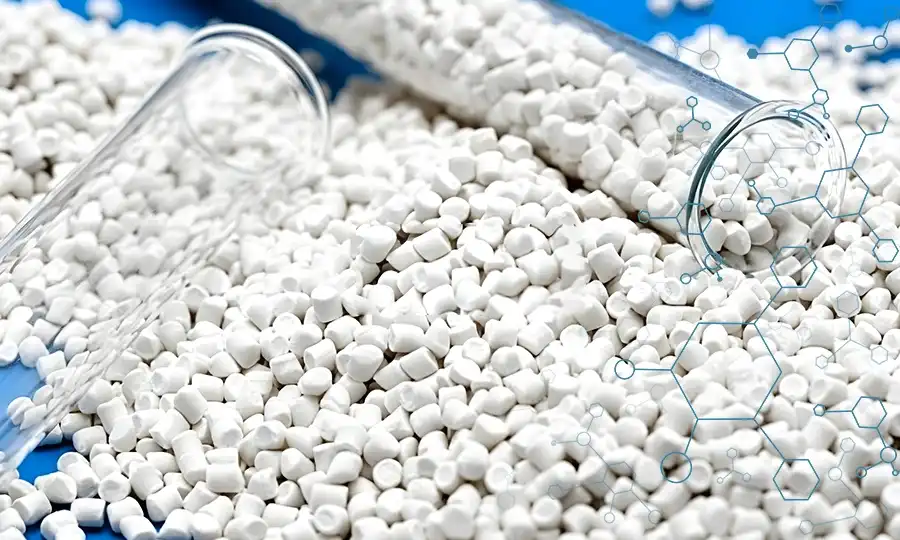
Das Verständnis der quantitativen Leistungsgrenzen von LDPE-Kunststoff ermöglicht es Ingenieuren, die Eignung für den jeweiligen Verwendungszweck schnell zu beurteilen und zu erkennen, in welchen Bereichen das Material seine Stärken ausspielt und in welchen Bereichen stattdessen alternative Polymere in Betracht gezogen werden sollten.
| Eigentum | Typischer Wert | Prüfnorm | Technische Auswirkungen |
|---|---|---|---|
| Dichte | 0,910 – 0,935 g/cm³ | ISO 1183 | Geringes Gewicht; reduziert das Gewicht der Bauteile im Vergleich zu Metallen |
| Zugfestigkeit (Streckgrenze) | 8 – 20 MPa | ISO 527 | Geeignet für nichttragende, flexible Bauteile |
| Bruchdehnung | 300 – 700 % | ISO 527 | Hervorragende Duktilität; widersteht wiederholter Biegung |
| Biegemodul | 150 – 350 MPa | ISO 178 | Geringe Steifigkeit – ideal für Schnappverschlüsse |
| Izod-Schlagzähigkeit | Keine Unterbrechung (eingekerbt) | ISO 180 | Hervorragende Stoßdämpfung bei Raumtemperatur und niedrigen Temperaturen |
| Heat Deflection Temperature | 40 – 55 °C | ISO 75 (0.45 MPa) | Limited high-temp use; not for under-hood automotive |
| Melting Point | 105 – 115 °C | DSC | Low processing temperatures; energy-efficient molding |
| Vicat-Erweichungspunkt | 80 – 100 °C | ISO 306 | EO gas sterilization compatible; not autoclavable |
| Water Absorption (24 h) | < 0,01 % | ISO 62 | Dimensionally stable in humid environments |
| Durchschlagfestigkeit | 18 – 20 kV/mm | IEC 60243 | Excellent wire insulation for EV/battery systems |
| Chemische Beständigkeit | Excellent (dilute acids, bases) | — | Safe for medical, food-contact, chemical packaging |
| Resin Shrinkage Rate | 1.5 – 3.0 % | ISO 294-4 | Must be compensated in mold cavity dimensions |
Dimud Engineering Note — Shrinkage Management
LDPE’s shrinkage range of 1.5–3.0% is among the widest of commodity thermoplastics, driven by its semi-crystalline structure and sensitivity to cooling rate. At Dimud, we compensate through precision mold cavity sizing, balanced cooling channel design, and Moldflow-Simulation prior to steel cutting — reducing dimensional deviation to within ±0.1 mm on most wall thicknesses. This is standard practice across all our LDPE programs.
LDPE Injection Molding: Process Parameters and Best Practices
Processing LDPE plastic correctly requires an understanding of how its molecular structure responds to temperature, pressure, shear, and cooling. The following parameters represent the baseline for a typical general-purpose injection grade; specific grades and complex geometries will require fine-tuning.
Melt and Barrel Temperature
| Zone | Temperaturbereich | Anmerkungen |
|---|---|---|
| Feed Zone (Rear) | 150 – 170 °C | Gentle preheat; avoids early degradation |
| Compression Zone (Middle) | 170 – 200 °C | Melting zone; critical for homogeneity |
| Metering Zone (Front) | 190 – 220 °C | Final melt temperature; controls viscosity |
| Düse | 200 – 215 °C | Avoid drool with a reverse-taper nozzle |
Temperatur der Form
Mold temperature for LDPE plastic should be maintained between 20 °C and 50 °C. Lower mold temperatures accelerate cycle time but can introduce weld-line weakness and surface gloss variation. For parts requiring uniform skin appearance or tighter dimensional control — typical in medical housing and consumer electronics applications — Dimud maintains mold temperature at 30–40 °C using precision conformal cooling circuits.
Einspritzgeschwindigkeit und -druck
LDPE’s low melt viscosity requires a relatively fast injection speed to fill thin sections before premature freeze-off. Typical injection pressures range from 70 to 110 MPa. Holding pressure is set at 40–60% of injection pressure, with hold time calibrated by part thickness (approximately 1 second per millimeter of wall). Back pressure should be kept low — 5 to 10 MPa — to preserve molecular weight and avoid excessive shear heating.
Anforderungen an die Trocknung
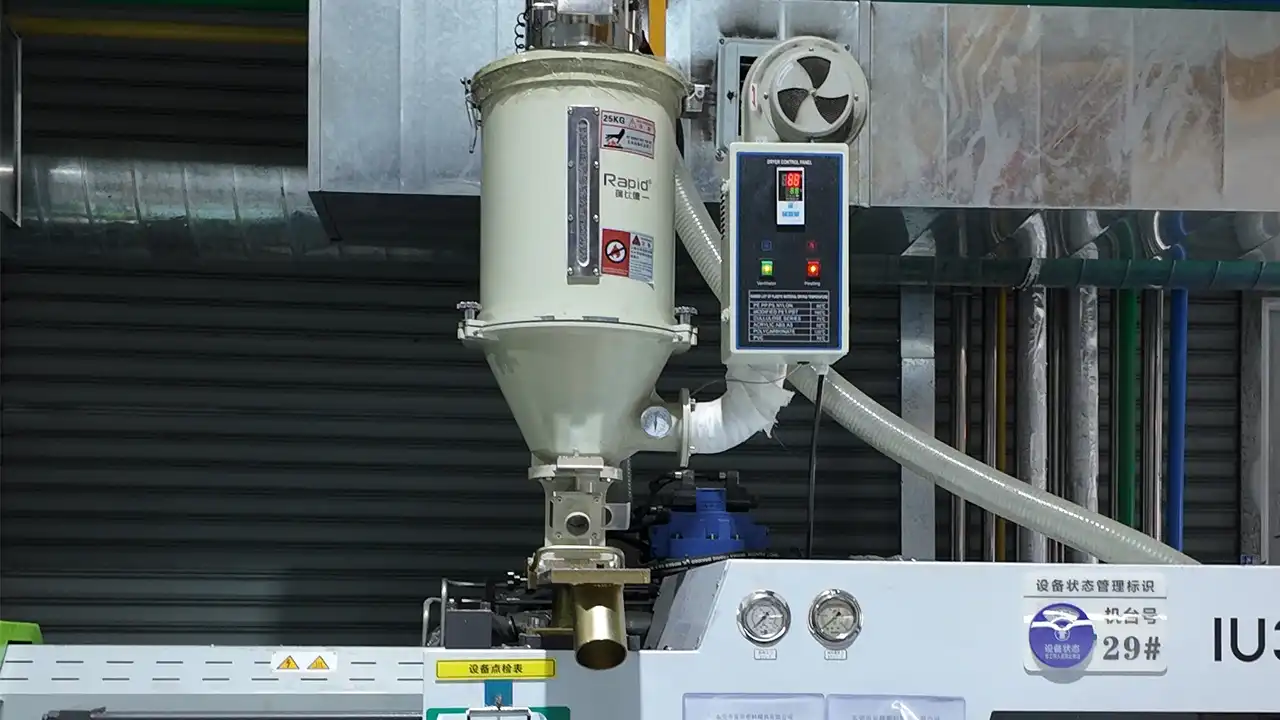
One of the process advantages of LDPE plastic is its extremely low hygroscopicity (water absorption < 0.01%). Under normal storage conditions, no pre-drying is required before molding. However, if resin has been exposed to humidity for extended periods or regrind is incorporated, brief drying at 60–70 °C for 1–2 hours in a dehumidifying dryer is recommended to prevent surface splay.
Common Defects and Root Causes
| Defekt | Primary Cause(s) | Korrekturmaßnahme |
|---|---|---|
| Warpage / Distortion | Non-uniform cooling; thick/thin wall transitions | Balance cooling channels; redesign wall uniformity |
| Excessive Shrinkage | Insufficient packing pressure or time | Increase hold pressure; extend hold time |
| Spülbecken-Eindrücke | Inadequate packing in thick sections | Increase hold pressure; reduce wall thickness |
| Blitzlicht | Over-packing; mold parting line wear | Reduce injection pressure; check mold clamping |
| Surface Splay | Moisture in regrind; excessive back pressure | Pre-dry regrind; reduce back pressure |
| Kurzer Schuss | Too-low melt temp or injection speed | Raise barrel temperature; increase fill speed |
| Schweißnähte | Convergent flow fronts; low melt temp | Raise melt temp; optimize gate position |
Mold Design Considerations for LDPE Plastic Components
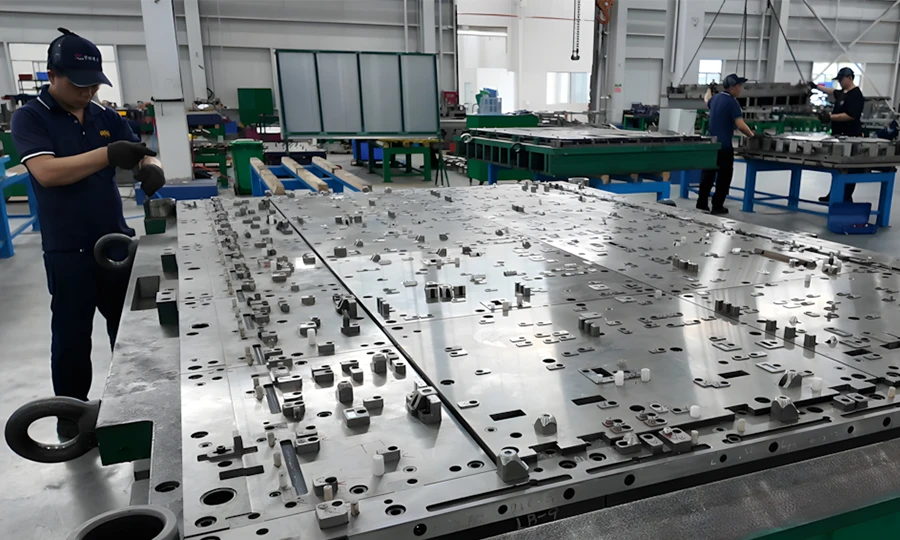
The flexibility and high shrinkage rate of LDPE plastic impose specific demands on mold engineering. A mold designed for rigid engineering polymers will not perform reliably when filled with LDPE without modification.
Gestaltung und Lage des Tors
Submarine (tunnel) gates, fan gates, and edge gates all perform well with LDPE. Pin-point gates work for high-flow grades but can generate excessive shear stress on low-MFI grades. Gate location should maximize fill symmetry to minimize differential shrinkage — a primary driver of warpage. For thin-wall parts, hot-runner systems with valve gating offer superior dimensional repeatability and reduce regrind generation.
Runner Systems
Full-round runners are preferred for LDPE to minimize pressure drop and maintain melt temperature uniformity. Runner diameter is typically 4–8 mm depending on part volume. For multi-cavity tools — common in high-volume automotive and electronics programs — balanced H-pattern or star-pattern runner layouts are standard in Dimud’s tool designs to ensure simultaneous cavity fill and equivalent part quality across all cavities.
Cooling System
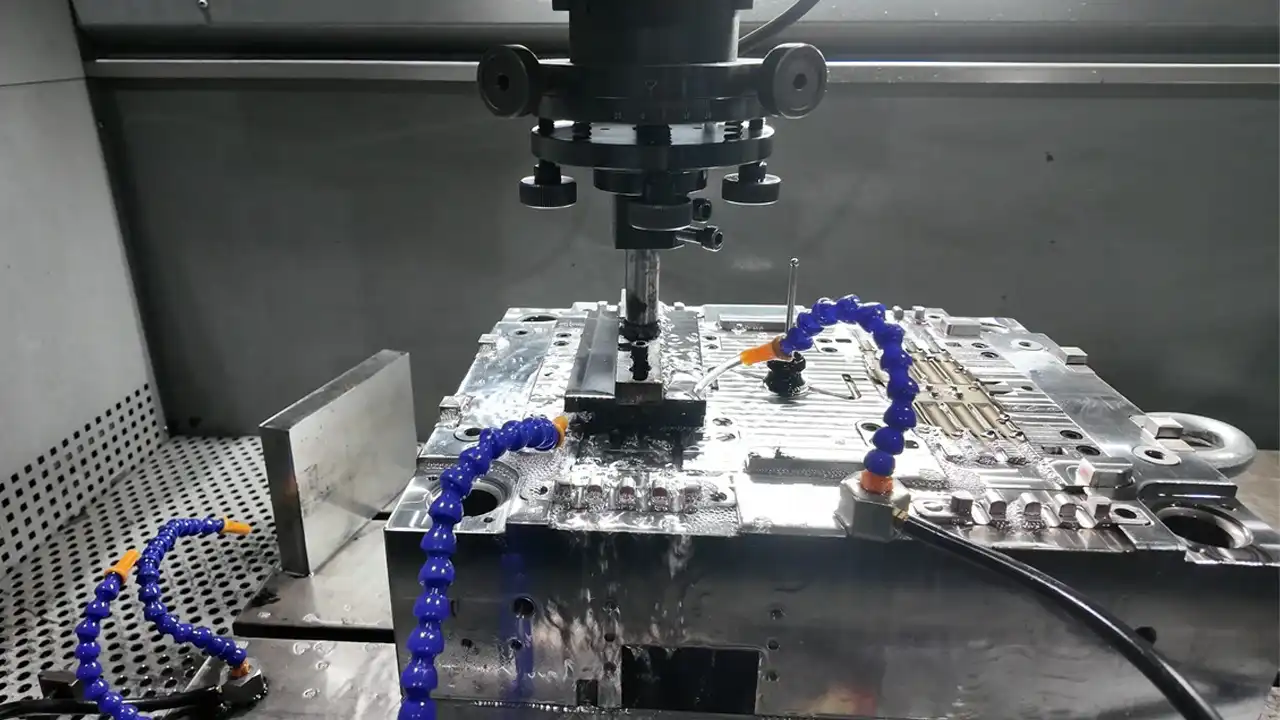
Given LDPE’s relatively high shrinkage and warpage tendency, cooling system design is arguably the most critical factor in achieving dimensional stability. Dimud engineers use conformal cooling channels — manufactured via CNC-drilled baffles or, for complex geometries, additive-manufactured inserts — to achieve cooling uniformity within ±2 °C across the cavity surface. This approach has consistently reduced cycle time by 15–25% compared to conventional straight-line cooling on LDPE molds.
Draft Angles and Ejection
Because LDPE is soft and flexible, parts can tolerate lower draft angles than rigid polymers — typically 0.5°–1° per side for textured surfaces and 0.25° for polished surfaces. Ejection should favor stripper plates or sleeve ejectors over pin ejectors when part geometry permits, as LDPE’s low flexural modulus makes it susceptible to ejector pin marks on cosmetic surfaces. For medical-grade parts requiring Class A surface finish, Dimud specifies polished P20 or H13 tool steel with textured ejection mechanisms.
LDPE Plastic Applications Across Key Industries
Autoindustrie
In the automotive sector, low-density polyethylene serves multiple functional roles where flexibility, chemical resistance, and sound dampening take priority over structural rigidity. Common injection-molded LDPE components include:
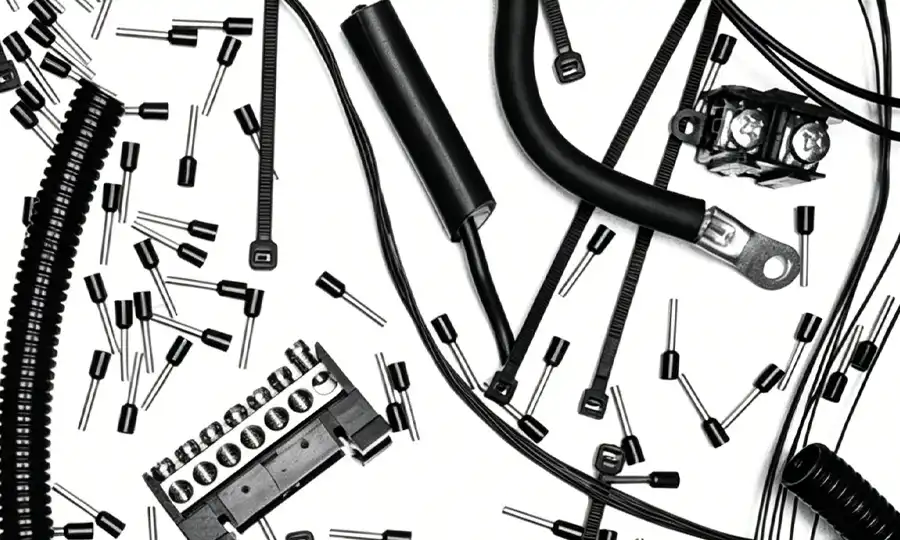
- Wire harness grommets and corrugated conduit clips — LDPE’s flexibility and dielectric strength make it ideal for protecting wire bundles from abrasion and thermal cycling in door frames and under-dash assemblies.
- Fluid reservoir caps and filler neck components — Excellent resistance to fuels, brake fluid, and windshield washer chemicals.
- Sound-deadening interior trim — LDPE foam-backed panels and flexible trim inserts absorb cabin noise without adding significant mass.
- EV battery pack components — With the rapid growth of electric vehicles, LDPE’s dielectric properties and flame-retardant compounded grades are increasingly specified for low-voltage wiring management clips and cell spacer components within battery modules.
Dimud manufactures LDPE automotive components to IATF 16949-aligned quality standards, with PPAP documentation, SPC process control, and first-article inspection reports supplied as standard deliverables.
Medizinbranche
Medical-grade low-density polyethylene is among the most biocompatible commodity thermoplastics available — non-cytotoxic, non-hemolytic, and compliant with USP Class VI and ISO 10993 requirements when the appropriate virgin resin and processing protocols are applied. Injection-molded medical LDPE applications processed at Dimud include:
- Disposable diagnostic device housings — Flexible snap-fit enclosures for point-of-care lateral flow test cassettes and glucose monitoring accessories.
- IV line and tubing connectors — LDPE’s softness enables secure luer-lock engagement without the stress-whitening that affects harder polymers.
- Laboratory consumables — Wash bottles, reagent caps, and flexible transfer pipette bulbs manufactured in ISO 7 cleanroom-compatible conditions.
- Prosthetic and orthopedic soft components — Low water absorption and long-term chemical stability support extended implant-adjacent applications.
Dimud operates dedicated production cells for medical components with documented material traceability, certificate of conformance (CoC), and material data safety sheets (MDSS) for every production batch — critical for regulatory submissions under FDA 510(k) and CE marking frameworks.
Unterhaltungselektronik
The consumer electronics industry demands cosmetically refined, dimensionally consistent plastic parts at high volumes and competitive unit costs. Applications include:
- Cable management and strain-relief boots — The soft durometer and fatigue resistance of LDPE prevent cable damage at bend points in power cables, USB connectors, and headphone cords.
- Flexible keypads and button caps — Thin-wall LDPE overlays provide tactile feedback and environmental sealing without cracking after repeated actuation cycles.
- Wire insulation and overmolded connectors — LDPE’s low dielectric constant and excellent moisture resistance make it a preferred material for signal-integrity-critical applications in data transmission cables and RF connectors.
- Protective packaging inserts — Custom-molded LDPE foam inserts for high-value electronics, protecting sensitive components during shipping.
Dimud’s electronics manufacturing plant operates alongside its mold factory and CNC facility, enabling integrated secondary operations — insert molding, pad printing, assembly — under a single quality system.
Robotik und Energiespeicherung
For engineers in robotics and energy storage — among the fastest-growing sectors in precision manufacturing — LDPE plastic offers a compelling combination of flexibility, electrical insulation, and chemical compatibility:
- Battery pack wiring accessories — Flame-retardant LDPE compounds are specified for low-voltage harness clips, bus bar insulators, and cell interconnect brackets in lithium-ion battery modules.
- Robotic gripper soft pads — The low Shore D hardness (44–50) of LDPE enables compliant contact surfaces for delicate object handling in collaborative robot (cobot) end-effector designs.
- Fluid path components — Chemical resistance to glycol-based coolants makes LDPE suitable for thermal management fluid connectors in battery cooling systems.
- Sensor housing and cable protection — Flexible housings for proximity sensors, encoders, and LIDAR wiring harnesses in mobile robot platforms.
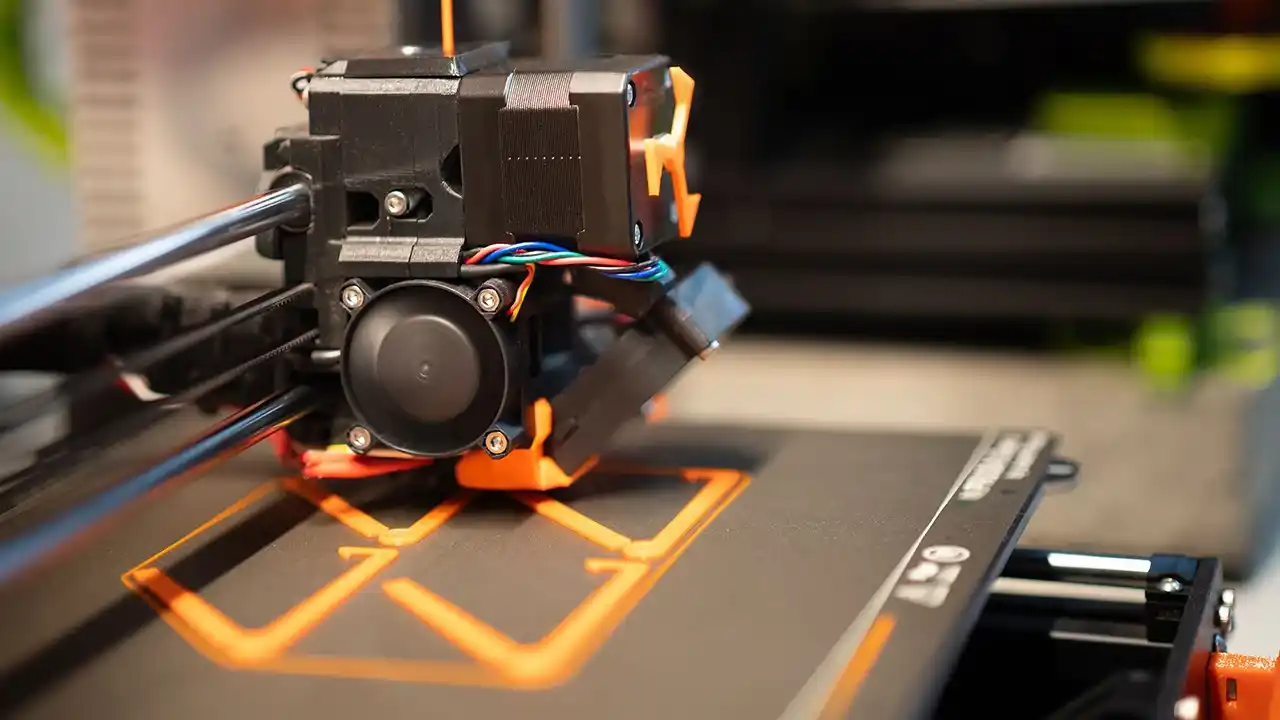
Dimud’s rapid prototyping capability — combining 3D printing for concept validation with aluminum prototype tooling for functional sample runs — accelerates time-to-market for robotics customers who face compressed development schedules.
LDPE vs. Competing Materials: When to Choose and When to Switch
No single polymer is optimal for every application. The decision to specify LDPE plastic should be made after systematic comparison against the most common alternatives:
| Eigenschaft / Faktor | LDPE | HDPE | PP | Weich-PVC | TPE / TPU |
|---|---|---|---|---|---|
| Flexibility (low modulus) | ★★★★★ | ★★★☆☆ | ★★★☆☆ | ★★★★☆ | ★★★★★ |
| Chemische Beständigkeit | ★★★★☆ | ★★★★★ | ★★★★☆ | ★★★☆☆ | ★★★☆☆ |
| Schlagfestigkeit | ★★★★★ | ★★★★☆ | ★★★☆☆ | ★★★★☆ | ★★★★★ |
| High-Temperature Performance | ★★☆☆☆ | ★★★☆☆ | ★★★★☆ | ★★☆☆☆ | ★★★☆☆ |
| Maßgenauigkeit | ★★★☆☆ | ★★★☆☆ | ★★★★☆ | ★★☆☆☆ | ★★★☆☆ |
| Medical Biocompatibility | ★★★★★ | ★★★★☆ | ★★★★☆ | ★★☆☆☆ | ★★★☆☆ |
| Rohstoffkosten | $ Niedrig | $ Niedrig | $ Niedrig | $$ Mittel | $$$ Hoch |
| Einfache Verarbeitung | ★★★★★ | ★★★★☆ | ★★★★☆ | ★★★☆☆ | ★★★☆☆ |
| Recycelbarkeit | ✓ Code 4 | ✓ Code 2 | ✓ Code 5 | Begrenzt | Begrenzt |
Key insight: LDPE is the optimal choice when flexibility, impact resistance, biocompatibility, and processing economy are the primary selection criteria. When dimensional precision, high-temperature performance, or compressive load-bearing are required, HDPE, PP, or engineering polymers should be evaluated instead.
Design for Manufacturability (DFM) Guidelines for LDPE Parts
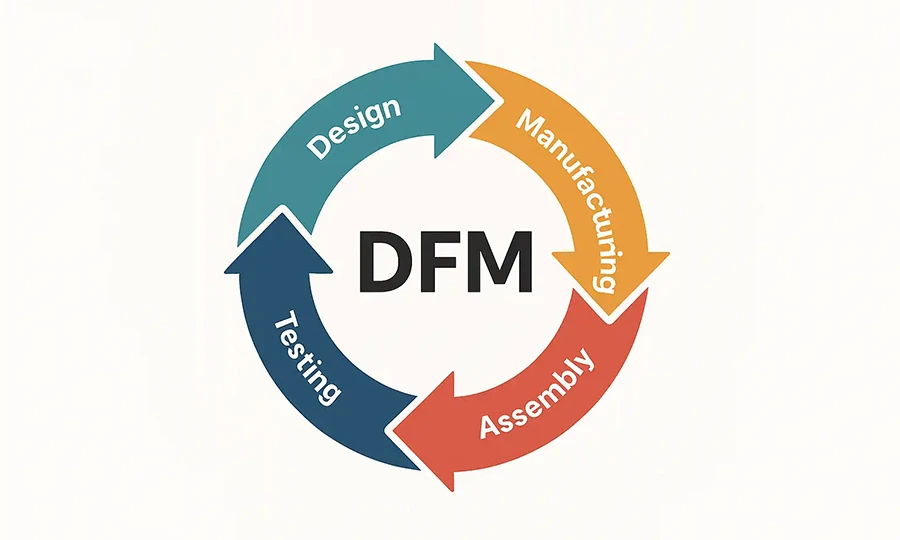
Applying DFM principles during early-stage design significantly reduces tooling revisions, part rejection rates, and time-to-production. Dimud’s engineering team applies the following LDPE-specific DFM rules on every new program:
Wanddicke
Maintain uniform wall thickness between 1.0 mm and 4.0 mm. Abrupt thickness changes generate differential shrinkage and warpage. When transitions are unavoidable, taper the wall over a minimum distance of 3× the thickness change. For thin-wall LDPE molding (< 1.5 mm), high-flow grade selection and optimized gate location are essential.
Rippen und Vorsprünge
Rib thickness should be 50–60% of the nominal wall to minimize sink marks on the opposite surface. Boss outer diameter should not exceed 2× the nominal wall thickness. Hollow cores or support gussets should be used on tall bosses to avoid thick cross-sections. Unlike rigid polymers, LDPE tolerates modest deviation from these rules due to its flexibility — but following them consistently produces more dimensionally stable parts at lower cycle time.
Radii and Corners
All internal corners should have a minimum radius of 0,5 mm (ideally 1.0 mm or 25–60% of wall thickness). Sharp corners concentrate stress and create stress-whitening on LDPE parts during flex cycles. External corners should carry a radius of at least 0.25 mm to reduce tool wear and improve part ejection.
Toleranzen
Due to LDPE’s high and variable shrinkage, standard achievable tolerances are ±0,2 mm for non-critical dimensions and ±0,1 mm for controlled critical dimensions with process optimization. For assemblies requiring tighter interoperability — such as medical luer connectors or electronics snap-fit housings —recommends tolerance stack-up analysis and validation via first-article sample approval before production release.
Qualitätsstandards, Compliance und Nachhaltigkeit
Quality Systems at Dimud
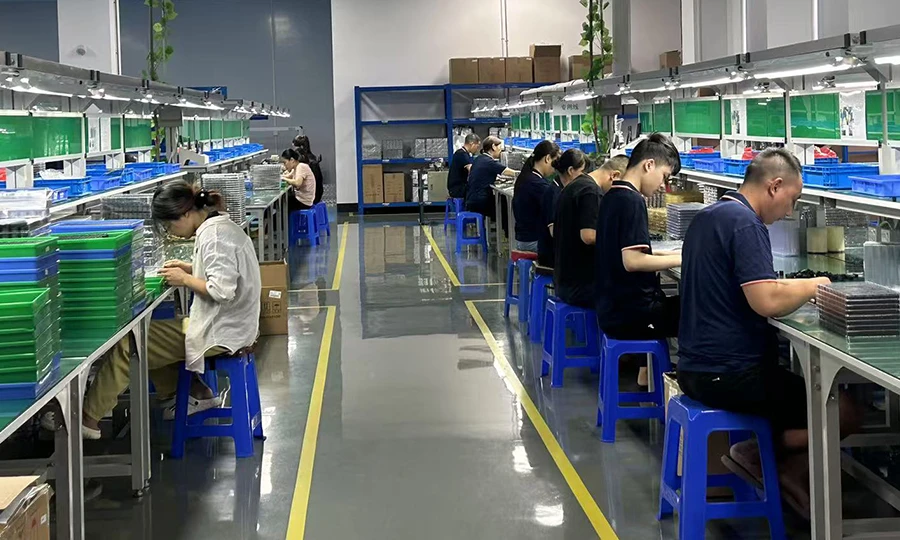
Dimud maintains a multi-layered quality management system across its three manufacturing plants — mold factory, CNC machining, and electronics assembly — to ensure that LDPE plastic components meet the most demanding industry requirements:
- IATF 16949-aligned quality procedures for automotive components, including PPAP Level 3 documentation, FMEA, and control plans.
- ISO 13485-compatible process control for medical device components, with full material traceability from resin lot to finished part.
- CMM inspection and SPC (Statistical Process Control) on critical dimensions for all production programs.
- Raw material certification from approved resin suppliers, with CoC, technical data sheets, and RoHS/REACH compliance declarations on file.
LDPE Recyclability and Environmental Profile
Low-density polyethylene carries recycling code #4 and is accepted by post-consumer recycling streams in most markets. In the context of injection molding, LDPE plastic offers specific sustainability advantages:
- Closed-loop regrind programs — Sprue, runner, and rejected-part regrind from LDPE production is blended at controlled ratios (typically ≤ 20%) back into virgin resin for appropriate applications, reducing material waste without compromising mechanical properties.
- Energy efficiency — LDPE’s low processing temperature (relative to engineering polymers) reduces energy consumption per kilogram of molded part — a meaningful contributor to manufacturing scope 1 emissions reduction.
- Bio-based LDPE — Several global resin producers now offer LDPE grades derived from sugarcane ethanol, carrying ISCC PLUS or RSPO certification — enabling Dimud customers to make verified bio-content claims for sustainability reporting.
Dimud's End-to-End LDPE Plastic Injection Molding Capabilities
Dimud operates as a one-stop, vertically integrated manufacturing partner — not simply a mold supplier. Our three manufacturing plants work in synchronized coordination to deliver LDPE components from initial concept through volume production:
| Servicephase | Dimud-Fähigkeit | Benefit to Customer |
|---|---|---|
| Concept & DFM Review | Free DFM analysis with moldability and material grade recommendation | Avoid costly design changes after tooling begins |
| Schnelles Prototyping | SLA/SLS 3D printing + aluminum soft tooling for LDPE samples | Validate form, fit, function before committing to production tool |
| Formenbau | P20 / H13 / S136 steel; single to 128-cavity tools; hot runner capable | Long mold life (500,000–1M+ shots) with consistent part quality |
| Spritzgießen | Machine range: 50T–1,600T; clean-room compatible cells for medical | Full production flexibility from prototype quantities to multi-million annual runs |
| Secondary Operations | Einpressen, Umspritzen, Ultraschallschweißen, Tampondruck, Montage | Reduce supply chain complexity; receive finished sub-assemblies |
| Supply Chain & Logistics | Raw material sourcing, incoming QC, outbound inspection, DDP/DHL | Vorhersehbare Durchlaufzeiten; ein einziger Ansprechpartner |
| Qualitätsdokumentation | PPAP, CoC, CMM reports, SPC charts, material traceability records | Audit-ready documentation for regulated industries |
Our primary export markets are Europa, Nordamerika und der Nahe Osten — regions with stringent quality expectations and regulatory frameworks. Dimud’s experience serving customers across these markets means our quality systems, communication protocols, and documentation practices are calibrated for international compliance from day one.
Häufig gestellte Fragen
Ja. Das Umspritzen von starren Substraten – darunter PP, ABS und Metalleinsätze – mit LDPE ist technisch machbar, wobei die Haftung jedoch in erster Linie auf mechanischer Verriegelung und nicht auf chemischer Bindung beruht (im Gegensatz zu TPE-auf-PP-Systemen). Bei Anwendungen, die eine starke Haftung erfordern, verbessert eine Oberflächenbehandlung (Plasmaaktivierung oder Grundierung) des Substrats vor dem Umspritzen die Haftfestigkeit erheblich. Dimud hat validierte Umspritzverfahren für LDPE-auf-Metalleinsatz-Baugruppen entwickelt, die in Griffen von Medizinprodukten und Kabelentlastungskomponenten zum Einsatz kommen.
Herkömmlicher LDPE-Kunststoff beginnt bei etwa 80–90 °C zu erweichen (Vicat-Erweichungspunkt) und weist unter einer Belastung von 0,45 MPa eine Wärmeformbeständigkeitstemperatur von 40–55 °C auf. Für Anwendungen mit dauerhaft erhöhten Temperaturen über 60 °C sollten HDPE oder PP als Alternativen in Betracht gezogen werden. In Automobilanwendungen müssen LDPE-Bauteile fern von Bereichen mit hoher Wärmeentwicklung wie dem Motorraum oder in der Nähe von Abgassystemen angeordnet werden; die Hauptanwendungsbereiche im Automobilbereich liegen in klimatisierten Fahrgasträumen und in Batteriemodulbaugruppen, in denen das Wärmemanagement die Bauteiletemperaturen unter 60 °C hält.
Sofern es sich um zertifiziertes, von nicht konformen Zusatzstoffen freies Reinstoff-LDPE handelt, ist dieser Kunststoff für den direkten Kontakt mit Lebensmitteln zugelassen gemäß FDA 21 CFR Vorschriften und EU-Verordnung Nr. 10/2011. LDPE-Harze in medizinischer Qualität, die den Biokompatibilitätsnormen nach USP Klasse VI und ISO 10993-1 entsprechen, sind im Handel erhältlich und werden von Dimud routinemäßig für diagnostische Geräte und medizinische Verpackungsanwendungen verarbeitet. Die Materialzertifizierung des Harzlieferanten wird den Kunden als Standarddokumentation zur Verfügung gestellt.
Aufgrund des Schrumpfbereichs von LDPE von 1,5–3,01 TP3T müssen die Formkammerabmessungen um den erwarteten Schrumpfungsfaktor vergrößert werden. Beispielsweise erfordert eine Sollabmessung des Bauteils von 100,00 mm bei einer erwarteten Schrumpfung von 2,01 TP3T eine Formkammerabmessung von 102,04 mm. Da die Schrumpfung von LDPE von der Wandstärke, der Abkühlgeschwindigkeit und dem Haltedruck abhängt, nutzt Dimud die Moldflow-Simulation, um die Schrumpfungsverteilung bei komplexen Geometrien vorherzusagen, bevor die Kavitätenabmessungen endgültig festgelegt werden – wodurch kostspielige Zyklen zum Entfernen von Stahl vermieden werden, die bei einer empirischen Schrumpfungsschätzung entstehen.
Für Standard-Serienformen mit einer oder zwei Kavitäten aus P20-Stahl beträgt die typische Vorlaufzeit für den Werkzeugbau bei Dimud 25–35 Werktage auf Basis freigegebener endgültiger CAD-Daten. Komplexe Heißkanalwerkzeuge mit mehreren Kavitäten können 40–55 Arbeitstage in Anspruch nehmen. Aluminium-Prototypenformen für die Musterbewertung von LDPE in der Frühphase können innerhalb von 10–15 Werktage. Alle Durchlaufzeiten beinhalten Qualitätskontrollen während des Fertigungsprozesses sowie die Einreichung eines T1-Musters mit vollständigem Maßbericht.
Conclusion: Choosing the Right LDPE Manufacturing Partner
Low-density polyethylene remains one of the most versatile and commercially important thermoplastics in injection molding — not despite its softness, but precisely because of it. The combination of exceptional flexibility, chemical inertness, biocompatibility, low processing temperature, and recyclability positions LDPE plastic as the material of choice for a wide spectrum of components in automotive, medical, consumer electronics, and robotics/energy-storage applications.
Successfully translating LDPE’s material advantages into production-quality components requires more than selecting the right resin grade. It demands precision mold engineering, disciplined process control, a DFM-first design approach, and a quality system calibrated for the regulatory expectations of each target industry.
Dimud brings all of these capabilities together under one roof — three integrated manufacturing plants, a cross-industry application portfolio, and a commitment to becoming a trusted extension of our customers’ engineering teams. Whether you are validating a new LDPE component concept, troubleshooting an existing production program, or qualifying a new precision mold supplier for your European or North American operations, we welcome the opportunity to support your project.