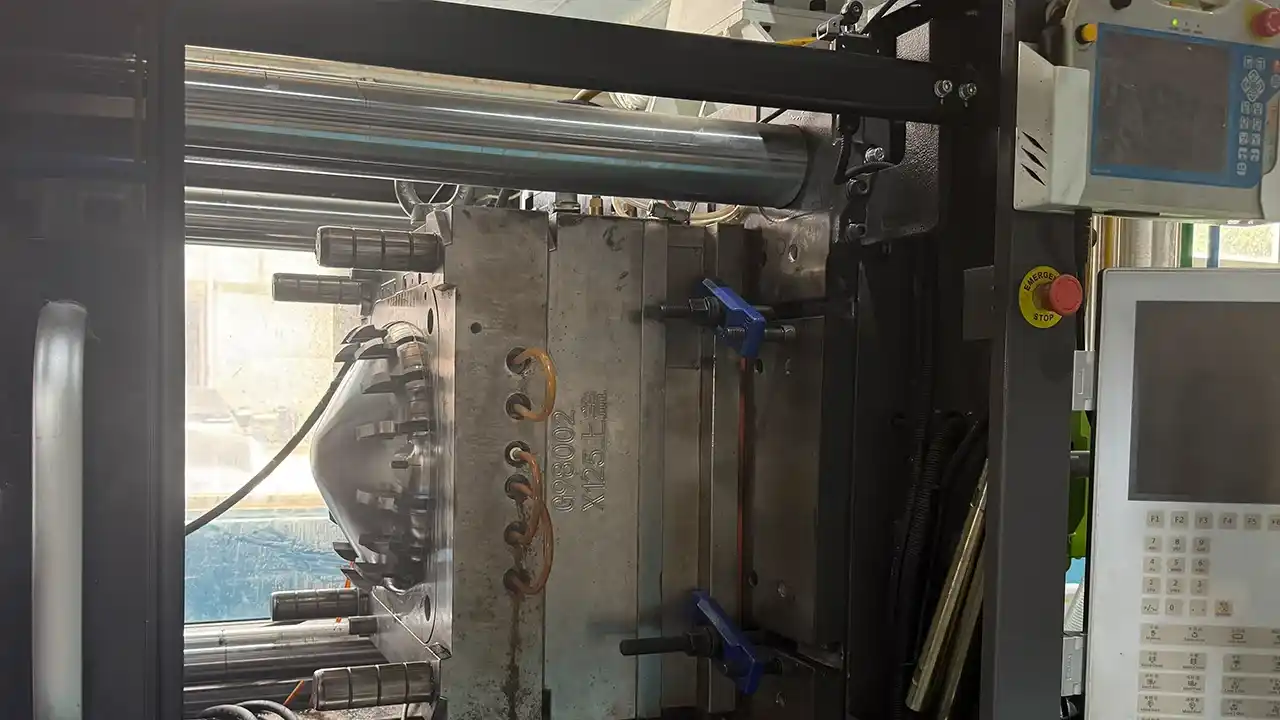

You picked polystyrene because the numbers made sense — low cost, high stiffness, excellent surface finish, optical clarity where you needed it. Then the parts came back brittle. Or the housing cracked under a drop test. Or the medical device OEM asked for a compliance document you didn’t know existed.
This guide covers what the datasheets skip — grade selection logic, brittleness management, process traps, industry-specific compliance, and how to design parts that survive real-world use. Every section draws on Dimuds production experience across consumer electronics, medical, automotive, and robotics programs where PS plastic and its modified variants were specified, tested, and refined under production conditions.
What Is PS Plastic?
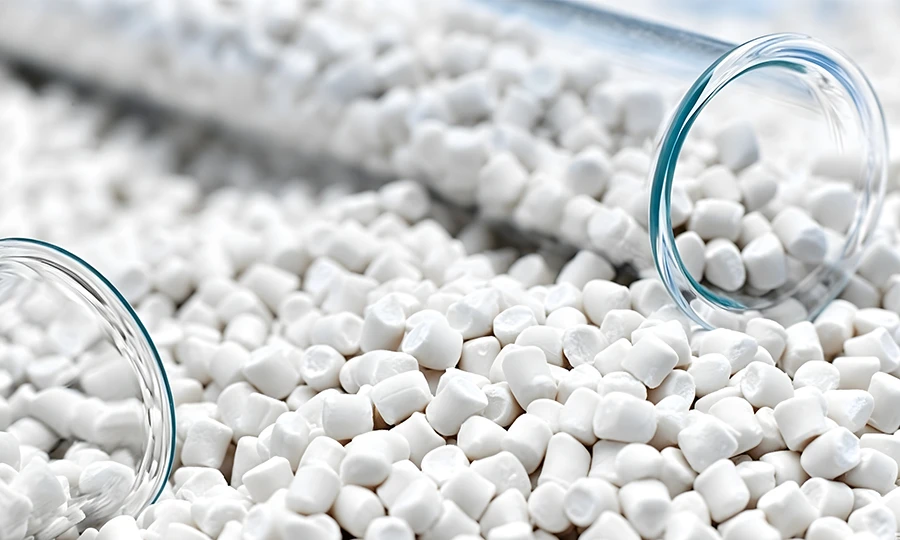
Polystyrene — commonly abbreviated as PS plastic — is a vinyl polymer produced by free-radical addition polymerization of styrene monomer (C₈H₈). Its molecular backbone consists of a long hydrocarbon chain with pendant benzene rings spaced along every other carbon atom. Those benzene rings are the source of both its most valuable properties and its most significant limitations.
What the benzene rings give you:
- High rigidity and dimensional stability — the rings restrict chain mobility, locking the amorphous structure into shape
- Optical transparency in unfilled, unmodified grades
- Natural surface gloss without secondary finishing operations
- Excellent electrical insulation across a wide frequency range
- Low dielectric constant — critical for high-frequency electronics
- Radiation resistance suitable for gamma and EO sterilization
What the benzene rings cost you:
- Brittleness — limited elongation at break and low notched impact strength
- Susceptibility to aromatic and chlorinated organic solvents
- A relatively low heat deflection temperature (~70–95 °C depending on grade)
- UV sensitivity — yellowing after prolonged outdoor exposure
Unlike semi-crystalline polymers such as PP oder HDPE, polystyrene is fully amorphous. There are no crystalline domains to melt and recrystallize during cooling. This amorphous nature is what gives PS plastic its low, predictable shrinkage rate (0.4–0.7%) — one of the tightest among commodity thermoplastics — making it a natural fit for precision components where dimensional consistency matters more than flexibility.
At Dimud, we process both GPPS and HIPS across programs ranging from diagnostic device housings and consumer electronics enclosures to automotive interior trim and robotic assembly fixtures. The material’s combination of low shrinkage, excellent surface finish, and cost-effective processing makes it a first choice when the design envelope allows.
Grade Landscape: GPPS, HIPS, and Modified Polystyrene
The term “PS plastic” covers a family of materials with meaningfully different performance profiles. Specifying the wrong grade is the single most common root cause of part failures in polystyrene programs. Understanding the grade landscape before tooling begins is non-negotiable.
GPPS — General Purpose Polystyrene
GPPS is the base form: pure atactic polystyrene, fully amorphous, with no rubber modification. It is sometimes called crystal polystyrene due to its water-clear optical clarity.
Where GPPS excels: transparent packaging, laboratory consumables, display cases, lenses, light diffusers, and any application where optical clarity and surface gloss are primary requirements. Its brittleness limits structural use, but within its performance envelope it is one of the easiest thermoplastics to mold with high dimensional repeatability.
HIPS — High Impact Polystyrene
HIPS is produced by polymerizing styrene in the presence of dissolved polybutadiene rubber. The rubber phase forms discrete micro-domains dispersed throughout the PS matrix, acting as crack arrestors under impact loading. The trade-off: opacity increases and optical clarity is lost. HIPS is typically opaque or translucent white in natural form.
Where HIPS excels: appliance housings, refrigerator liners, consumer electronics enclosures, automotive interior panels, and any structural application where occasional impact loading is expected. For Dimud’s consumer electronics and robotics customers, HIPS is the dominant polystyrene grade — it provides the dimensional stability and surface quality of GPPS with meaningful improvement in toughness.
Modified and Compounded PS Grades
Beyond base GPPS and HIPS, several commercially important modified grades are processed at Dimud:
| Note | Änderung | Wichtigster Vorteil | Typische Anwendung |
|---|---|---|---|
| FR-HIPS | Flame retardant additives | UL 94 V-0 / V-1 compliance | Electronics enclosures, IT equipment |
| Glass-filled PS | 10–30% short glass fiber | 2–3× stiffness improvement | Structural fixtures, automotive brackets |
| Mineral-filled PS | Calcium carbonate / talc | Improved HDT, reduced cost | Appliance components, packaging |
| ESD PS | Conductive carbon additives | Static dissipation (10⁶–10¹¹ Ω/sq) | Semiconductor trays, electronics fixtures |
| Medical-grade PS | USP Class VI compliant resin | Biokompatibilität | Diagnostic devices, lab consumables |
| UV-stabilized PS | HALS + UV-Absorber | Outdoor durability | POS displays, light fixtures |
Dimud’s engineering team reviews grade options at DFM stage — not after tooling is complete. Selecting the right PS variant before steel is cut prevents the costly scenario of reformulating a program mid-stream because the base-grade parts failed a regulatory test or a drop simulation.
Wichtige physikalische und mechanische Eigenschaften
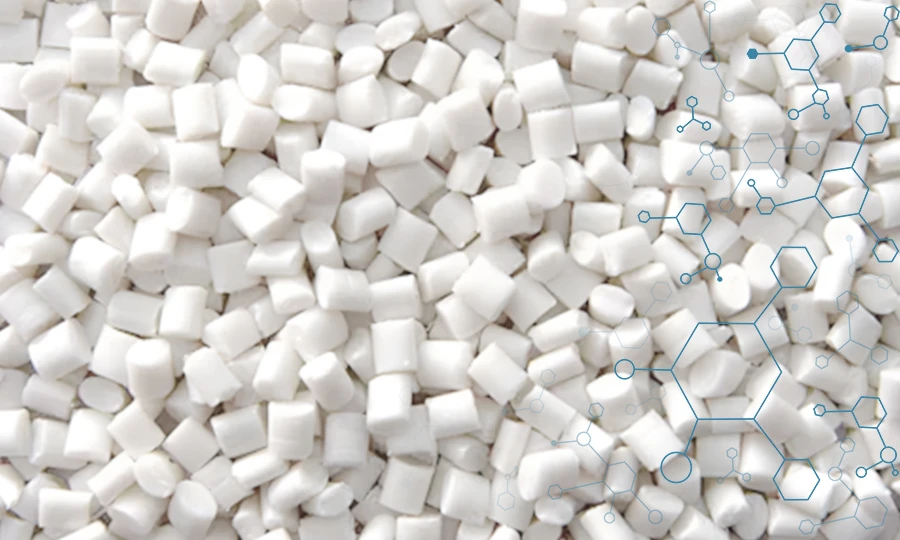
The table below consolidates typical property values for GPPS and HIPS across the test standards most commonly referenced in engineering drawings, material approval documents, and regulatory submissions.
| Eigentum | GPPS | HIPS | Prüfnorm | Technische Auswirkungen |
|---|---|---|---|---|
| Dichte | 1.04–1.06 g/cm³ | 1,03–1,06 g/cm³ | ISO 1183 | Lightweight; competitive with ABS at lower cost |
| Zugfestigkeit | 35–60 MPa | 14–42 MPa | ISO 527 | GPPS rigid structural; HIPS toughened enclosures |
| Biegemodul | 3,100–3,500 MPa | 1,700–2,800 MPa | ISO 178 | High stiffness; minimal deflection under load |
| Bruchdehnung | 1–3 % | 15–50 % | ISO 527 | GPPS brittle; HIPS significantly more ductile |
| Izod-Schlagzähigkeit mit Kerbe | 1–3 kJ/m² | 6–15 kJ/m² | ISO 180 | HIPS required for any drop or impact risk |
| Wärmeformbeständigkeitstemperatur | 75–95 °C | 70–85 °C | ISO 75 (1,82 MPa) | Not suitable for continuous elevated temperatures |
| Vicat-Erweichungspunkt | 90–103 °C | 82–96 °C | ISO 306 | EO sterilization compatible; not autoclavable |
| Formschrumpfung | 0,4–0,7 % | 0,3–0,6 % | ISO 294-4 | Among the lowest of commodity plastics — precision-friendly |
| Wasseraufnahme (24 Std.) | 0.03–0.10 % | 0.05–0.15 % | ISO 62 | Near-zero; no pre-drying required in most conditions |
| Dielectric Constant | 2.4–2.7 | 2.4–2.7 | IEC 60250 | Excellent electrical insulation; low RF signal loss |
| Lichtdurchlässigkeit | 88–92 % | Opaque | — | GPPS competes with acrylic for low-cost optical parts |
| Oberflächenglanz | High (mirror possible) | Mittel bis hoch | — | Minimizes secondary finishing cost |
Dimud Engineering Note — Low Shrinkage Advantage
PS plastic’s shrinkage rate of 0.4–0.7% is the tightest among commodity thermoplastics — roughly 3–5× lower than LDPE or PP. In precision housing programs where multi-component assemblies require consistent snap-fit engagement, this predictable shrinkage allows Dimud to hold tighter cavity sizing tolerances and reduce first-article adjustment cycles. For electronics customers running 64-cavity production tools, this translates directly into shorter qualification timelines and lower part-to-part dimensional variation at volume.
Injection Molding Process Parameters and Best Practices
Polystyrene is regarded as one of the most process-friendly thermoplastics available. Its low melt viscosity, broad processing window, and compatibility with most gate geometries make it accessible even on lower-tonnage equipment. That said, its brittleness and sensitivity to shear degradation at elevated temperatures require disciplined process control to prevent quality failures at volume.
Zylinder- und Schmelztemperatur
| Zone | GPPS | HIPS | Anmerkungen |
|---|---|---|---|
| Rückseite (Eingabe) | 160–180 °C | 170–190 °C | Conservative entry; prevents premature softening |
| Mittel (Kompression) | 180–210 °C | 190–220 °C | Primary melt zone; homogeneity target |
| Vorderseite (Messung) | 200–230 °C | 210–240 °C | Melt temperature control; viscosity calibration |
| Düse | 195–220 °C | 205–230 °C | Slightly cooler to prevent drool |
Critical warning: PS plastic degrades above 270 °C with release of volatile styrene monomer. Residence time at elevated temperatures must be minimized — particularly on small-shot programs running in large machines. Dimud’s process engineers verify residence time at machine qualification and flag high-risk configurations before production release.
Temperatur der Form
Recommended mold temperature range: 20–60 °C
- Lower range (20–35 °C): Faster cycle, matte surface, suitable for structural HIPS parts where cosmetics are secondary.
- Upper range (40–60 °C): Improved surface gloss, reduced weld-line visibility, better optical clarity for GPPS parts. Critical for transparent covers, display panels, and medical device windows.
For high-gloss HIPS consumer electronics housings, Dimud targets 45–55 °C mold temperature combined with SPI A1 or A2 polished cavity steel to achieve Class A cosmetic surfaces without post-mold painting.
Einspritzgeschwindigkeit und -druck
- Injection pressure: 70–140 MPa (lower than engineering polymers due to PS’s good flow)
- Haltedruck: 50–70% des Einspritzdrucks
- Back pressure: 5–15 MPa — low; excessive back pressure degrades molecular weight and increases brittleness in production
- Screw speed: 60–100 RPM; moderate to preserve rubber-phase integrity in HIPS
Anforderungen an die Trocknung
Under standard storage conditions, polystyrene requires no pre-drying — water absorption below 0.15% makes moisture-induced splay rare. Dimud applies regrind control protocols as standard: maximum 20% regrind ratio, maximum three regrind cycles, and 60–70 °C / 1–2 hour pre-dry on any regrind lot exposed to ambient humidity.
Häufige Mängel und Abhilfemaßnahmen
| Defekt | Most Likely Root Cause | Korrekturmaßnahme |
|---|---|---|
| Spröder Bruch beim Ausstoß | Sharp internal corners; insufficient draft | Add minimum 0.5 mm radii; increase draft to 1.5° |
| Jetting / snake-skin | Gate too small; injection speed too high | Enlarge gate; reduce fill speed; use fan gate |
| Weld lines (visible or weak) | Niedrige Schmelztemperatur; ungünstige Angussposition | Raise melt temp 10–15 °C; reposition gate |
| Einfallstellen | Thick sections; insufficient hold pressure | Dicke Stellen aushöhlen; den Anpressdruck erhöhen |
| Silberne Streifen / Ausläufer | Overheating or moisture in regrind | Reduce barrel temp; dry regrind; check residence time |
| Part sticking in tool | Insufficient draft; over-packed cavity | Reduce hold pressure; polish core; increase draft |
| Yellowing / discoloration | Degradation at high barrel temp | Reduce temperature; purge; check residence time |
| Verzug | Uneven cooling; gate imbalance | Balance cooling channels; adjust gate location |
Mold Design Considerations for Polystyrene Components
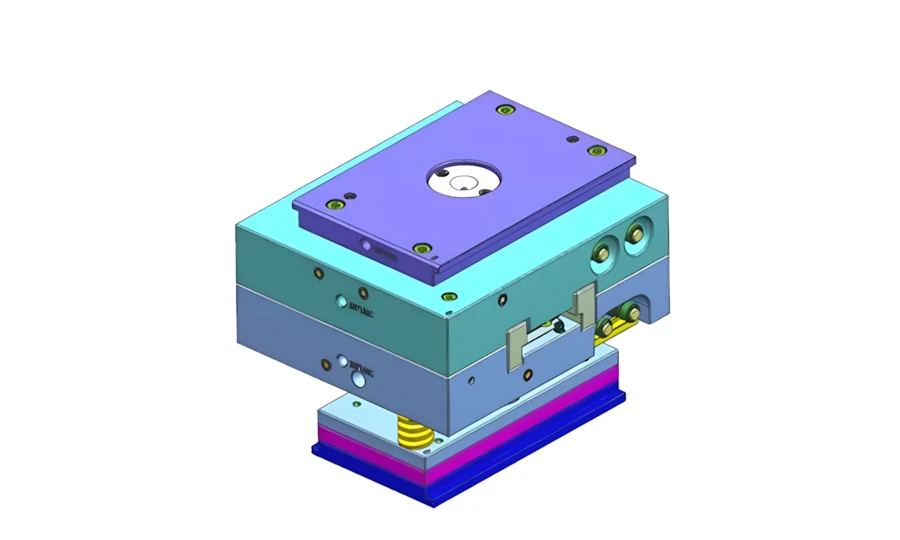
Gate Selection and Sizing
PS plastic’s low viscosity makes it compatible with virtually all gate types — edge, submarine (tunnel), fan, pin-point, and hot-runner valve gates:
- Fan gates are preferred for flat, transparent GPPS panels where uniform fill and minimal weld lines are critical.
- Submarine gates work well for HIPS structural housings in multi-cavity tools; they provide automatic degating and reduce post-processing labor.
- Hot-runner systems are recommended for high-volume consumer electronics programs — eliminating runner scrap, reducing cycle time, and improving gate cosmetics on visible HIPS surfaces.
- Gate land length should be minimized to 0.5–1.0 mm to reduce shear stress and prevent stress-whitening in transparent GPPS parts.
Laufschuhdesign
Full-round runners (4–8 mm diameter) minimize pressure drop. For balanced multi-cavity tools — standard in high-volume electronics and medical consumables — Dimud uses naturally balanced runner layouts (H-pattern or radial) to ensure simultaneous fill across all cavities. In 16- to 64-cavity PS tools, runner balance directly determines part-to-part weight consistency and dimensional uniformity.
Steel Selection and Surface Finish
| Steel Grade | Anwendung | Begründung |
|---|---|---|
| P20 (vorgehärtet) | Standard HIPS production molds | 500,000+ shot life on unfilled grades |
| H13 (hardened) | Glass-filled PS; abrasive compounds | Wear resistance at gate and cavity surfaces |
| S136 / 420SS Edelstahl | Medical-grade GPPS | Corrosion resistance + SPI A1 polishability |
Surface texture significantly affects final part appearance on PS plastic:
- Optical-grade GPPS: SPI A1 or A2 polish (mirror finish)
- Consumer electronics HIPS: Matte texture (MT-11040 or equivalent) to conceal fingerprints
- Automotive interior HIPS: Leather-grain texture (VDI 30–33) per OEM specification
Ejection System Design
Polystyrene’s brittleness creates ejection risk with poorly placed pins. Dimud applies the following rules on every PS program:
- Maximize pin contact area — use blade ejectors or stripper plates on thin-wall sections in preference to small-diameter point pins.
- Never place ejector pins at sharp corners or thin ribs — stress concentration at pin contact points causes fracture initiation, particularly in GPPS.
- Stripper plate ejection is standard for transparent GPPS parts where pin witness marks on cosmetic surfaces are unacceptable.
Entlüftung
PS plastic’s rapid fill speed requires adequate mold venting to prevent burn marks (diesel effect) at last-fill zones:
- Vent depth: 0.02–0.03 mm for GPPS; 0.025–0.04 mm for HIPS
- Lüftungsspalt: 3–5 mm
- Peripheral parting-line venting plus ejector pin clearance venting on deep ribs is Dimud’s standard configuration
Anwendungen in der Industrie
Unterhaltungselektronik
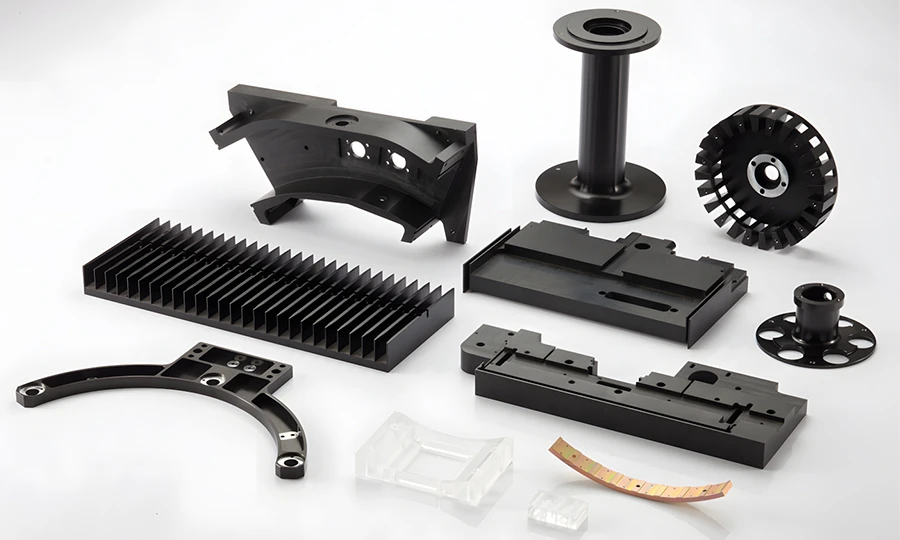
Consumer electronics is the highest-volume application sector for injection-molded PS plastic globally, and Dimud’s most active domain for this material family. Polystyrene delivers the surface quality, dimensional precision, and cost structure that high-volume electronics programs demand.
Device enclosures and rear covers (FR-HIPS): TV rear housings, set-top box shells, router enclosures, and speaker cabinets. FR-HIPS provides impact resistance, dimensional stability, a paintable or directly texturable surface, and UL 94 V-0 compliance for mains-powered devices. This combination is difficult to replicate at equivalent cost with any other commodity thermoplastic.
Display light diffusers and bezels (GPPS): The 88–92% light transmittance of GPPS makes it a cost-effective alternative to acrylic for light diffusion panels, indicator lenses, and display bezels. For programs where optical performance is required but polycarbonate’s cost premium is unjustified, GPPS is the default specification at Dimud.
ESD-dissipative handling fixtures (ESD PS): Semiconductor packaging trays, component handling fixtures, and PCB storage inserts from carbon-loaded PS protect sensitive components from electrostatic discharge. Dimud produces ESD PS fixtures with surface resistivity verification to ANSI/ESD S20.20 as part of standard lot acceptance testing.
Internal structural brackets (HIPS): Internal chassis brackets, PCB standoffs, and wire routing guides — invisible components where material cost and tight tolerances matter more than aesthetics. The low shrinkage of PS plastic makes it ideal for these fit-critical parts.
Medical and Diagnostic Devices
Medical-grade PS plastic occupies a defined and growing role in diagnostic and laboratory device manufacturing, driven by polystyrene’s exceptional radiation resistance — enabling gamma and EO sterilization without significant mechanical or optical degradation.
Diagnostic test cassette housings (GPPS): Lateral flow assay cassettes for point-of-care diagnostics are among the highest-volume injection-molded GPPS applications globally. The material’s transparency allows optical reading of results windows, while its dimensional stability ensures consistent reagent pad positioning across production lots. Dimud has produced multi-million-unit volumes of diagnostic cassette components for customers across European and North American markets.
Microplate systems (GPPS): 96-well, 384-well, and 1536-well microplates for drug discovery and clinical diagnostics. GPPS provides optical clarity, low background fluorescence, and the dimensional precision (inter-well position tolerance: ±0.1 mm) required for automated liquid handling compatibility.
Petri dishes and cell culture vessels (GPPS): Standard laboratory consumables where optical clarity, gamma sterilization compatibility, and low adsorption of biological molecules are essential. Medical-grade GPPS certified to USP Class VI and ISO 10993 is the required specification for these applications.
Specimen containers and diagnostic packaging (HIPS): Impact resistance and chemical compatibility for sample transport containers, slide mailers, and specimen collection kits.
Dimud operates dedicated clean production cells for medical PS components, with resin lot certification, material traceability records, and batch CoC as standard deliverables.
Fahrzeuginnenraum
PS plastic has a long-established role in automotive interior systems, where its combination of rigidity, dimensional stability, and surface quality addresses the cost-optimization pressure that defines Tier-1 supply. Applications concentrate in non-structural interior components within climate-controlled cabin environments.
Interior trim panels and door pull covers (HIPS): HIPS is the workhorse material for painted and textured interior trim surfaces — instrument panel inserts, pillar covers, and glove box liners. Leather-grain textured HIPS achieves premium haptic quality at commodity material cost.
Air vent bezels and register surrounds (HIPS): Dimensional stability under vehicle HVAC temperature cycling (typically -30 °C to +85 °C) is a key selection driver; HIPS performs reliably within this range without the warpage risk of softer polymers.
Infotainment and switch bezel surrounds (FR-HIPS): Flame-retardant HIPS is increasingly specified for in-cabin electronics surrounds as OEMs integrate larger display and control surfaces into dashboard systems.
Interior lighting lenses (GPPS): Ambient lighting lenses and instrument cluster light pipes where optical clarity is required at lower cost than polycarbonate.
Dimud supplies automotive PS components to IATF 16949-aligned quality standards, with PPAP Level 3 documentation, FMVSS 302 flammability compliance records, and dimensional reports as standard deliverables.
Robotik und Energiespeicherung
Sensor enclosures and structural brackets (HIPS): Proximity sensor housings, encoder covers, and mounting brackets for robotic arms benefit from HIPS’s stiffness, tight dimensional tolerances, and machinability for post-mold secondary operations.
Battery cell spacers and module insulators (FR-HIPS / ESD PS): In lithium-ion battery module assembly, inter-cell spacers and insulating separators are injection-molded from flame-retardant HIPS or ESD PS compounds — providing both dielectric isolation and controlled static discharge at cell surfaces.
Assembly jigs and test fixtures (HIPS): Production-line jigs and functional test fixtures manufactured from HIPS for their dimensional stability, machinability, and low material cost. HIPS tooling fixtures provide repeatability across shift changes and thermal cycling that softer polymers cannot match.
Cable management and wiring accessories (FR-HIPS): Wiring harness clips, conduit brackets, and cable tie mounts in robot base assemblies and battery pack wiring systems — where flame-retardant compliance is increasingly required by OEM safety standards.
Dimud’s rapid prototyping pathway — 3D-printed concept models validated against aluminum soft-tool sample runs before committing to production steel — supports robotics customers whose development cycles are compressed by fast-moving market timelines.
PS Plastic vs. Competing Materials
| Eigenschaft / Faktor | GPPS | HIPS | ABS | PP | PC |
|---|---|---|---|---|---|
| Optische Klarheit | ★★★★★ | ★☆☆☆☆ | ★★☆☆☆ | ★★☆☆☆ | ★★★★☆ |
| Rigidity / Stiffness | ★★★★★ | ★★★★☆ | ★★★★☆ | ★★★☆☆ | ★★★★☆ |
| Schlagfestigkeit | ★★☆☆☆ | ★★★★☆ | ★★★★★ | ★★★★☆ | ★★★★★ |
| Formstabilität | ★★★★★ | ★★★★★ | ★★★★☆ | ★★★☆☆ | ★★★★☆ |
| Surface Finish Quality | ★★★★★ | ★★★★☆ | ★★★★☆ | ★★★☆☆ | ★★★★☆ |
| Hitzebeständigkeit | ★★☆☆☆ | ★★☆☆☆ | ★★★☆☆ | ★★★★☆ | ★★★★★ |
| Radiation Sterilizability | ★★★★★ | ★★★★☆ | ★★★☆☆ | ★★★☆☆ | ★★☆☆☆ |
| Einfache Verarbeitung | ★★★★★ | ★★★★★ | ★★★★☆ | ★★★★☆ | ★★★☆☆ |
| Rohstoffkosten | $ Niedrig | $ Niedrig | $$ Mittel | $ Niedrig | $$$ Hoch |
| Chemische Beständigkeit | ★★★☆☆ | ★★★☆☆ | ★★★☆☆ | ★★★★★ | ★★★☆☆ |
PS vs. ABS: HIPS is typically 15–25% lower in raw material cost than ABS and achieves higher natural surface gloss. ABS wins where tougher impact performance, better chemical resistance, or stronger weld-line strength is required and opacity is acceptable.
PS vs. PC: For non-impact-critical optical applications, GPPS costs significantly less than polycarbonate and sterilizes with gamma radiation without yellowing — a decisive advantage for medical consumables. PC wins where impact performance, high-temperature service, or long-term UV stability are required.
PS vs. PP: PS provides significantly better dimensional stability (lower shrinkage) and surface finish. PP wins where chemical resistance, high-temperature service, or living hinge functionality are required.
DFM Guidelines for PS Plastic Parts
Wanddicke
Recommended range: 1.0–4.0 mm for structural parts; 0.5–1.5 mm for thin-wall packaging or medical consumables with high-flow grades.
Uniform wall thickness is more critical for PS than for flexible polymers — differential residual stress in thick/thin transitions can cause brittle fracture in service, particularly in GPPS. Where walls must transition, taper over a minimum distance of 3× the thickness change on the non-cosmetic face.
Corner Radii — The Most Critical DFM Rule for PS
Sharp internal corners are the primary failure mode in injection-molded polystyrene. Stress concentrations at zero-radius corners under impact, thermal cycling, or ejection force cause fracture initiation that propagates through the part.
Mindestradius für Innenecken: 0,5 mm. Empfohlen: 1,0 mm oder 25–50% der Wandstärke.
Every DFM review Dimud conducts on PS programs includes a mandatory corner radius audit of the 3D model before any tooling quotes are issued. This is non-negotiable on GPPS programs and strongly enforced on HIPS.
Rippen und Vorsprünge
- Rib thickness: 50–60% of nominal wall to prevent sink marks on the opposite surface
- Rib height: maximum 3× nominal wall; taller ribs require draft and fillets at base
- Boss outer diameter: maximum 2× nominal wall; cored bosses preferred on thick sections
- Boss-to-wall connection: always filletted at base (minimum 0.5 mm radius)
Entwurfswinkel
- Polished GPPS surfaces: minimum 0.5° per side (1° preferred)
- Textured HIPS surfaces: 1.5°–3° per side depending on texture depth (VDI 30 requires approximately 3° minimum)
- Deep ribs (height > 5 mm): 1° minimum with polished core surfaces
Erreichbare Toleranzen
PS plastic’s low shrinkage enables tighter dimensional tolerances than most commodity polymers:
- Standard: ±0.10–0.15 mm on controlled critical dimensions
- Fine (process-optimized): ±0.05–0.08 mm on short dimensions < 50 mm
- Multi-component assemblies (snap-fits, light-pipe alignment): Dimud recommends tolerance stack-up analysis before tool design freeze
Dimud's PS Plastic Injection Molding Capabilities
| Servicephase | Dimud-Fähigkeit | Kundenvorteil |
|---|---|---|
| DFM-Überprüfung | Grade recommendation, corner radius audit, wall thickness analysis, Moldflow pre-validation | Eliminate design-driven failures before tooling |
| Schnelles Prototyping | SLA/SLS models + aluminum soft tools in GPPS or HIPS | Funktionsfähige Muster innerhalb von 10–15 Arbeitstagen |
| Formenbau | P20 / H13 / S136; hot-runner; 1–128 cavities | Production-ready tooling with guaranteed shot-life commitment |
| Serienformung | 50T–1,600T machines; FR-HIPS, ESD PS, medical-grade GPPS | Pilot to multi-million annual volumes |
| Secondary Operations | Pad printing, hot stamping, ultrasonic welding, sub-assembly | Finished cosmetic and functional sub-assemblies |
| Qualitätsdokumentation | PPAP, CoC, CMM reports, UL file support, material traceability | Audit-ready for automotive, medical, electronics |
| Lieferkette | Resin sourcing, incoming QC, outbound inspection, DDP logistics | Single point of accountability |
Dimud’s export programs serve customers in Europe, North America, and the Middle East — markets where regulatory documentation, English-language engineering communication, and consistent on-time delivery are minimum expectations, not differentiators.
Häufig gestellte Fragen
GPPS and HIPS accept water-based and UV-cured paint systems without primer in most cases. Solvent-based coatings containing aromatic hydrocarbons (toluene, MEK, acetone) will craze or dissolve PS surfaces — these must be avoided. For bonding, PS is one of the easiest thermoplastics to solvent-weld using methylene chloride or ethyl acetate; cyanoacrylate and two-part epoxies also perform reliably. Ultrasonic welding is Dimud's standard approach for HIPS housing assemblies.
HIPS is typically 15–25% lower in raw material cost, achieves higher natural gloss, and sterilizes reliably under gamma radiation. ABS provides better impact strength at low temperatures, superior chemical resistance, and stronger weld-line performance. For consumer electronics enclosures not requiring drop-test certification, FR-HIPS at UL 94 V-0 is the cost-optimized choice. For industrial electronics or drop-rated devices, ABS is the safer structural selection.
Food-grade GPPS and HIPS comply with FDA 21 CFR 177.1640 and EU Regulation 10/2011 when produced from compliant resin with verified additive systems. Medical-grade GPPS certified to USP Class VI and ISO 10993-1 is widely used for diagnostic consumables, laboratory plasticware, and diagnostic packaging. Dimud provides full material certification, CoC, and compliance documentation for both food-contact and medical-grade PS programs.
Standard GPPS and HIPS are not recommended for prolonged outdoor exposure without UV stabilization — the benzene ring in the molecular structure is susceptible to UV-induced photo-oxidation, causing yellowing and surface crazing over 6–18 months. UV-stabilized PS grades (HALS + UV absorbers) extend outdoor service life to 3–5 years for moderate-exposure applications. For demanding outdoor use, ASA (acrylonitrile-styrene-acrylate) is the natural upgrade path — same processing window as HIPS with inherently superior UV durability.
For standard HIPS programs in P20 steel: 500,000 to 1,000,000 shots with proper maintenance. Glass-filled PS reduces tool life due to gate and cavity wear — H13 hardened steel restores expected life to 500,000+ shots. Dimud provides guaranteed minimum shot-life commitments in tooling contracts, with scheduled preventive maintenance intervals and cavity inspection records as standard deliverables.
Schlussfolgerung
PS plastic is not a single material. It is a family whose performance can be tuned from water-clear optical components to impact-resistant structural enclosures to flame-retardant electronics housings — depending on which grade you specify and how you engineer the mold.
The engineers who get consistent results from polystyrene treat grade selection, corner radius design, and mold cooling as an integrated system. A perfect cavity in the wrong grade, or a correct grade in a mold with zero-radius corners, produces the same outcome: field failures and rework.
Dimud manages all three variables simultaneously — from DFM review through production qualification — so your PS program arrives at volume with the dimensional consistency, surface quality, and regulatory documentation your customers require.