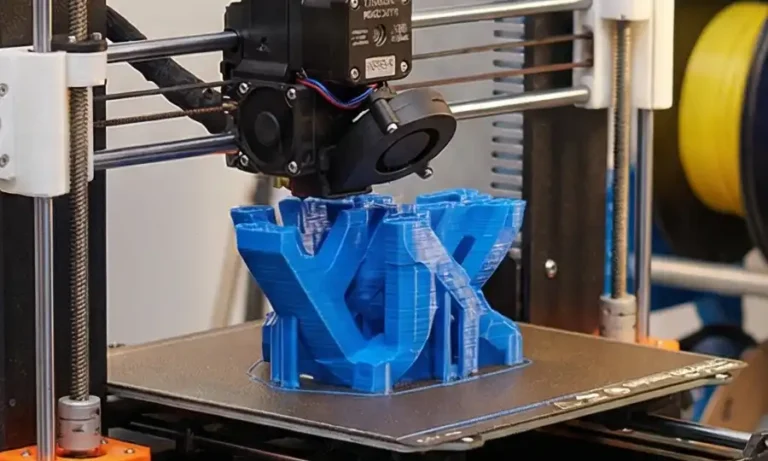

What Is Rapid Tooling?

Every product starts as an idea. But somewhere between that idea and a shelf-ready part, most teams hit the same wall: the mold takes too long. Waiting 8–12 weeks for a production mold — only to discover a wall thickness…

Every product starts as an idea. But somewhere between that idea and a shelf-ready part, most teams hit the same wall: the mold takes too long. Waiting 8–12 weeks for a production mold — only to discover a wall thickness…

Liquid crystal polymer occupies a unique performance tier — not just high-performance, but possessing a specific combination of properties that collectively define the material: the ability to flow into walls thinner than human hair, crystallize in microseconds producing self-reinforcing molecular…

That number is not a marketing claim — it is a documented material performance threshold that separates PPSU plastic from every other engineering thermoplastic in the polysulfone family, and from most high-performance resins at any price point. PSU and PES…

Polyphenylene sulfide occupies the performance tier between standard engineering thermoplastics and ultra-high-performance polymers like PEEK — delivering continuous service temperatures to 220 °C, resistance to virtually every solvent below 200 °C, inherent UL 94 V-0 flame resistance without additives, and…

Polyetherimide — commercially known as Ultem® (SABIC) — is the material that gets specified once the design requirements have been clarified by failure. It is not the cheapest engineering thermoplastic on the list. It is not the easiest to process.…

ASA plastics — acrylonitrile styrene acrylate — was engineered specifically to solve the outdoor durability problem that ABS cannot. By replacing ABS’s polybutadiene rubber phase (which contains UV-reactive carbon-carbon double bonds) with a saturated acrylic ester elastomer, ASA achieves approximately…

Polyetheretherketone occupies a performance tier that no other injection-moldable polymer reaches — a sustained service temperature approaching 260 °C, strength-to-weight ratio rivaling aluminum, resistance to virtually every industrial chemical except concentrated sulfuric and nitric acids, inherent biocompatibility validated for long-term…

When a product fails in the field — a sealing gasket that cracks at -40°C, a medical device grip that deforms under repeated sterilisation, an automotive grommet that leaks after 50,000 km — the root cause is almost always a…

Styrene acrylonitrile sits in a performance window that is genuinely underutilized in precision injection molding programs — better optical clarity and chemical resistance than GPPS, significantly more rigid and dimensionally stable than LDPE or PP, and less expensive than PC…

What happened? PET is a semi-crystalline polymer — and semi-crystalline polymers behave differently depending on whether they crystallize during molding or not. An engineer who has only worked with amorphous polymers like ABS or PC will encounter PET’s crystallization behavior…