

SLA 3D Printing Service
Dimud provides professional SLA 3D printing service for high-detail prototypes, appearance models and low-volume parts. With engineering resin options, DFM support, precision finishing and inspection, we help you validate designs faster and move confidently toward production.
- Single prototypes to low-volume builds
- Your files and project stay confidential
- From SLA samples to scalable manufacturing
SLA 3D Printing Capabilities
From high-detail prototypes to low-volume custom parts, Dimud provides flexible SLA manufacturing with engineering resin options, professional finishing, and quality inspection.
| Fähigkeit | Dimud SLA Manufacturing Support |
|---|---|
|
Printing Process |
Industrial SLA 3D Printing |
|
Order Quantity |
From 1 part to low-volume production |
|
Resin Materials |
Standard, Tough, Durable, Clear, High-Temp, Flexible, Castable |
|
File Formats |
STEP, STP, STL, IGES, OBJ |
|
Part Features |
Fine details, thin structures, complex surfaces, internal channels |
|
Finishing Options |
Sanding, polishing, painting, clear coating, inserts, assembly |
|
Quality Control |
Visual inspection and dimensional measurement |
|
Project Support |
DFM review, material selection, finishing, and production transition |
What Is SLA 3D Printing?
SLA 3D printing, short for stereolithography, is a resin-based additive manufacturing process that uses a controlled light source to cure liquid photopolymer resin layer by layer. It is widely used to produce prototypes and custom parts with smooth surfaces, fine details, and complex geometries.
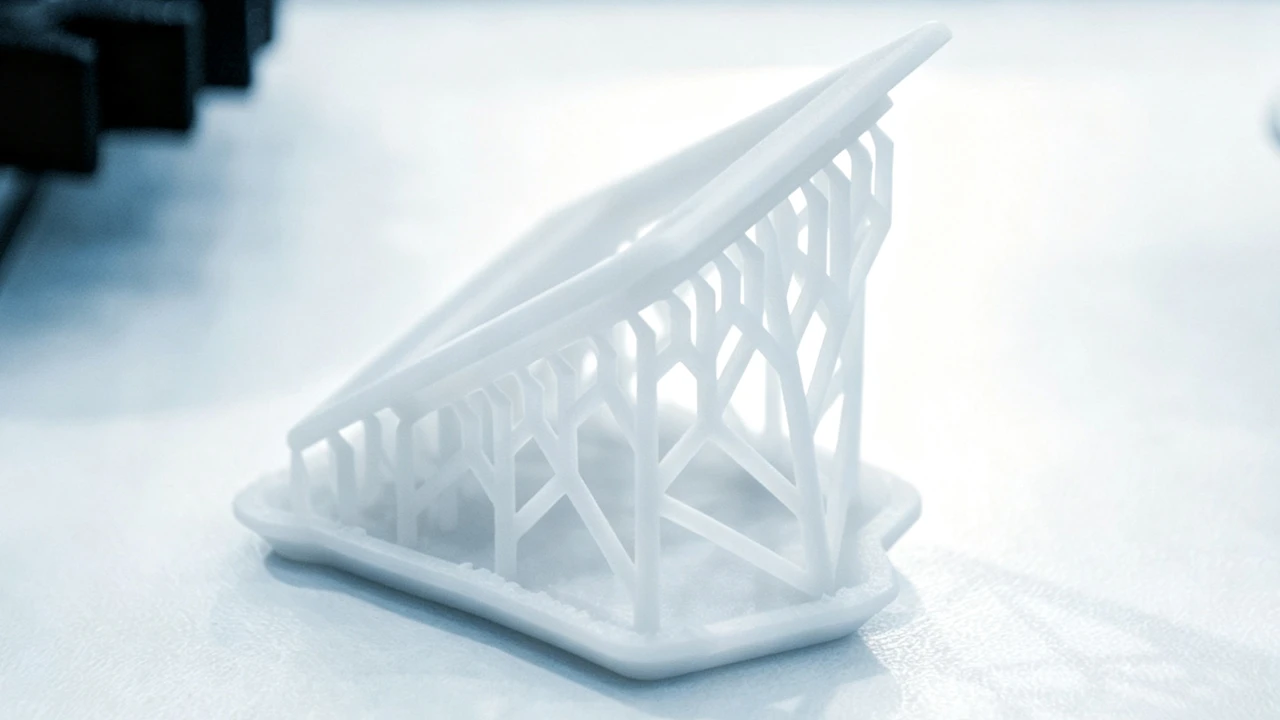
Unlike filament-based printing, SLA forms parts from liquid SLA resin, allowing it to reproduce small features, thin walls, curved surfaces, text, and other detailed structures more clearly. After printing, each part is washed, post-cured, support marks are removed, and the required surface finishing is completed.
At Dimud, SLA is not treated as a simple printing process. Our engineers consider part orientation, support placement, resin shrinkage, critical dimensions, appearance surfaces, and the intended use of the part before production. This helps reduce deformation, visible support marks, and assembly problems during prototype validation.
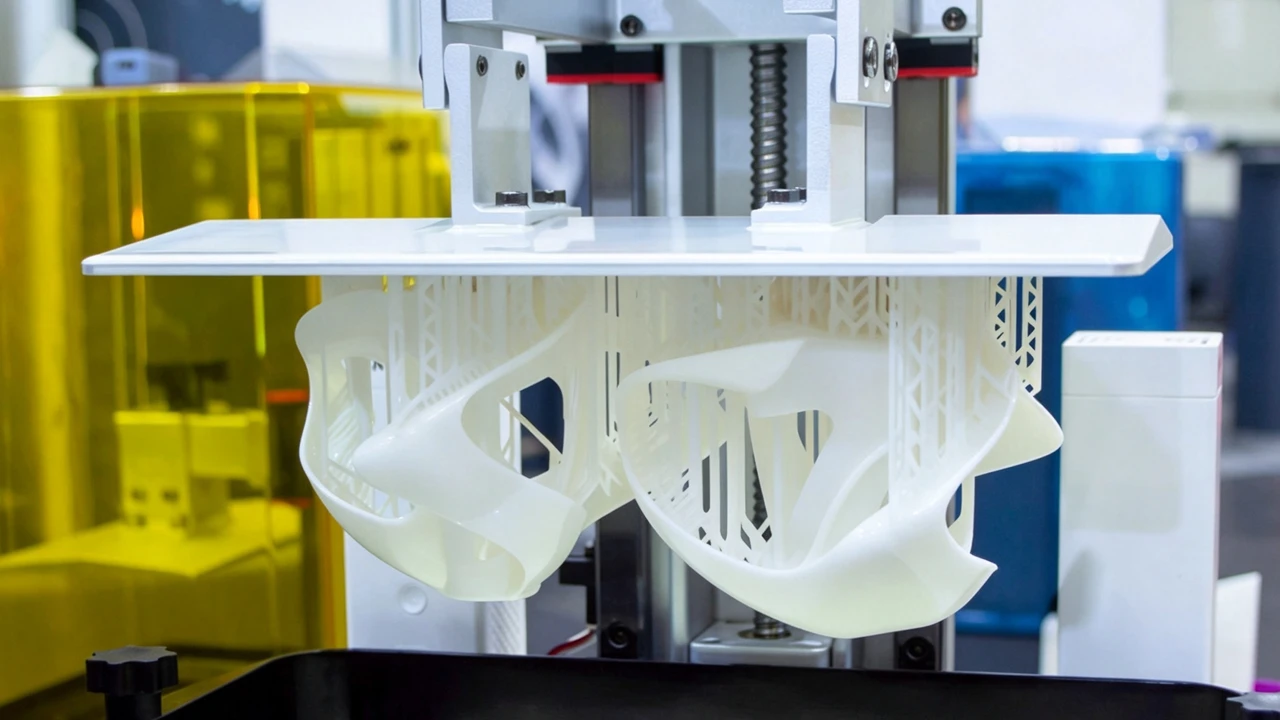
SLA 3D Printing Process
CAD File Preparation
The 3D model is reviewed and converted into a printable file.
Build Orientation
The part is positioned to balance accuracy, surface quality, support marks, and printing stability.
Resin Printing
An industrial SLA printer cures the liquid resin layer by layer according to the sliced model.
Washing
Uncured resin is removed from the printed part.
UV Post-Curing
The part is cured under controlled UV light to achieve its required final properties.
Finishing and Inspection
Supports are removed before sanding, polishing, painting, assembly, or dimensional inspection.
Is SLA Right for Your Part?
SLA is an excellent choice when surface quality, fine detail, and fast design validation are more important than long-term production material performance. However, it is not the best process for every application. The right decision depends on how the part will be used, tested, and manufactured later.
Dimud engineers evaluate the purpose of the prototype—not only its geometry—to recommend the appropriate resin and manufacturing process. This helps prevent customers from paying for a highly detailed part that cannot provide the test results their project actually needs.
SLA Is a Good Choice When You Need
High-Detail Features
Produce small text, logos, thin structures, complex curves, and intricate geometries with excellent visual definition.
Smooth Appearance Surfaces
Create presentation-ready prototypes that require less finishing before painting, polishing, or customer evaluation.
Fast Design Validation
Test product shape, assembly, clearances, ergonomics, and design changes before investing in production tooling.
Clear or Translucent Prototypes
Evaluate internal channels, fluid paths, lighting structures, and transparent product features.
Complex Custom Parts
Manufacture geometries that may be difficult or costly to produce through conventional machining.
Low-Volume Prototypes
Produce one part or several design versions without the cost and lead time of mold manufacturing.
Consider Another Process When You Need
Long-Term Mechanical Performance
Standard SLA resin may not be suitable for parts exposed to repeated impact, continuous loading, or long-term flexing.
Production-Grade Thermoplastics
If the prototype must use real ABS, POM, Nylon, PEEK, or other engineering plastics, CNC machining or SLS may be more suitable.
High-Volume Production
For stable medium- or high-volume requirements, injection molding usually provides better unit cost and consistency.
Clear or Translucent Prototypes
Evaluate internal channels, fluid paths, lighting structures, and transparent product features.
Long-Term Outdoor Use
Some SLA materials may change in color or mechanical performance after prolonged UV exposure.
Large, Cost-Sensitive Parts
FDM or other manufacturing processes may be more economical for large models with limited detail requirements.
Extreme Heat or Chemical Exposure
A specialized material or alternative manufacturing process may be required for demanding operating environments.
Benefits of SLA 3D Printing
SLA 3D printing combines fine detail, smooth surfaces, and flexible production, making it ideal for high-quality prototypes and complex custom parts. More importantly, it helps product teams identify design problems earlier and reduce the risk of expensive changes after tooling begins.
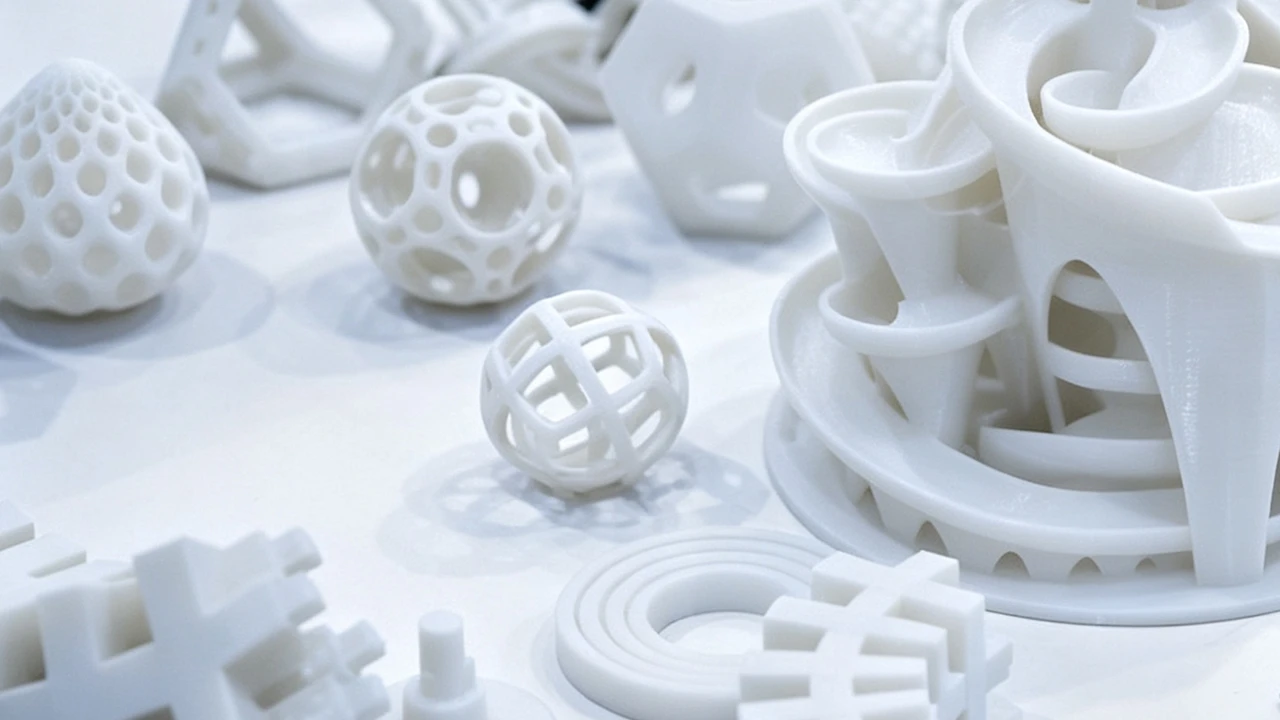
Exceptional Detail Resolution
SLA can accurately reproduce small text, logos, thin features, complex curves, and intricate geometries that may be difficult to achieve with other rapid prototyping processes.
Smooth Surface Finish
Parts have minimal visible layer lines, reducing the time required for sanding, painting, polishing, or preparing appearance models for customer presentations.
Faster Design Iteration
Without mold tooling, different design versions can be produced quickly for form, fit, assembly, and ergonomic evaluation, helping development teams make decisions sooner.
Complex Geometry Freedom
SLA supports internal channels, organic surfaces, small cavities, and integrated structures, giving designers more freedom to validate complex product concepts.
Wide Range of Engineering Resins
Different SLA resin options can provide clear, tough, durable, flexible, high-temperature, or castable properties for specific prototype and testing requirements.
Lower Development Risk
A detailed prototype can reveal interference, clearance, appearance, and usability issues before mold manufacturing, helping reduce tooling modifications, project delays, and unexpected costs.
From Prototype to Production
Dimud can support the next manufacturing stage after SLA rapid prototyping, including vacuum casting, CNC machining, mold making, injection molding, surface finishing, and product assembly.
SLA Resin Materials
The right SLA resin should be selected according to how the part will be used—not simply by choosing the hardest or most expensive material. Dimud evaluates impact, flexibility, temperature, appearance, assembly method, and testing requirements before recommending a suitable SLA 3D printer resin.
| Resin Type | Wichtige Eigenschaften | Typische Anwendungen | Important Considerations |
|---|---|---|---|
|
Standard-Harz |
Smooth surface, fine detail, good dimensional definition |
Appearance models, concept prototypes, display parts |
Best for visual evaluation rather than repeated impact |
|
Tough / ABS-Like Resin |
Higher impact resistance and toughness |
Housings, brackets, clips, functional prototypes |
Similar to ABS in behavior, but not identical to injection-molded ABS |
|
Durable / PP-Like Resin |
Flexible, low-friction, and resistant to moderate deformation |
Snap fits, hinges, squeezable parts, protective components |
Suitable for limited flexing and assembly validation |
|
Klares Harz |
Transparent or translucent appearance after finishing |
Fluid channels, lighting parts, lenses, internal structure inspection |
High transparency requires polishing and clear coating |
|
High-Temperature Resin |
Improved heat resistance and stiffness |
prototypes, fixtures, tooling, hot-air applications |
Higher heat resistance may come with increased brittleness |
|
Flexible Resin |
Soft, elastic, and rubber-like |
Seals, grips, soft-touch parts, flexible covers |
Dimensional accuracy is usually lower than rigid resins |
|
Castable Resin |
Clean burnout with low residue |
Investment casting patterns, jewelry, precision casting |
Designed for casting rather than long-term functional use |
|
Biocompatible Resin |
Formulated for specific medical or dental applications |
Medical models, guides, dental components |
Certification and intended contact conditions must be verified |
How Dimud Selects the Right SLA Resin
Before production, our engineers review:
- The purpose of the prototype
- Expected loads and impact
- Required flexibility or stiffness
- Operating temperature
- Transparency and surface requirements
- Snap fits, threads, and assembly features
- Chemical, moisture, or UV exposure
- Whether the design will later move to injection molding
SLA Design Guidelines
Good SLA results depend on more than printer resolution. Wall thickness, part orientation, support placement, drainage, resin shrinkage, and post-curing can all affect dimensional accuracy, surface quality, and print stability.
The following guidelines provide practical starting points for SLA part design. Final recommendations may vary according to the selected resin, part size, geometry, and application.
| Design Feature | Recommended Starting Point | Why It Matters |
|---|---|---|
|
Supported Wall Thickness |
0.6 mm or more |
Thin supported walls may deform during printing, washing, or post-curing. |
|
Unsupported Wall Thickness |
1.0 mm or more |
Free-standing walls require additional thickness to reduce warping and breakage. |
|
Minimum Hole Diameter |
0.8 mm or more |
Small holes may partially close because of resin curing, orientation, and cleaning limitations. |
|
Assembly Clearance |
0.3–0.5 mm between parts |
Adequate clearance helps prevent mating components from fusing or interfering during assembly. |
|
Embossed Details |
At least 0.4 mm high and wide |
Very small raised text, logos, and details may lose definition during printing or finishing. |
|
Engraved Details |
At least 0.4 mm deep and wide |
Shallow grooves and text can become less visible after curing, sanding, or painting. |
|
Drainage Holes |
At least 3 mm in diameter |
Hollow parts need drainage paths to remove uncured SLA resin and allow effective cleaning. |
|
Hollow Part Walls |
Typically 2–3 mm |
Uniform walls help reduce material use while maintaining enough strength for post-processing. |
|
Printed Threads |
Use larger, coarse threads |
Fine threads can lose definition; threaded inserts are better for repeated assembly. |
|
Large Flat Surfaces |
Add ribs, curves, or suitable orientation |
Large flat areas are more likely to show warping, support marks, or uneven surfaces. |
Gestaltungshinweise
- Protect Critical Surfaces: Do not place supports on sealing faces, mating areas, transparent surfaces, or visible cosmetic zones. Mark these surfaces in the CAD file so Dimud can optimize orientation and finishing.
- Hollow Large Parts Correctly: Use uniform 2–3 mm walls and add drainage holes of at least 3 mm. Two openings are recommended to improve resin removal, washing, and internal curing.
- Allow for Real Assembly Conditions: Keep 0.3–0.5 mm clearance between mating parts and avoid applying tight tolerances to the entire model. Prioritize only dimensions that affect fit, sealing, alignment, or movement.
SLA 3D Printing Applications
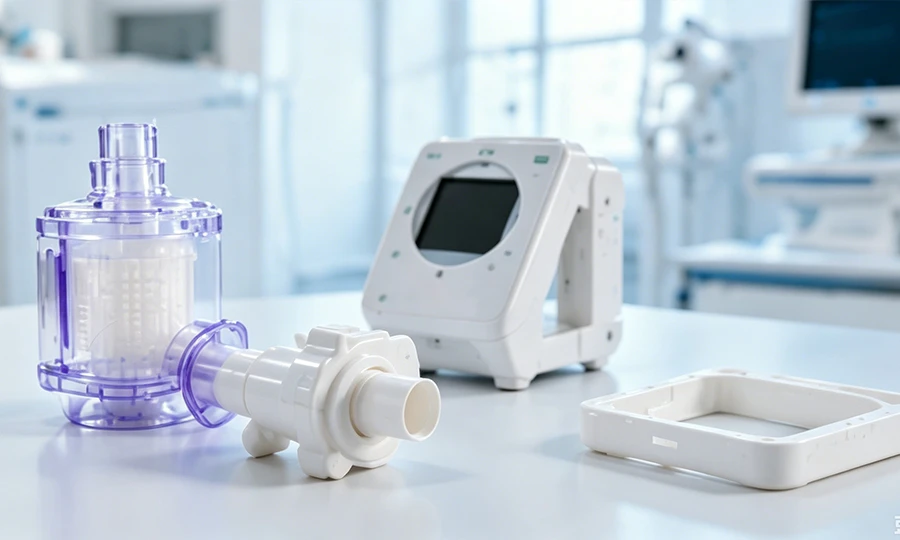
SLA 3D printing is widely used when fine details, smooth surfaces, and fast design validation are critical. Dimud supports customers across product development, engineering testing, visual presentation, and low-volume manufacturing.



Why Choose Dimud for SLA 3D Printing?
Dimud combines industrial SLA printing with practical engineering support, quality control, and complete manufacturing services. We help customers obtain prototypes that are not only visually accurate, but also useful for assembly testing, design decisions, and the next stage of production.
Engineering Review Before Printing
Our engineers review wall thickness, support areas, drainage holes, critical dimensions, assembly clearances, and appearance surfaces before production. This helps reduce failed prints, deformation, visible support marks, and unnecessary rework.
Material Selection Based on Application
Instead of recommending resin only by hardness or appearance, Dimud evaluates impact, flexibility, temperature, transparency, environmental exposure, and testing requirements to select a more suitable SLA resin.
Controlled Finishing and Inspection
Each part can go through washing, post-curing, support removal, sanding, polishing, painting, coating, assembly, and dimensional inspection according to the project requirements.
Flexible Orders from Prototype to Low Volume
Dimud supports single prototypes, multiple design iterations, and low-volume custom parts, allowing customers to validate designs without investing in tooling too early.
One-Stop Manufacturing Support
After SLA rapid prototyping, your project can continue with vacuum casting, CNC machining, mold manufacturing, injection molding, surface finishing, and product assembly through one manufacturing partner.
Experience Across Multiple Industries
Our engineering and manufacturing teams support automotive, medical device, robotics, consumer electronics, and industrial equipment projects, helping customers solve appearance, assembly, performance, and production challenges.
Start Your SLA Project with Dimud
Upload your CAD files together with the quantity, application, material, surface, and testing requirements. Our team will review your project and provide a suitable manufacturing recommendation.
SLA 3D Printing Cost
The cost of SLA 3D printing depends on more than the amount of resin used. Part geometry, build height, support requirements, resin type, finishing, inspection, and delivery time can all affect the final quotation.
At Dimud, each project is reviewed individually so customers receive a clear price based on the actual manufacturing requirements.
What Affects SLA 3D Printing Cost?
Part Size and Resin Volume
Larger and solid parts consume more SLA resin and require longer printing and post-curing times. Hollowing suitable areas can reduce material use, but drainage and structural strength must be considered.
Build Height and Orientation
Printing time is strongly influenced by the total build height. Two parts with similar volumes may have different costs if one requires a taller build orientation to protect critical surfaces or improve accuracy.
Resin Type
Standard resin is generally more economical than clear, tough, flexible, high-temperature, castable, or specialized engineering resins.
Tolerance and Inspection
Projects with critical assembly dimensions, detailed inspection requirements, or measurement reports require additional engineering and quality-control time.
Support Structures
Complex overhangs and delicate features may require additional supports. More supports increase material use, removal time, and surface-finishing work.
Menge
Multiple parts can sometimes be arranged in the same build, reducing setup cost per part. However, the final unit price also depends on part size, orientation, and finishing requirements.
Oberfläche
Basic support removal costs less than sanding, polishing, painting, clear coating, color matching, or display-quality finishing.
Vorlaufzeit
Urgent production may require priority scheduling, while flexible delivery dates can provide more economical production options.
How to Reduce SLA Printing Cost
- Hollow large solid sections where technically suitable
- Use consistent wall thickness
- Add correctly positioned drainage holes
- Avoid unnecessarily tight tolerances
- Mark only critical dimensions and appearance surfaces
- Combine multiple small parts into one production batch
- Select standard resin for early design validation
- Reserve premium finishing for customer-facing surfaces
- Choose the manufacturing process according to the prototype’s purpose
FAQ
SLA is a resin-based 3D printing process that uses light to cure liquid photopolymer resin layer by layer. It is ideal for parts requiring fine details, smooth surfaces, and complex geometries.
SLA is commonly used for appearance models, assembly prototypes, transparent parts, medical models, casting patterns, and high-detail product development prototypes.
Accuracy depends on the part size, geometry, resin, build orientation, support placement, and post-curing. Dimud reviews critical dimensions before printing and can provide dimensional inspection when required.
Engineering SLA resin can support limited functional, fit, and assembly testing. For repeated impact, long-term loading, or production-level performance, CNC machining, SLS, or injection molding may be more suitable.
No. SLA resins are photopolymer thermosets. Materials described as ABS-like or PP-like may provide similar characteristics, but they are not identical to injection-molded ABS or PP.
The correct material depends on the required toughness, flexibility, transparency, temperature resistance, surface finish, and testing purpose. Dimud can recommend a suitable resin after reviewing your application.
Yes. Clear SLA resin can produce transparent or translucent prototypes. Higher transparency normally requires controlled orientation, sanding, polishing, and clear coating.
Standard SLA resin is generally not recommended for long-term outdoor use because UV exposure may affect its color and mechanical properties. A UV-resistant coating or another manufacturing process may be required.
Dimud supports orders starting from one part, including single prototypes, design iterations, and low-volume production.
Lead time depends on part size, quantity, resin, finishing, and inspection requirements. Simple prototypes can usually be completed faster than parts requiring painting, polishing, assembly, or detailed inspection.
Cost is affected by part size, resin volume, build height, support structures, material, quantity, surface finish, tolerance, and delivery schedule. Uploading a CAD file is the best way to receive an accurate quotation.
STEP, STP, STL, IGES, OBJ, and other common 3D file formats are accepted. STEP or STP files are preferred when engineering review or dimensional analysis is required.
Yes. SLA parts normally require washing, UV post-curing, support removal, and surface cleaning. Sanding, polishing, painting, coating, inserts, and assembly are also available.