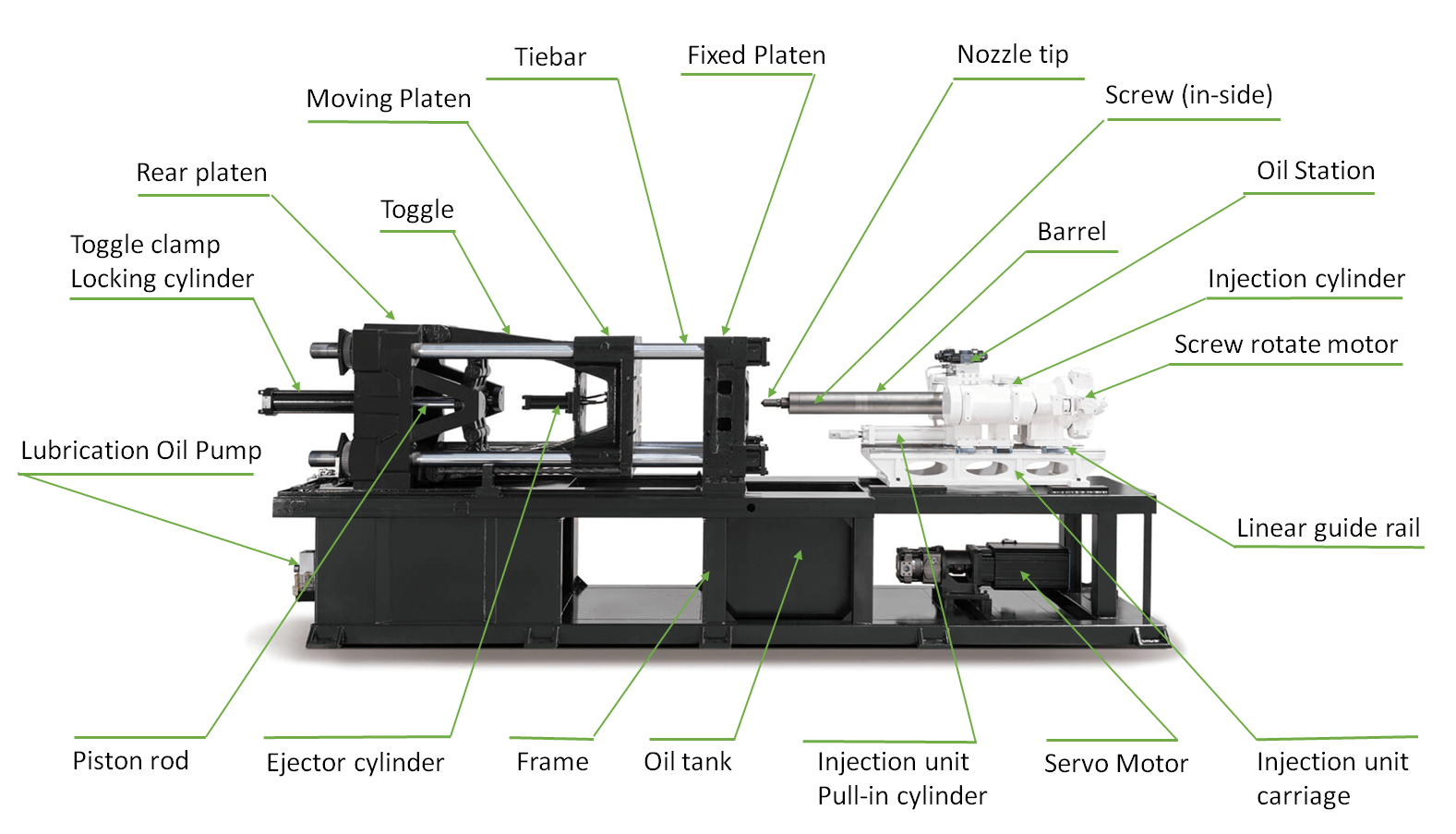
Have you ever received an injection molding quote but had no idea whether the price was high or low?
Or has your product development budget suddenly gone over budget during mass production, yet you couldn’t pinpoint the root cause?
This article will systematically break down every component of injection molding costs—from mold expenses to unit costs, and from material selection to process optimization—so you can negotiate with suppliers with full confidence.
The Two Key Components of Injection Molding Costs
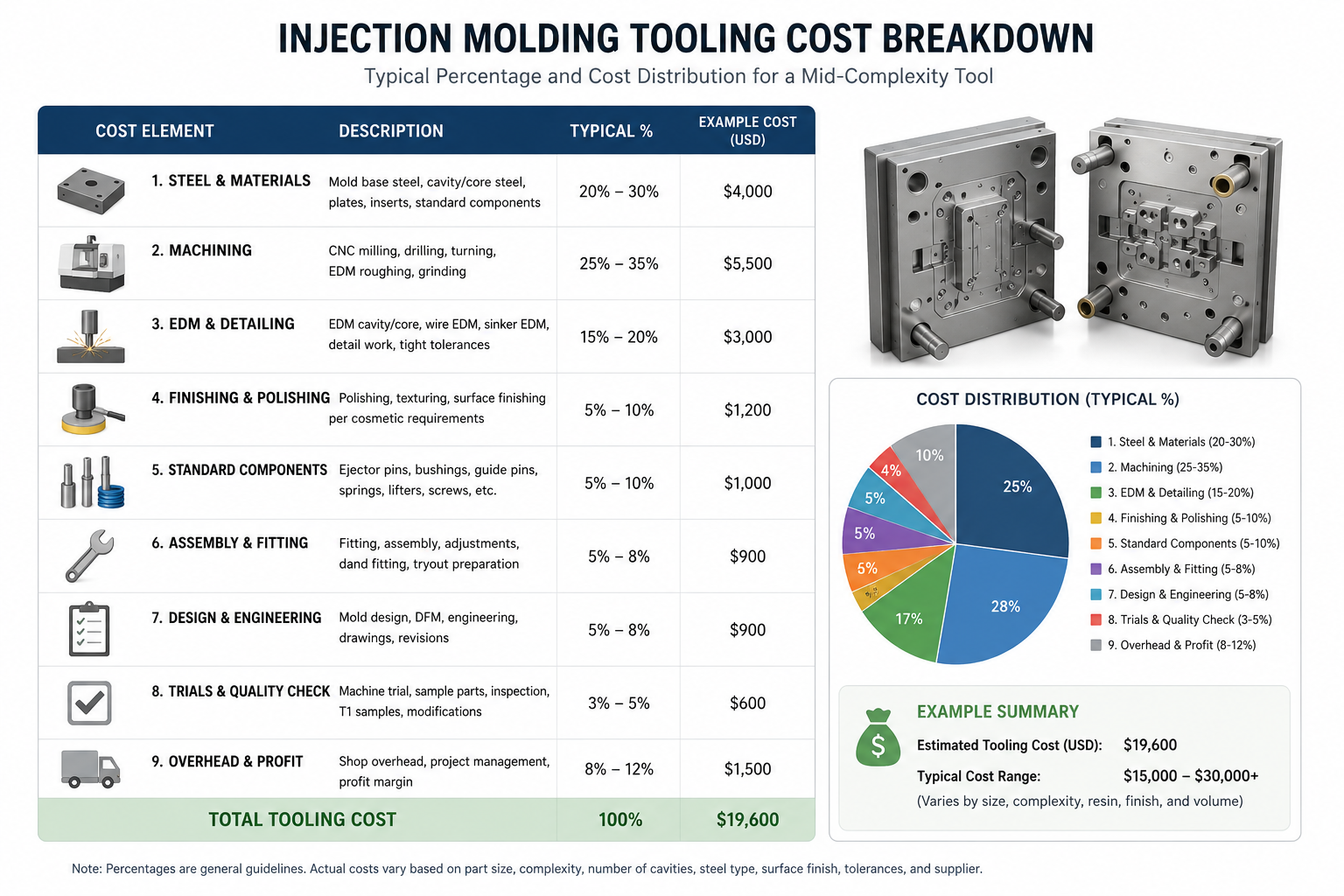
When evaluating injection molding projects, many customers focus solely on the “unit price” and overlook a larger source of costs: tooling costs. To understand the total cost of injection molding, it is essential to consider these two components separately:
Tooling Costs
Tooling costs are a one-time upfront investment, typically paid before mass production begins. They include:
- Tooling design and engineering analysis fees
- Purchasing of mold steel (P20, 718, H13, S136, etc.)
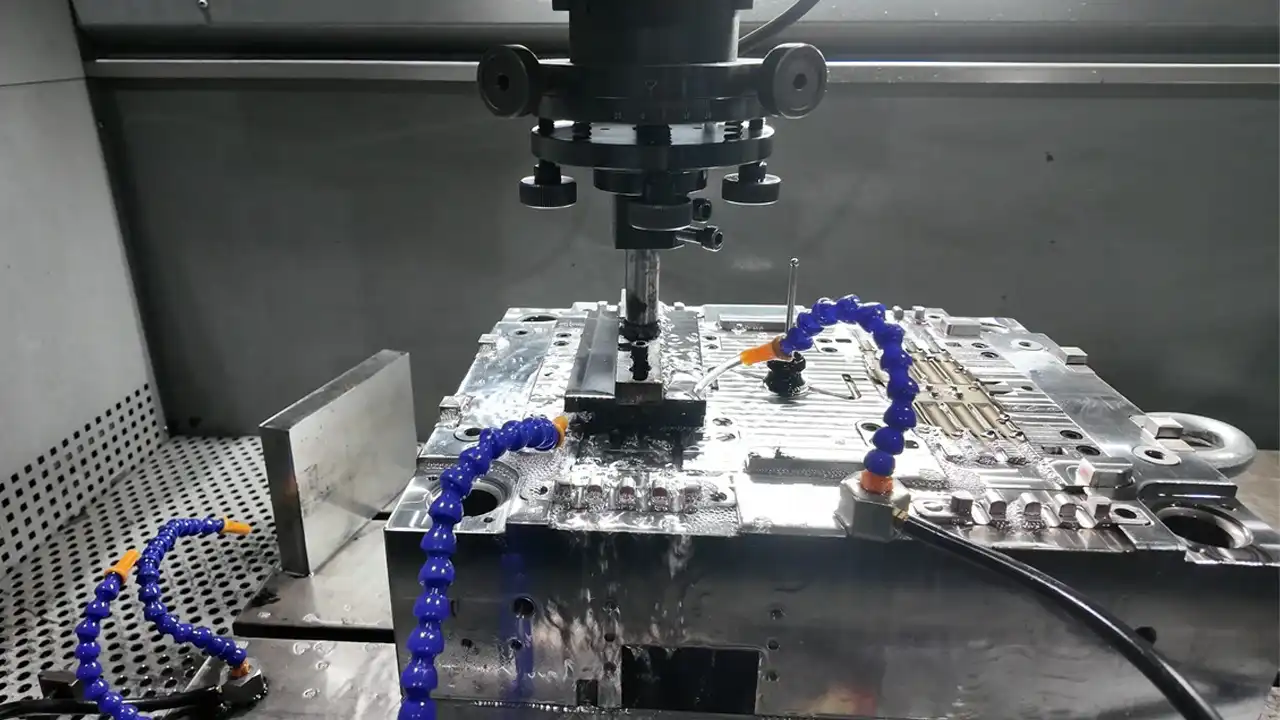
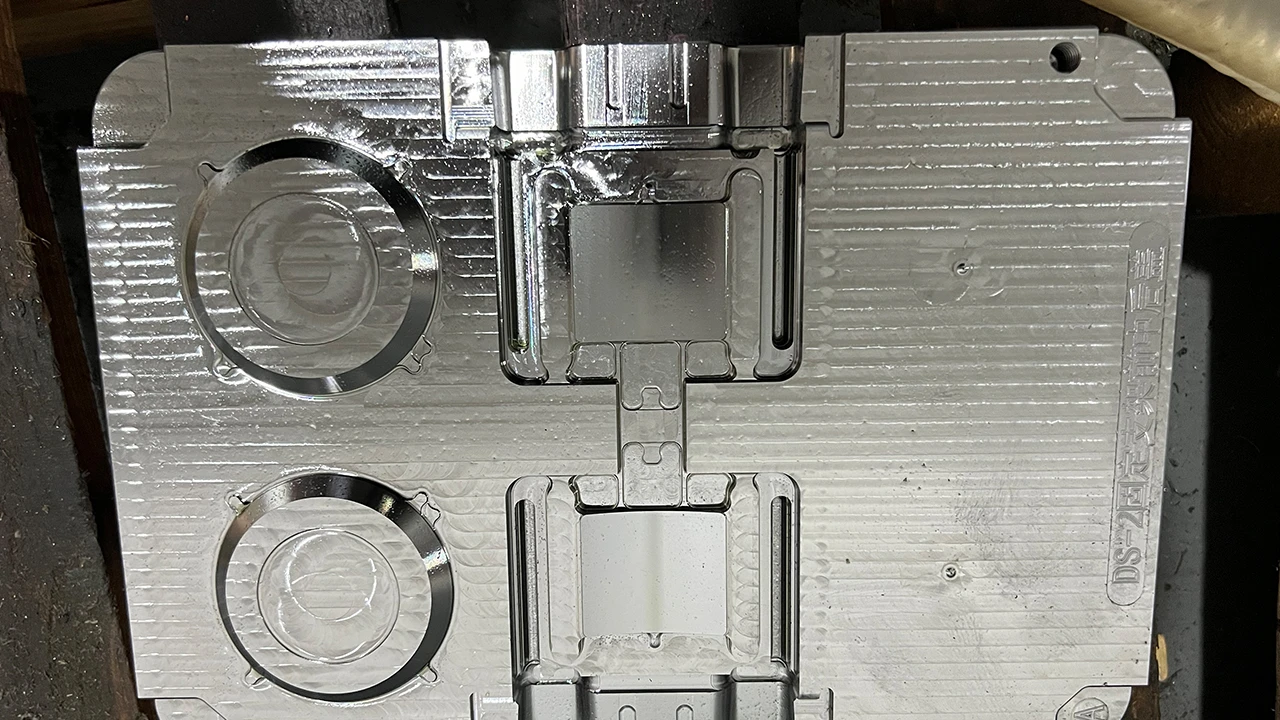
- Precision manufacturing costs (CNC machining, EDM, wire cutting, etc.)
- Trial molding and debugging costs
- Mold validation costs (T1, T2 samples)
Typical mold cost reference ranges:
Mold Type | Complexity | Estimated Price Range (USD) |
Simple single-chamber mold | Low | $1,500 – $5,000 |
Moderately complex single-chamber mold | Intermediate | $5,000 – $20,000 |
Multi-cavity molds (4-cavity/8-cavity) | Intermediate to Advanced | $10,000 – $50,000 |
High-precision/slide block mold | High | $20,000 – $100,000+ |
Automotive-grade/medical-grade precision molds | Extremely high | $50,000 – $200,000+ |
Note: The price ranges above vary significantly depending on product structure, materials, mold life requirements, and country of origin. Molds manufactured in China typically offer cost savings of 30%–60% compared to those from Europe and the United States, and their quality has reached international standards.
Per-Part Cost
Per-part cost refers to the direct cost incurred for producing a single part, primarily comprising:
- Raw material costs (plastic resin)
- Injection molding machine fees (machine time fees)
- Labor costs
- Energy consumption
- Quality inspection and scrap/rework costs
- Secondary processing (post-processing) costs
7 Key Mold Factors That Affect Injection Molding Costs
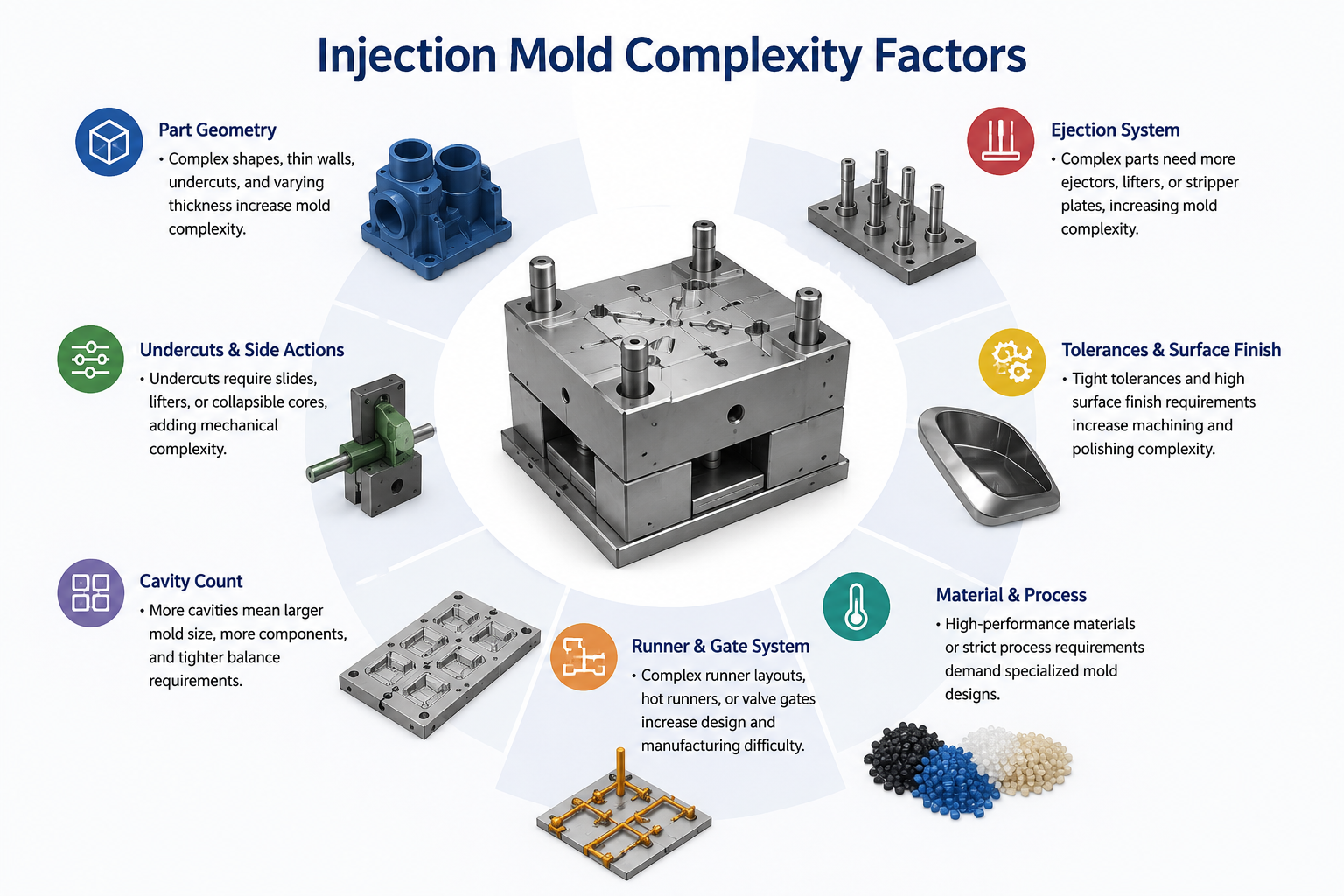
Factor 1: Part Geometric Complexity
The structural complexity of a part is the most critical factor affecting mold cost. The following features can significantly drive up mold costs:
- Undercuts and sliders require additional side-ejection or inclined ejector mechanisms, increasing costs by 20%–50%
- Deep cavities/slender cores: Require high mold rigidity and are difficult to machine
- Thin-wall designs: Require precise injection-molding processes and higher mold precision
- Internal/external thread structures typically require rotary ejection mechanisms or folding cores
- Part size: Larger parts incur higher costs for mold materials and machining labor
Factor 2: Number of Mold Cavities
The number of cavities determines how many parts can be produced per injection cycle:
- Single-cavity mold: Low tooling cost, suitable for small batches or prototype validation
- Multi-cavity mold (2-cavity, 4-cavity, 8-cavity, 16-cavity, etc.): High tooling cost, but significantly lower unit cost, suitable for high-volume production.
At Dimud, we recommend the optimal number of cavities based on your annual demand and project timeline to help you achieve the best overall cost solution.
Factor 3: Selection of Mold Materials
Different types of steel have different costs and service lives:
Die, steel | Applicable Scenarios | Expected lifespan (shots) | Relative cost |
P20 | General-purpose, small-to-medium batches | 500,000 | Intermediate |
718H | General-purpose, modified, high-transparency parts | 800,000 | Upper-middle |
H13 | High-temperature materials, engineering plastics | 1,000,000+ | High |
S136 | Corrosive materials, optical components | 1,000,000+ | High |
aluminum alloy | Rapid prototyping, small batches | 5,000–50,000 | Low |
Dimud’s mold manufacturing services enable mold designs with a lifespan of up to 1,000,000 cycles or more, meeting the long-term mass production needs of high-standard industries such as the automotive and medical sectors.
Factor 4: Surface Finish Requirements
The aesthetic and functional requirements of parts directly impact mold costs:
- SPI Gloss Grades (A1–D3): High-gloss surfaces (such as A1/A2 grades) require cavity polishing, which is more costly
- Etched/Textured Surfaces: Require additional chemical etching
- Mirror Finish: Used for optical lenses and transparent housings; this is the most expensive option.
For more information on surface finishes, please refer to the Dimud Surface Finish Guide.
Factor 5: Tolerance and Precision Requirements
Standard injection molding tolerances are typically ±0.1 mm–±0.3 mm, while precision injection molding can achieve ±0.01mm–±0.05mm.
Higher precision requirements mean:
- Stricter machining accuracy requirements for the mold (precision EDM, coordinate grinding machines)
- Higher-grade mold materials
- Longer trial molding and debugging cycles
- Corresponding cost increase of 20%–100%
Dimud’s precision molds can achieve ±0.01 mm tolerance control on critical mold dimensions, meeting the stringent requirements of the automotive and electronics industries.
Factor 6: Brands of Mold Standard Components
Costs vary significantly depending on the brands of standard components (guide pins, ejector pins, hot runners, etc.) used in the mold:
- International brands (HASCO, DME, MISUMI, LKM): Higher cost, but with guaranteed precision and longevity,suitable for export to European and American markets
- Domestic standard components: Lower cost, suitable for the domestic market or projects with limited budgets.
Dimud supports international mold standards: HASCO, DME, MISUMI, and LKM, ensuring that molds comply with the specifications of your target market.
Factor 7: Mold Delivery Time Requirements
Standard mold delivery time is typically 4–6 weeks. If expedited delivery (within 3 weeks) is required, an expedited fee of 15%–30% usually applies.
Dimud’s standard delivery time is approximately 4 weeks, and we offer an expedited service option of approximately 3 weeks.
5 Key Factors Affecting the Unit Cost of Injection Molding
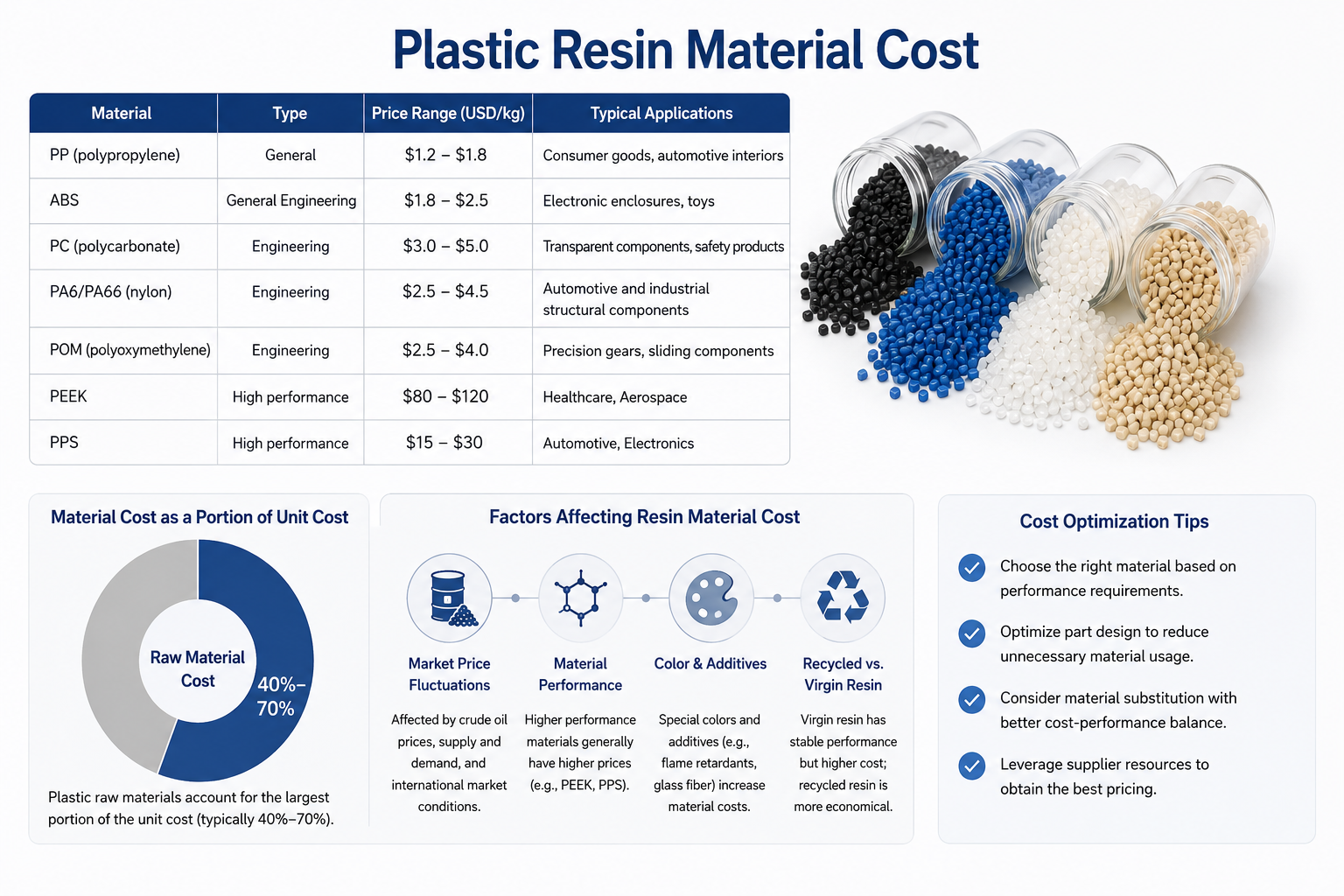
Variable 1: Raw Material Costs
Plastic raw materials account for the largest portion of the unit cost (typically 40%–70%).
Reference prices for common injection molding materials (market prices, for reference only):
Materials | Type | Price Range (USD/kg) | Typical Applications |
PP (polypropylene) | General | $1.2 – $1.8 | Consumer goods, automotive interiors |
ABS | General Engineering | $1.8 – $2.5 | Electronic enclosures, toys |
PC (polycarbonate) | Engineering | $3.0 – $5.0 | Transparent components, safety products |
PA6/PA66 (nylon) | Engineering | $2.5 – $4.5 | Automotive and industrial structural components |
POM (polyoxymethylene) | Engineering | $2.5 – $4.0 | Precision gears, sliding components |
PEEK | High performance | $80 – $120 | Healthcare, Aerospace |
PPS | High performance | $15 – $30 | Automotive, Electronics |
Dimud has extensive experience in material selection, ranging from general-purpose resins to high-performance engineering plastics such as PEEK and PPS. We can assist with material substitution analysis to optimize material costs while ensuring performance requirements are met.
Variable 2: Production Volume (Scale Effects)
Batch size is the factor most sensitive to unit cost, exhibiting a clear nonlinear relationship:
Batch range | Characteristics of unit cost |
100–1,000 items | The cost of sharing the mold is high, resulting in the highest unit price |
1,000–10,000 items | Mold costs are gradually being spread out, resulting in a significant decrease in unit prices |
10,000–100,000 items | Economies of scale are taking effect, and unit prices are stabilizing |
Over 100,000 | Minimizes unit cost and maximizes the benefits of multi-cavity molds |
Total Cost = Mold Cost ÷ Total Output + Variable Cost per Unit
This formula shows that when production volume is sufficiently large, the impact of mold costs on the unit price can be disregarded.
Variable 3: Part Weight and Wall Thickness
The more material used in a part, the higher the raw material cost; the thicker the wall, the longer the injection molding cycle (due to increased cooling time), and the higher the machine rental cost.
Recommended optimal wall thickness for injection molding:
- General-purpose plastics (PP/ABS): 1.5 mm – 3.0 mm
- Engineering plastics (PC/PA): 1.5 mm – 3.5 mm
- High-performance plastic (PEEK): 1.0 mm – 4.0 mm
Wall thickness uniformity is equally important for both injection molding costs and quality—uneven wall thickness can lead to defects such as shrink marks and warping, increasing scrap rates and costs.
Variable 4: Injection Molding Cycle Time
Injection molding cycle = injection time + holding time + cooling time + mold opening and part removal time
The shorter the cycle time, the higher the output per unit of time, and the lower the cost per machine. Factors affecting cycle time include:
- Wall thickness (the primary factor affecting cooling time)
- Thermal Properties of Materials (Thermal Conductivity)
- Design of Mold Cooling Systems
- Level of automation (robotic picking vs. manual picking)
Variable 5: Level of Manual and Automated Operations
Labor costs at Chinese injection molding factories are significantly lower than in Europe and the United States, but as automation increases, the impact of labor costs is diminishing:
- Fully automated production line: Ideal for high-volume, standardized products, offering the lowest cost
- Semi-automatic (robot-assisted): Suitable for products of medium to high complexity
- Manual assistance: Suitable for small batches or complex assembly processes
Differences in Injection Molding Costs Across Industries
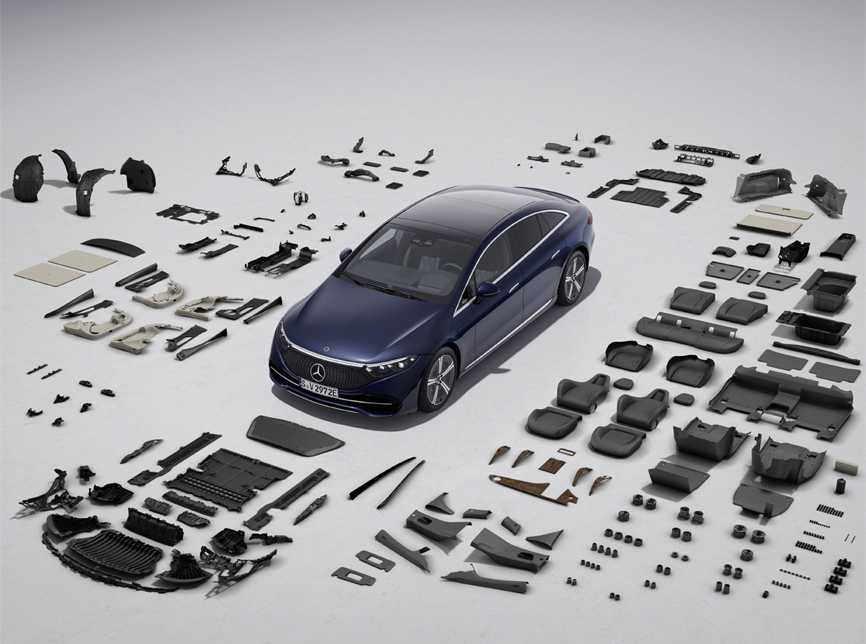
Injection molding costs depend not only on the product itself but are also closely tied to industry-specific factors:
Injection Molding Costs in the Automotive Industry
Automotive parts have extremely high requirements for dimensional accuracy, material properties, and batch consistency and typically must comply with IATF 16949 quality management system certification.
Key cost drivers:
- High mold life requirements (typically ≥500,000 cycles)
- A rigorous PPAP (Production Part Approval Process) is required.
- Materials typically need to meet specific requirements such as flame retardancy and heat resistance.
- Strict dimensional inspection requirements (CMM measurement, full dimensional report)
Dimud’s automotive parts manufacturing services specialize in the precision production of structural components, interior systems, and electronic enclosures and feature a comprehensive quality management system that meets automotive-grade standards.
Cost of Injection Molding for Medical Devices
Medical-grade injection molding imposes stringent requirements on clean production environments, material compliance, and traceability:
- Materials must comply with regulations such as USP Class VI and FDA 21 CFR
- Production must be carried out in a cleanroom (Class 7/8)
- A complete batch traceability record is required
- Mold validation requires IQ/OQ/PQ procedures
These additional requirements typically increase the cost of medical-grade injection molding by 30%–100% compared to standard injection molding, but compliance is non-negotiable.
Dimud’s medical device manufacturing services ensure that your medical components meet regulatory requirements every step of the way, from material selection to controlled production processes.
Cost of Injection Molding for Consumer Electronics
The consumer electronics industry places equally high demands on product aesthetics and rapid iteration:
- Exterior components typically require a high-gloss or textured finish
- Products evolve rapidly, so mold designs must allow for modifications.
- High requirements for dimensional consistency (assembly accuracy)
- Typically, there are functional requirements such as EMI shielding and heat dissipation
Dimud’s consumer electronics manufacturing services specialize in the custom production of enclosures, connectors, and thermal management components, helping you accelerate time-to-market while ensuring quality.
Injection Molding Costs in the Robotics and Energy Storage Industries
The need for rapid prototyping and flexible production scaling is particularly acute in these two fast-growing industries:
- Early-stage rapid prototyping (small batches, short lead times)
- Product design may involve frequent iterations
- Once mass production begins, consistent quality and a reliable supply are essential.
Dimud’s robotics and energy storage manufacturing services provide comprehensive support from rapid prototyping to mass production.
A Practical Framework for Estimating Injection Molding Costs
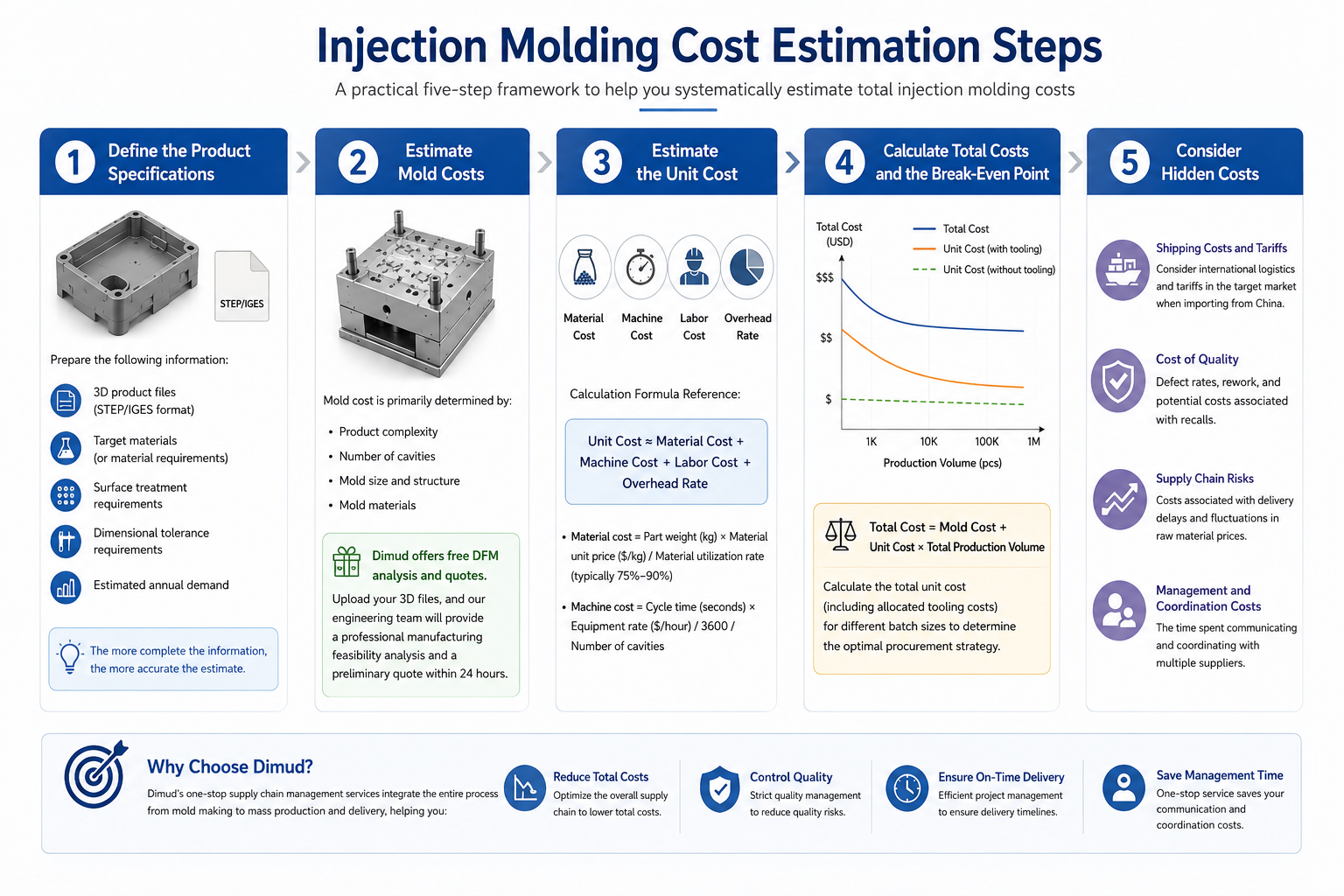
When tackling a new project, how can you systematically estimate the total cost of injection molding? Here is a practical five-step framework:
Step 1: Define the product specifications
Before requesting a quote or estimating the cost yourself, please have the following information ready:
- 3D product files (STEP/IGES format)
- Target Materials (or Material Requirements)
- Surface Treatment Requirements
- Dimensional Tolerance Requirements
- Estimated annual demand
Step 2: Estimate mold costs
Preliminary estimates of mold costs are based on product complexity, the number of cavities, and mold materials; please refer to the cost table above.
At Dimud, we offer free DFM analysis and quotes. Simply upload your 3D files, and our engineering team will provide a professional manufacturing feasibility analysis and a preliminary quote within 24 hours.
Step 3: Estimate the unit cost
Calculation Formula Reference:
Unit Cost ≈ Material Cost + Machine Cost (Cycle Time × Tonnage Rate) + Labor Cost + Overhead Rate
- Material cost = Part weight (kg) × Material unit price ($/kg) / Material utilization rate (typically 75%–90%)
- Machine cost = Cycle time (seconds) × Equipment rate ($/hour) / 3600 / Number of cavities
Step 4: Calculate Total Costs and the Break-Even Point
Total Cost = Mold Cost + Unit Cost × Total Production Volume
Determine the optimal procurement strategy by calculating the total unit cost (including allocated tooling costs) for different batch sizes.
Step 5: Consider hidden costs
Hidden costs that many customers overlook include:
- Shipping Costs and Tariffs: When importing products from China, you need to consider international logistics and tariffs in the target market.
- Cost of Quality: Defect rates, rework, and potential costs associated with recalls
- Supply Chain Risks: Costs Associated with Delivery Delays and Fluctuations in Raw Material Prices
- Management and coordination costs: The time spent communicating and coordinating with multiple suppliers
This is precisely the core value of Dimud’s one-stop supply chain management services—by integrating the supply chain, we significantly reduce our clients’ management costs and supply risks.
How to Reduce Injection Molding Costs Through DFM Optimization
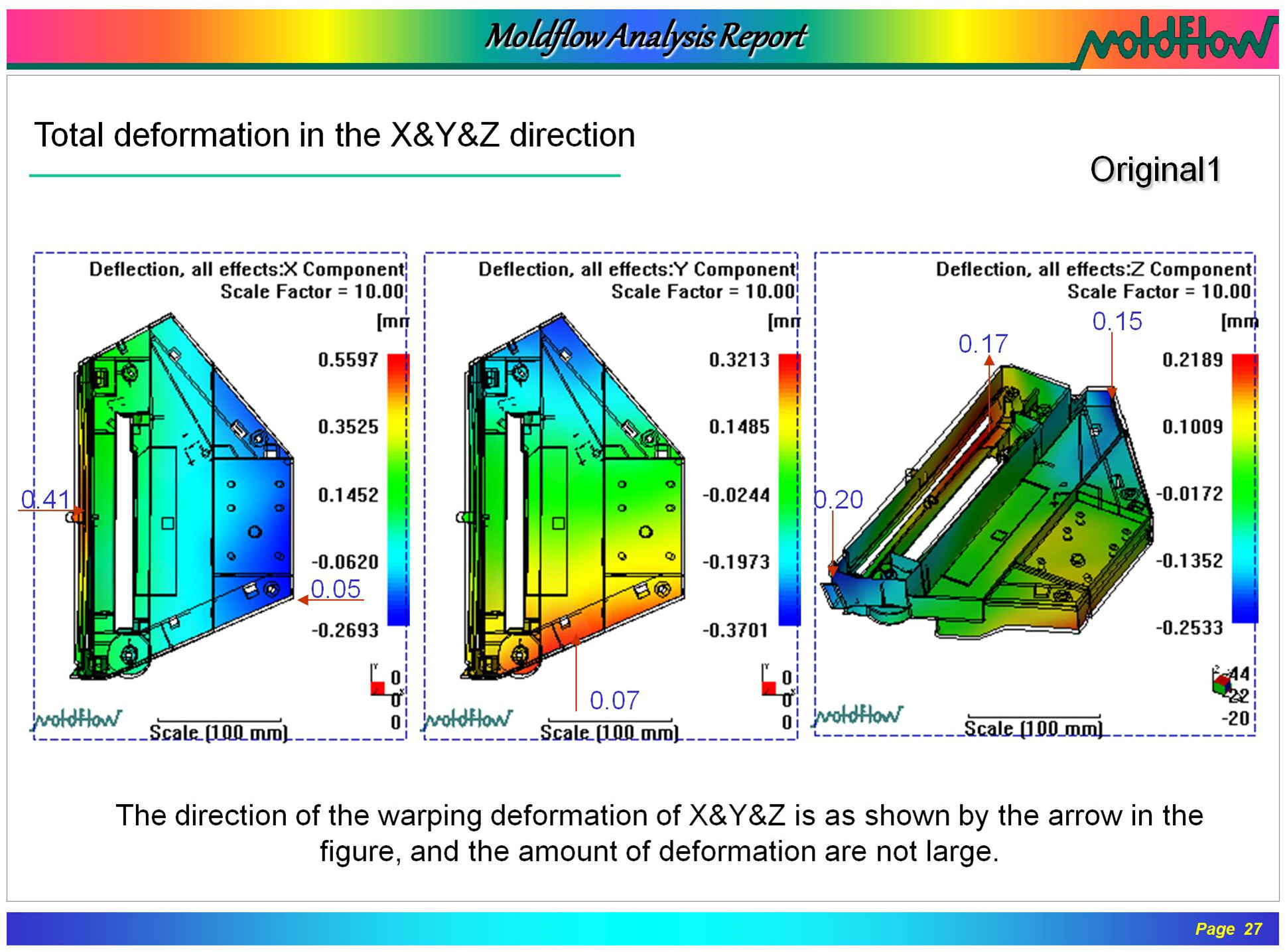
Design for Manufacturability (DFM) is a methodology for proactively identifying and eliminating manufacturing challenges during the product design phase, typically resulting in cost savings of 15%–40%.
Common DFM Optimization Strategies
① Eliminate unnecessary undercuts
Undercuts require sliders or inclined core mechanisms, which are a major contributor to increased mold costs. By redesigning the parting line or modifying the product’s structure, it is often possible to eliminate some undercuts and reduce the mold’s complexity.
② Optimize wall thickness uniformity
Uneven wall thickness can lead to inconsistent shrinkage, resulting in sink marks or warpage, which increases the defect rate. A design with uniform wall thickness improves quality, shortens cooling time, and reduces overall costs.
③Add an appropriate draft angle
A sufficient draft angle (typically 1°–3°) facilitates smooth part ejection, reduces the risk of parts sticking to the mold, minimizes mold wear, and extends mold life.
④Proper Design of Ribs
The thickness of the ribs should be 50%–70% of the main wall thickness to prevent shrinkage marks from forming on the back of the ribs while ensuring sufficient structural strength.
⑤ Part Consolidation
Combining multiple parts that would otherwise need to be manufactured and assembled separately into a single injection-molded part can reduce the number of molds required and lower assembly costs.
⑥ Material Substitution Analysis
Replace expensive materials with lower-cost alternatives while ensuring that performance requirements are met. For example:
- Replacing PA with glass-fiber-reinforced PP (in certain applications)
- Replace PC with modified ABS (when transparency is not a major concern)
Dimud’s DFM and design for manufacturability services are integrated early in the project. Through Moldflow analysis and engineering reviews, we help clients avoid up to 80% of design defects, thereby controlling costs at the source. (when not high)
The Best Time for DFM
The earlier you begin DFM analysis, the greater the benefits.
Timing of Intervention | Typical Cost Savings | Difficulty of making changes |
Conceptual Design Phase | Maximum (30%–50%) | Lowest |
Detailed Design Phase | Significant (15%–30%) | Low–Medium |
Mold Development Phase | Limited (5%–15%) | High |
Mass production phase | Negligible (<5%) | Extremely high |
Injection Molding Costs vs. Other Molding Processes
Injection molding isn’t suitable for every application; understanding how different processes compare can help you make the best decision:
Process | Mold/Equipment Costs | Unit cost (high-volume production) | Applicable batch | Optimal Application |
Injection molding | Mid–High ($2,000–$200,000) | Very low | 10,000+ | Complex plastic parts, high-volume production |
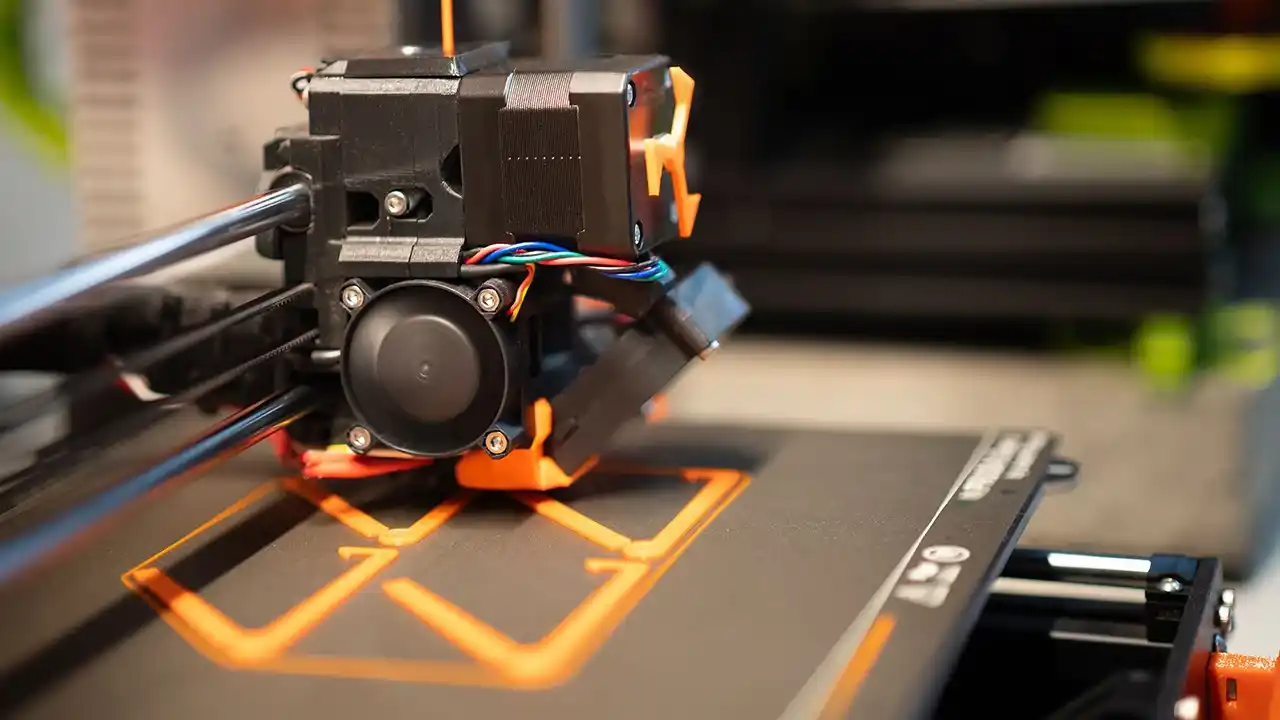
3D Printing (FDM/SLA) | Very low (no mold) | High | 1–500 items | Prototyping, Customization |
CNC Machining | Low (programming fee) | Intermediate–Advanced | 1–1,000 items | Precision metal/plastic parts |
Blow Molding | Low–Medium | Low | 5,000+ items | Hollow containers (bottles, jars) |
Thermoforming | Low | Low–Medium | 1,000+ items | Thin-walled, large-surface-area parts |
Die Casting | High | Low | 10,000+ | Metal structural components |
Conclusion: The advantages of injection molding lie in its extremely low unit cost for high-volume production and its ability to accommodate highly complex geometries. When product demand is high, the design is stable, and high precision is required, injection molding is the optimal choice in the vast majority of scenarios.
For early-stage product validation, Dimud offers rapid prototyping services to help customers validate their product designs at low cost before proceeding to full-scale mold development.
Common Pitfalls in Injection Molding Costs and How to Avoid Them
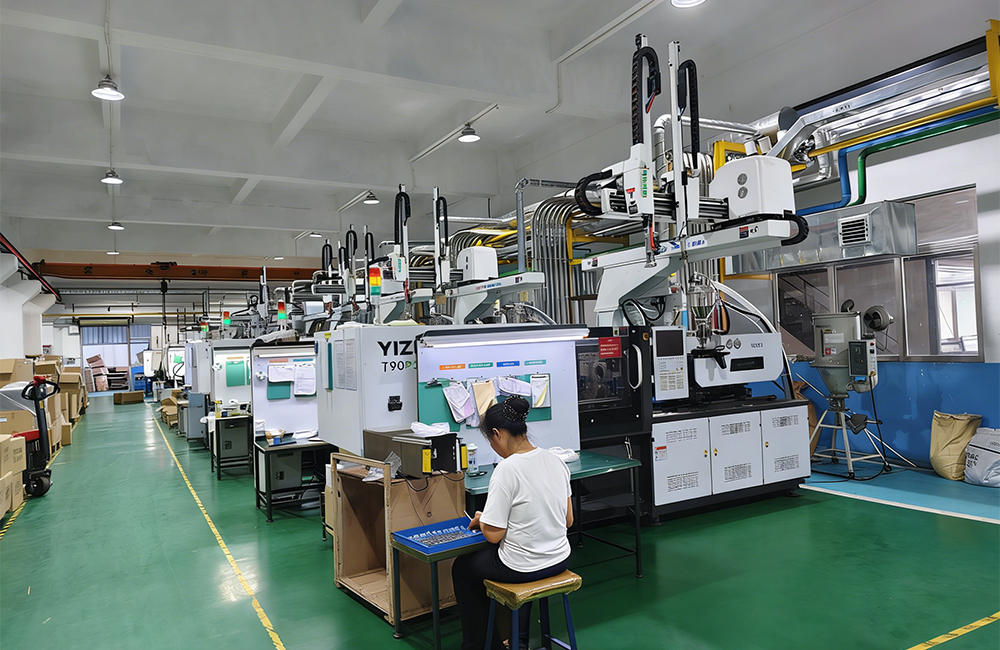
Here are some of the most common cost pitfalls that many procurement managers and product development teams tend to fall into:
Focusing solely on mold quotes while ignoring overall costs
For molds with the same functionality, low-cost suppliers may use low-quality steel, resulting in a service life that is only half of what was expected. This ultimately leads to the need for early remolding, which increases the total cost.
Recommendation: When requesting quotes, ask suppliers to specify the mold materials, expected service life, and warranty terms.
Start tooling production before the design is finalized
Frequent design changes during the mold development phase can result in significant rework costs (commonly referred to as “mold modification fees”), which can sometimes even exceed the original mold cost.
Recommendation: After completing the DFM review and prototype validation, confirm the design freeze before proceeding with mold development. The mold
Underestimating the costs of the pilot production phase
Prototypes produced from the T1 mold often require adjustments, and it is common to undergo T2, T3, or even more rounds of mold modification. These costs should be factored into the project budget.
Recommendation: Set aside 10%–20% of the budget as a contingency for the pilot production and debugging phases.
Failure to account for the risk of fluctuations in material prices
Fluctuations in oil prices directly affect the prices of most thermoplastics. When entering into long-term contracts, failure to include price adjustment clauses may expose you to significant cost risks.
Recommendation: Negotiate the inclusion of a material price adjustment mechanism in long-term contracts.
A fragmented supplier base leads to skyrocketing coordination costs
When a product involves multiple manufacturing processes (injection molding + CNC machining + electronic assembly), sourcing different suppliers for each step can significantly increase communication costs, quality consistency issues, and delivery risks.
Recommendation: Prioritize manufacturing partners with one-stop capabilities. Dimud’s three factories—a mold shop, a CNC shop, and an electronics assembly plant—are ideally suited to meet this need.
How to Choose the Right Injection Molding Supplier
Choosing an injection molding supplier is not just about comparing prices; the following factors are equally important:
Engineering Capabilities
- Do you have a dedicated DFM analysis team?
- Do you have Moldflow capabilities?
- Can engineers proactively identify design risks?
Manufacturing facilities
- Does the tonnage range of our injection molding machines meet your needs?
- Do you have precision machining equipment (CNC, EDM, wire cutting)?
- Does the cleanroom environment meet your industry’s requirements?
Quality System
- Are you ISO 9001 certified?
- Automotive customers require IATF 16949
- Medical clients require ISO 13485 certification or equivalent
- Do you have a comprehensive quality control system covering IQC, IPQC, and FQC?
Delivery reliability
- Is there a robust project management system in place?
- What has been the on-time delivery rate in the past?
- How quickly do you respond when issues arise?
Supply chain integration capabilities
- Can you handle raw material procurement?
- Do you offer assembly services?
- Do you have experience in export logistics?
Dimud Injection Molding Solutions: A One-Stop Solution for Reducing Overall Costs
As a team of professionals with deep expertise in the injection molding industry, Dimud has completed over 1,000 custom manufacturing projects for clients across Europe, North America, and the Middle East.
How we can help you control your total injection molding costs:
Early DFM involvement reduces design risks
We work closely with our clients from the product design phase onward. Through professional DFM analysis and mold flow simulation, we identify and eliminate potential cost issues before tooling begins, significantly reducing the cost of subsequent mold modifications.
High-precision mold manufacturing to reduce defect rates
Dimud’s mold manufacturing services adhere to a precision machining standard of ±0.005 mm, with a first-time mold trial pass rate exceeding 98%, significantly shortening project timelines and reducing trial production costs. Our molds are designed for a service life of over 1 million cycles, which reduces the per-unit mold cost over the long term.
One-stop injection molding services that eliminate coordination costs
Equipped with over 100 injection molding machines (with a maximum clamping force of 1,300 tons), we handle everything from small-batch prototyping to large-scale mass production of up to 50,000 units per month. With comprehensive quality control throughout the entire process—including IQC, IPQC, and FQC—we consistently maintain a first-pass yield rate of over 99%.
Three factories working in tandem to cover the entire process chain
- Mold Factory: Precision Mold Design and Manufacturing
- CNC Factory: Precision Machining and Metal Parts
- Electronics Factory: PCBA and Electronic Component Assembly
This integrated manufacturing capability means you only need to deal with a single point of contact, and we’ll handle the coordination of the entire process.
End-to-End Supply Chain Management
From raw material procurement to finished product shipment, we manage a network of over 3,000 suppliers. Through volume purchasing and rigorous supplier evaluations, we help our clients optimize raw material costs while ensuring a stable supply chain.
Summary
Injection molding costs are never just a single figure; they reflect a combination of materials, design, processes, the supply chain, and the capabilities of partners. Only by understanding the cost structure can you make smarter decisions at every critical juncture—whether optimizing product design, selecting a mold solution, or determining production volume strategies.
If you’re facing cost pressures in your injection molding project or are unsure whether your current approach is optimal, why not start with a free DFM analysis? Dimud’s engineering team will provide professional feedback within 24 hours—this could be the most rewarding step in your project.