
POM plastic — formally known as polyoxymethylene, and widely sold under trade names like Delrin® and Celcon — occupies a well-defined space in the engineering thermoplastic lineup: harder than nylon, stiffer than polypropylene, and capable of dimensional tolerances that rival machined metal. If your design involves gears, bushings, snap-fit fasteners, fuel system components, or any moving part that must slide or bear cyclic load without a lubricant, acetal deserves a serious evaluation before you finalize material selection.
This guide covers everything a qualified buyer or design engineer needs to know: the structural basis for POM’s properties, the difference between homopolymer and copolymer grades, real-world processing parameters, DFM considerations specific to acetal, and the industry applications where Димудс vertically integrated injection molding capability delivers consistent, auditable results.
What Is POM Plastic? Molecular Structure and Core Properties
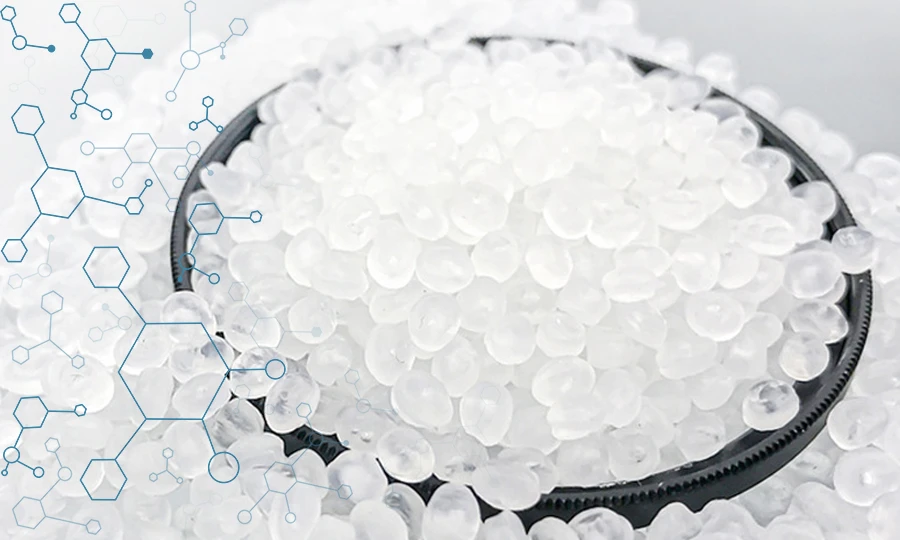
Polyoxymethylene is a semi-crystalline thermoplastic built on a repeating –CH₂O– backbone — one of the simplest monomer units in polymer chemistry. That structural simplicity is precisely why POM performs the way it does: the tight, regular chain packing produces crystallinity levels of 70–85%, which translates directly into high stiffness, low creep, outstanding fatigue resistance, and a surface energy low enough to function as a self-lubricating bearing material without additives.
The key property profile of standard-grade POM plastic at a glance:
| Недвижимость | Типичное значение | Стандарт испытаний |
|---|---|---|
| Прочность на разрыв | 60–80 MPa | ISO 527 |
| Модуль упругости при изгибе | 2,600–3,100 MPa | ISO 178 |
| Coefficient of Friction (dry) | 0.20–0.35 | — |
| Водопоглощение (24 ч) | < 0.2% | ISO 62 |
| Continuous Use Temperature | 90–110°C | — |
| Shrinkage (injection molded) | 2.0–3.5% | — |
| Hardness (Rockwell M) | M78–M94 | ASTM D785 |
The low moisture absorption figure is commercially significant. Unlike PA6 or PA66, acetal parts reach dimensional equilibrium quickly after molding, which simplifies validation timelines for precision-fit assemblies and tight-tolerance components destined for automotive or medical applications.
Homopolymer vs. Copolymer: Choosing the Right POM Grade
One of the most common specification errors engineers make with acetal is treating POM-H and POM-C as interchangeable. They share a common chemistry but diverge in ways that matter at the design and processing level.
POM-H (Homopolymer Acetal)
Homopolymer POM — the chemistry behind DuPont’s Delrin® family — is built entirely from formaldehyde monomers, producing a highly uniform crystalline structure. The result is the highest achievable tensile strength and fatigue resistance within the acetal family. Delrin 100, 500, and 900 differ primarily in melt viscosity, giving processors a range of flow options across thin-wall and thick-section applications.
Choose POM-H when: the design demands maximum static and dynamic load capacity, highest stiffness, or the best wear performance in dry-running metal-on-plastic contact.
Watch for: POM-H is more thermally sensitive during processing. Residence time at melt temperature must be managed carefully to prevent formaldehyde gas evolution, and centerline porosity can develop in thick cross-sections above 6 mm due to the material’s high crystallization rate.
POM-C (Copolymer Acetal)
Copolymer acetal introduces a small proportion of comonomer (typically ethylene oxide) into the chain, which disrupts the regularity enough to reduce centerline porosity almost entirely. POM-C also offers slightly better hydrolysis resistance, improved performance in weak acid or base environments, and a wider processing window — making it the preferred choice for most general injection molding programs.
Choose POM-C when: the part has thick walls, requires exposure to hot water or mild chemicals, or when processing stability and consistent batch-to-batch quality take priority over absolute peak strength.
Dimud’s materials library includes both POM-H and POM-C grades from qualified resin suppliers, and our DFM process flags the grade selection early to prevent downstream tooling and validation issues.
Where POM Plastic Is Used: Industry Applications
Автомобили
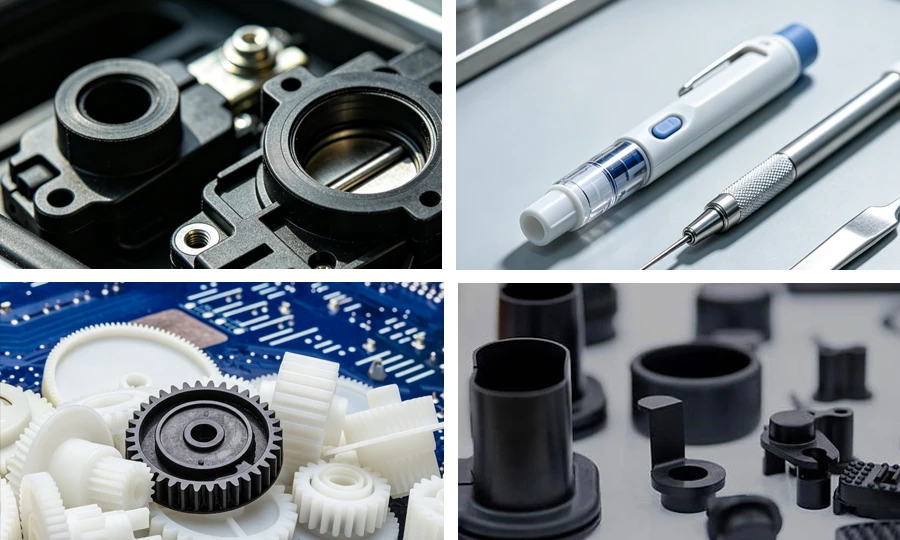
POM plastic is a structural material in automotive powertrain and chassis components, not merely a cosmetic choice. Fuel sender modules, seat belt buckle mechanisms, door lock actuators, window regulator carriers, throttle body bushings, and HVAC damper pivots all rely on acetal’s combination of creep resistance, chemical compatibility with fuels and brake fluids, and dimensional stability across the –40°C to +100°C operating range common in vehicle interiors and underhood zones.
For Dimud’s automotive customers, this translates to parts produced under IATF 16949-aligned processes, with Moldflow simulation run pre-tool to validate gate placement, weld line position, and packing pressure distribution before steel is cut.
Медицинские приборы
Этот FDA has cleared a range of acetal copolymer grades for food contact and direct drug-contact applications. In medical device manufacturing, POM plastic appears in insulin pen components, inhaler actuation systems, surgical instrument handles, and catheter hubs — components that require autoclave resistance (limited cycles), dimensional repeatability across lot production, and surfaces clean enough for cleanroom assembly.
Dimud’s electronics and precision assembly capabilities support the secondary operations — ultrasonic welding, press-fit insert installation, and functional testing — that medical programs typically require beyond raw molding.
Consumer Electronics and Robotics
Precision snap-fit latches, gear trains for robotic actuators, printer carriage guides, and storage device access mechanisms all benefit from POM’s low coefficient of friction and exceptional dimensional repeatability. In robotic and energy storage applications — a growing segment of Dimud’s customer base — acetal components in battery management system enclosures and motor gear housings withstand the combination of cyclic mechanical loading and thermal cycling that eliminates lower-grade commodity resins quickly.
Industrial and Fluid Handling
Acetal’s resistance to most hydrocarbons, alcohols, and weak solvents (while being incompatible with strong acids and oxidizers) makes it a common choice for pump impellers, valve seats, pipe fittings, and metering components in food processing, water treatment, and chemical dosing equipment.
Injection Molding POM Plastic: Key Processing Parameters
Acetal is not a forgiving material during processing. It has a relatively narrow melt processing window, and overheating produces formaldehyde gas — both a safety concern and a surface-quality defect indicator. The following parameters reflect standard production practice at Dimud:
Температура плавления
- POM-H (homopolymer): 190–230°C
- POM-C (copolymer): 190–210°C
Do not exceed 230°C. Overtemperature events cause silver streaks, surface blistering, and acrid formaldehyde odor. Monitor barrel residence time, especially on small-shot programs where the barrel is oversized relative to the shot weight.
Температура пресс-формы 80–120°C is the standard range. Elevated mold temperatures improve surface finish and reduce internal stress in demanding tolerance applications. Water cooling channels sized at 8–12 mm diameter are standard practice to maintain thermal uniformity across the cavity.
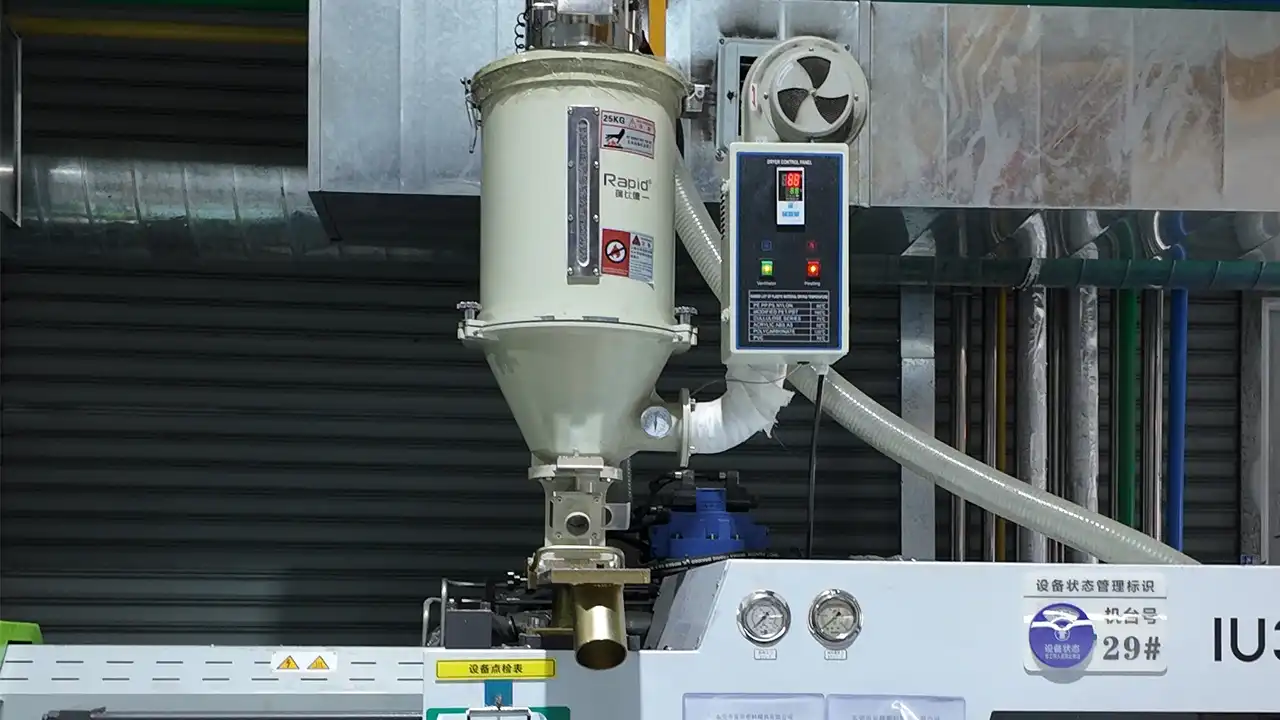
Drying POM absorbs very little moisture (< 0.2%), but pre-drying at 80°C for 2–4 hours before processing is recommended when material has been stored in high-humidity environments, or when surface quality requirements are critical.
Скорость и давление впрыска Moderate injection speed with progressive profile; POM fills fast but high shear at the gate can cause jetting defects. Pack and hold pressure should be calibrated against shrinkage targets — incorrect packing is the primary root cause of sink marks on POM parts with nominal wall thicknesses above 3 mm.
Shrinkage Management This is the single most critical processing variable for POM plastic components. Isotropic shrinkage of 2.0–3.5% must be built into mold cavity dimensions upfront. For POM-H, post-mold shrinkage continues for 24–48 hours after ejection, which is why first-article inspection on acetal parts should be completed after a controlled conditioning period, not immediately off the press. Dimud’s tool design standards include standard POM shrinkage compensation factors verified through historical production data, reducing T1 dimensional sampling rounds.
DFM Guidelines for POM Injection Molded Parts
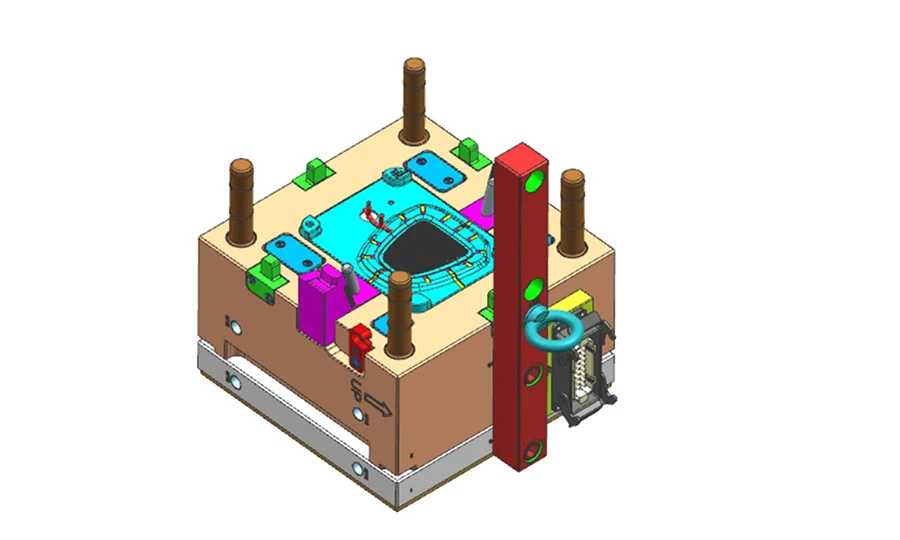
Design for manufacturability considerations specific to acetal:
Толщина стенок Target 1.5–4.0 mm. Keep wall-to-wall transitions within 15% of nominal to prevent differential shrinkage from creating internal stress and warpage. Avoid bosses thicker than 60% of the nominal wall. Heavy wall sections exceeding 6 mm are high-risk on POM-H due to centerline porosity.
Углы наклона Minimum 1° per side on vertical walls; increase to 1.5–2° for textured or matte surfaces. POM’s low surface energy means ejection forces are manageable, but inadequate draft on tall ribs causes cosmetic drag marks.
Gates Subgates, tunnel gates, and pin gates work well on acetal. Avoid gate locations directly into thin-wall features or across anticipated weld lines — POM weld-line strength is significantly lower than the base material, which matters in fatigue-loaded applications like gear teeth and snap-fit hooks.
Допуски POM holds tighter tolerances than most semi-crystalline resins. With controlled tooling and stable process windows, ±0.05–0.10 mm on features under 50 mm is achievable in production. Tighter than ±0.03 mm requires controlled conditioning and validated measurement protocol. Reference DIN 16901 tolerance group 130 for standard acetal parts.
Material Combinations POM bonds poorly to adhesives and paints without surface treatment (its low surface energy is the same property that makes it a good bearing material). If your assembly requires bonded joints or labeled surfaces, discuss the surface preparation step with Dimud’s engineering team during DFM — the solution exists, but it needs to be in the process plan from the start.
Understanding POM Plastic Limitations
No material earns broad adoption without a clear-eyed view of its constraints. For acetal, the following limitations should inform design and application decisions:
UV Degradation Standard POM plastic degrades under prolonged UV exposure — surface chalking, gloss loss, and eventual embrittlement occur within months of outdoor use. UV-stabilized grades and carbon black-filled compounds extend service life substantially, but unmodified acetal is not appropriate for exterior applications without protective coating or enclosure.
Воспламеняемость POM is rated UL94 HB — it burns when exposed to ignition and does not self-extinguish. Flame-retardant grades exist for applications requiring UL94 V-0 classification, such as electrical housings. This is a critical compliance checkpoint for consumer product and industrial equipment programs.
Strong Acid and Oxidizer Incompatibility Acetal degrades in concentrated mineral acids, bleaches, and strong oxidizing agents. Chemical resistance should always be validated against the actual service environment and fluid chemistry — not assumed from general-purpose tables.
Notch Sensitivity POM is sensitive to stress concentrations. Sharp internal corners, rapid section transitions, and deep weld lines reduce impact resistance significantly. Apply a minimum radius of 0.5–1.0 mm to all internal corners in loaded sections.
Why Dimud for POM Plastic Injection Molding?
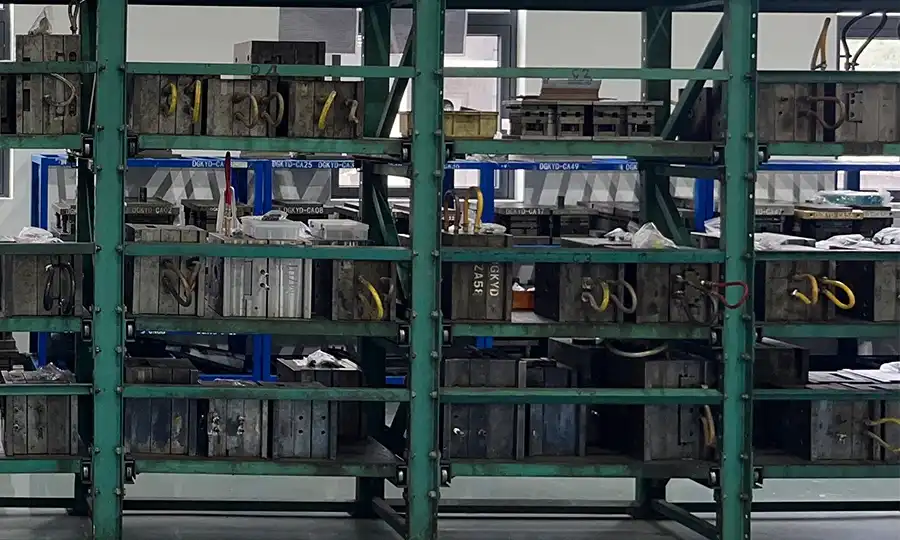
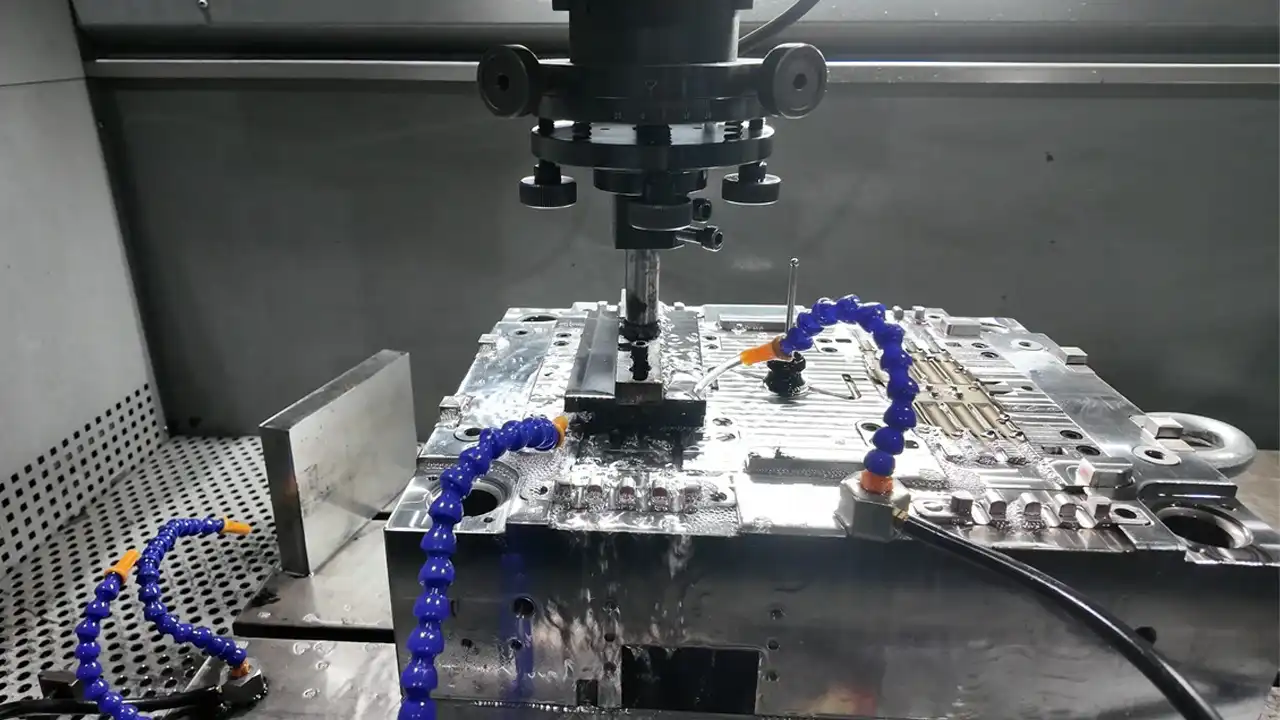
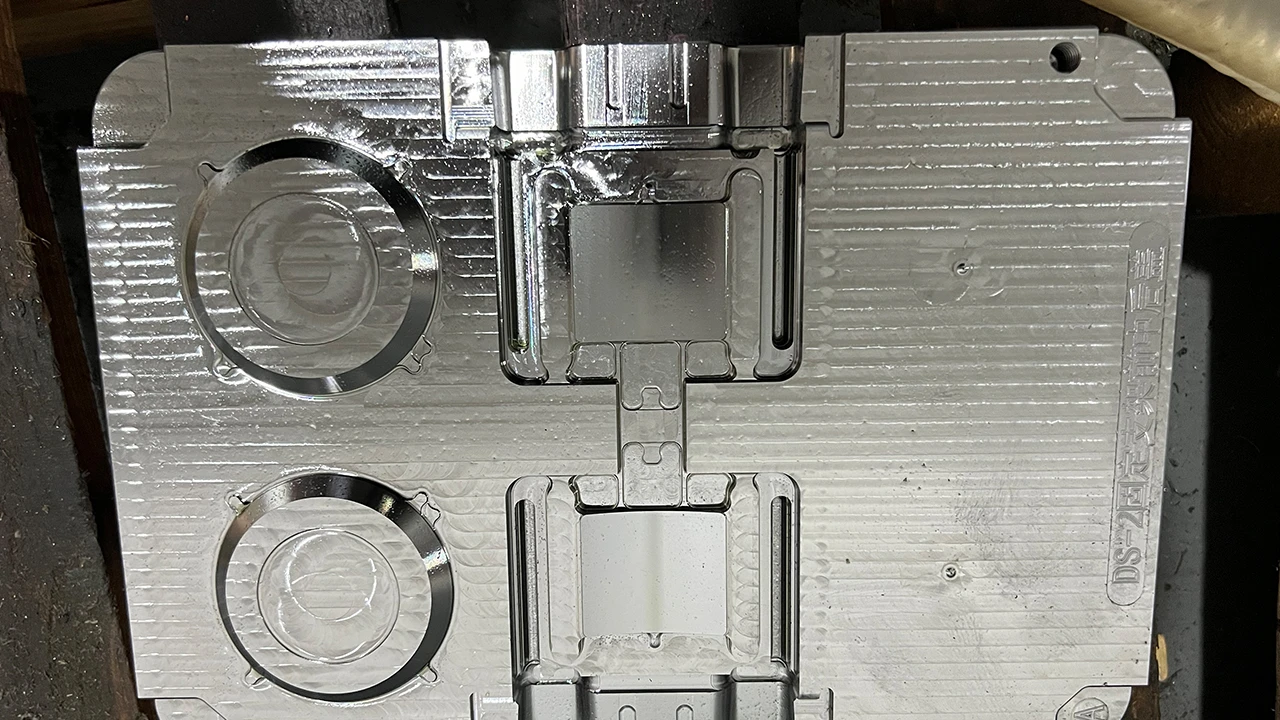
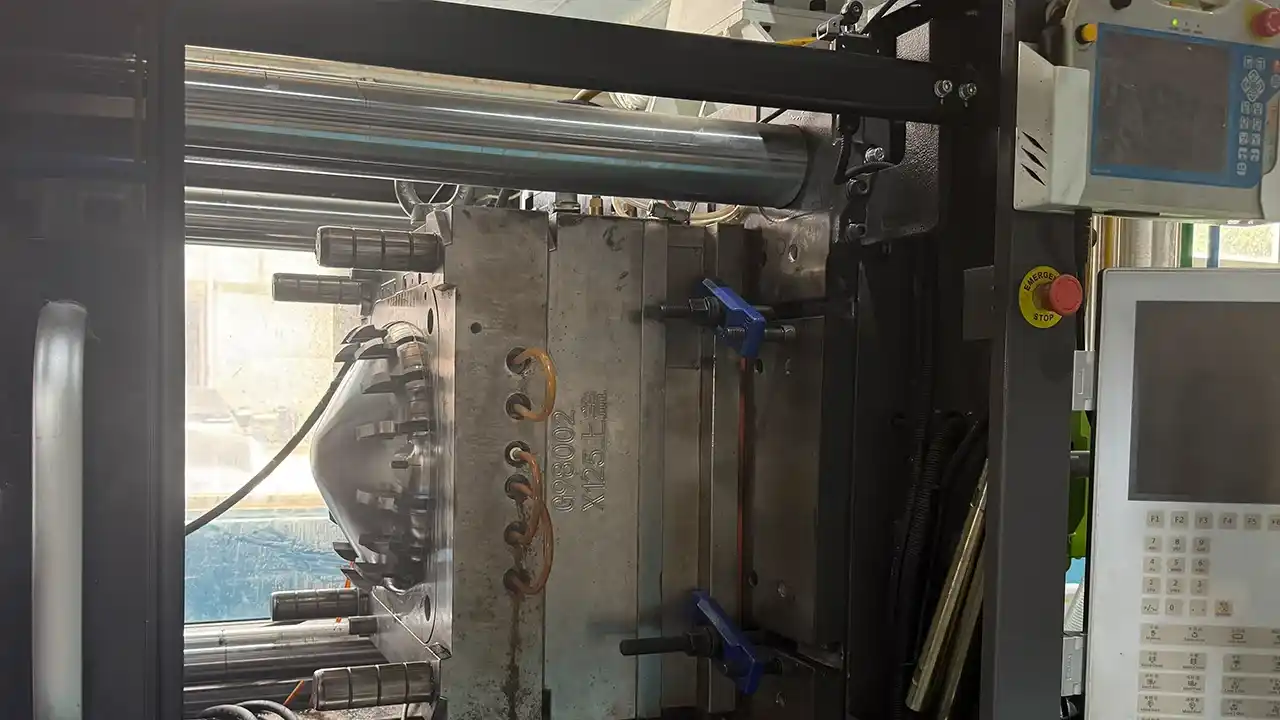
Dimud Manufacturing brings vertically integrated capability to every POM program: in-house mold development и Обработка на станках с ЧПУ, multi-press injection molding production, and downstream electronics assembly — all under one roof. This structure eliminates the supplier-to-supplier transfer variability that causes dimensional scatter on sensitive acetal programs.
Our engineering team runs Анализ Moldflow on all tooling before first steel is cut, catching POM-specific issues — shrinkage compensation, gate-induced weld line position, packing pressure distribution, and core cooling adequacy — at the simulation stage rather than through iterative sampling rounds. The result is faster time-to-production validation and lower total tooling cost for our customers across automotive, medical, consumer electronics, and robotics programs.
For procurement teams evaluating Chinese injection molding partners: Dimud’s quality system supports IATF 16949 process requirements for automotive supply chains and delivers full traceability documentation, PPAP capability studies, and material certifications for medical and regulated applications.
Часто задаваемые вопросы
Delrin is a brand name (DuPont) for homopolymer POM. All Delrin is POM, but not all POM is Delrin. Copolymer acetal grades from Celanese (Celcon) and BASF (Ultraform) are also POM, with different property and processing profiles.
Yes. Multiple copolymer POM grades carry FDA and EU 10/2011 food contact compliance. Confirm the specific grade and color masterbatch against the relevant regulatory framework before finalizing material selection.
POM offers better dimensional stability, lower moisture sensitivity, and more consistent friction behavior in dry-running conditions. Nylon (PA) offers higher peak impact toughness and generally better performance in lubricated or wet environments. For precision dry gears in electronics or robotics, acetal is typically the better default; for high-impact or continuously lubricated automotive drivetrain gears, PA66-GF is more common.
With properly polished mold steel and stable processing parameters, POM delivers very smooth, semi-gloss surfaces without secondary finishing. SPI A2 and A3 surface finishes are routinely achievable on cavity faces.