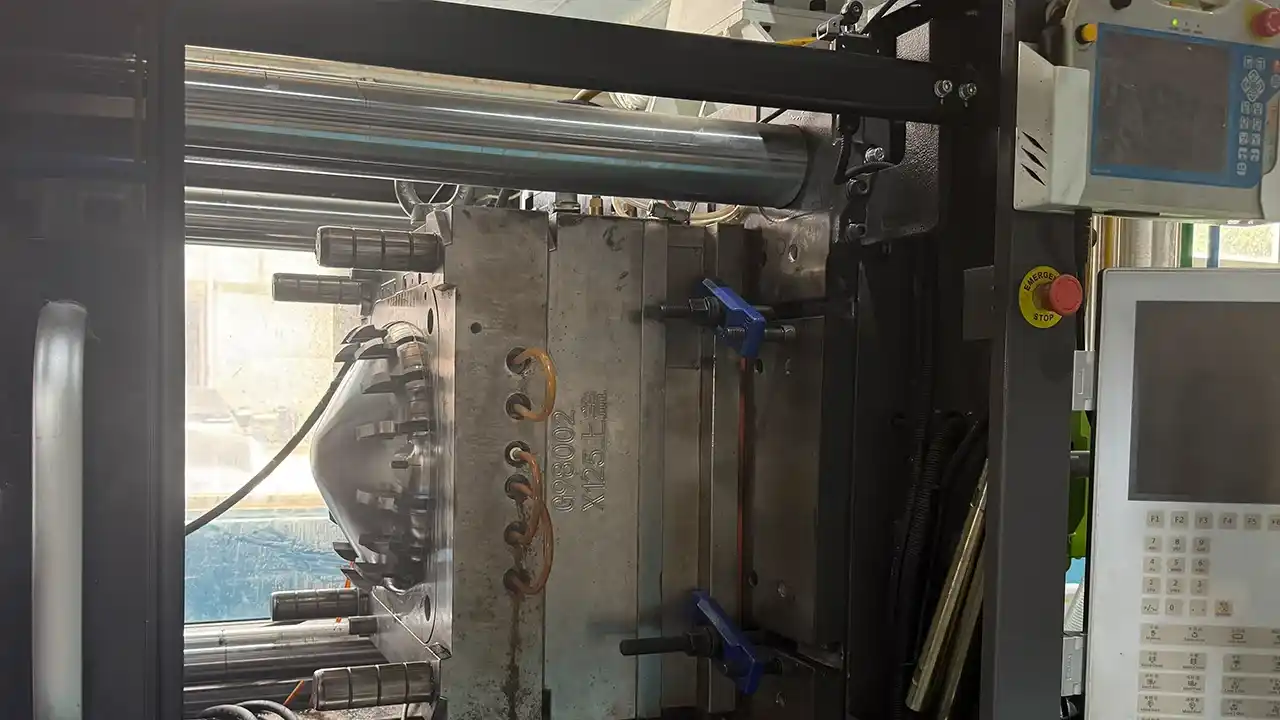

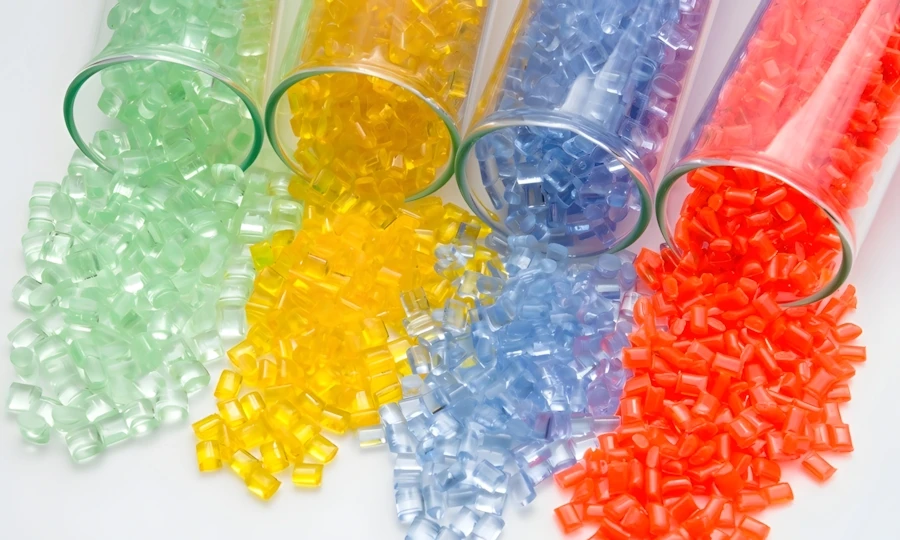
Le plastique ASA (acrylonitrile-styrène-acrylate) a été spécialement conçu pour résoudre le problème de durabilité en extérieur que l'ABS ne parvient pas à surmonter. En remplaçant la phase de caoutchouc polybutadiène de l’ABS (qui contient des doubles liaisons carbone-carbone réactives aux UV) par un élastomère d’ester acrylique saturé, l’ASA offre une résistance aux UV environ dix fois supérieure à celle de l’ABS, tout en conservant les mêmes caractéristiques de mise en œuvre, la même stabilité dimensionnelle et la même résistance aux chocs qui ont fait de l’ABS le thermoplastique structurel de référence pour les applications extérieures.
Pour les ingénieurs qui conçoivent des composants destinés à être utilisés en extérieur pendant toute leur durée de vie, le moulage par injection d’ASA n’est pas une option haut de gamme : c’est la spécification de base la plus rationnelle. Ce guide fournit toutes les informations nécessaires pour évaluer, spécifier et fabriquer avec succès des composants en plastique ASA : composition chimique du matériau, choix des grades, paramètres de processus, conception des moules, applications industrielles, règles de conception pour la fabrication (DFM) et le cadre de conformité pour les marchés d’Europe, d’Amérique du Nord et du Moyen-Orient desservis par Dimud.
Qu'est-ce qu'ASA Plastics ?
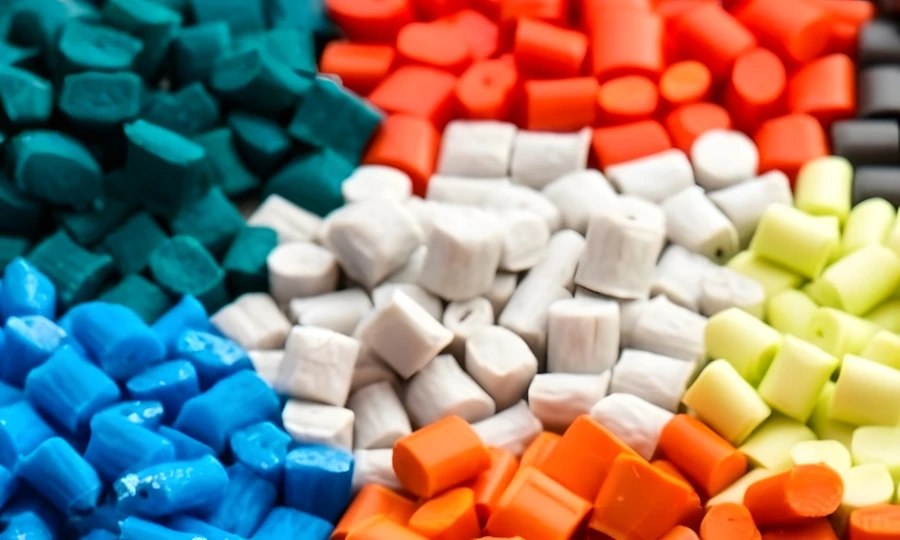
Le plastique ASA — acrylonitrile-styrène-acrylate — est un terpolymère thermoplastique technique amorphe obtenu par polymérisation par greffage du styrène et de l'acrylonitrile sur un squelette de caoutchouc d'ester acrylique réticulé, qui est ensuite intégré dans une matrice continue de styrène-acrylonitrile (SAN). Chacun de ces trois composants apporte des caractéristiques de performance spécifiques :
- Acrylonitrile (A) : Résistance chimique, dureté de surface et stabilité thermique : les mêmes avantages que ceux qu’il apporte à l’ABS et au SAN.
- Styrène (S) : Rigidité, brillance de surface, facilité de mise en œuvre : autant de propriétés caractéristiques du polystyrène.
- Caoutchouc acrylate (A) : La résistance aux chocs et, surtout, la stabilité aux UV, grâce à l'absence de doubles liaisons carbone-carbone qui, autrement, absorberaient l'énergie UV et déclencheraient une dégradation.
Ce troisième composant constitue la percée technique qui distingue les plastiques ASA de l’ABS. L’ABS tire sa résistance aux chocs des particules de caoutchouc de polybutadiène — mais les doubles liaisons carbone-carbone (C=C) du polybutadiène absorbent le rayonnement UV et subissent une scission de chaîne par photo-oxydation, provoquant le jaunissement, le farinage et la fragilisation qui rendent l’ABS impropre à une utilisation à long terme en extérieur. L’ASA remplace le butadiène par du caoutchouc réticulé d’acrylate de n-butyle ou d’acrylate de 2-éthylhexyle — des élastomères saturés dépourvus de doubles liaisons, qui ne permettent donc pas la dégradation induite par les UV. Il en résulte un matériau qui conserve sa couleur, son brillant et ses propriétés mécaniques après 3 000 à 5 000 heures d’essais d’exposition accélérée aux UV, alors que l’ABS commence à se dégrader au bout de 200 à 400 heures.
Ce que les plastiques ASA offrent et que l'ABS ne peut pas offrir :
- Résistance aux UV : > 3 000 heures d'exposition aux rayons d'un arc au xénon (ISO 4892-2) sans perte significative de brillance ni altération de la couleur
- Une résistance aux intempéries 10 fois supérieure à celle de l'ABS dans les environnements d'exposition en extérieur
- Résistance chimique supérieure à celle de l'ABS face aux alcools, aux produits nettoyants et aux fluides automobiles
- Meilleure résistance à la fissuration sous contrainte environnementale (ESC) que l'ABS au contact de solvants courants
- Température de déformation sous charge légèrement supérieure (HDT : 95–105 °C contre 85–100 °C pour l'ABS)
- Stabilité intrinsèque de la couleur — les pièces extérieures en ASA non peintes conservent un ΔE inférieur à 2,0 après 3 ans d'exposition à l'extérieur
Ce que le plastique ASA perd par rapport à l'ABS :
- Coût des matières premières : coût des matières premières de 15 à 301 TP3T supérieur à celui du GP-ABS
- Résistance au choc Izod avec entaille : légèrement inférieure à celle du HI-ABS à basse température (< −10 °C)
- Transparence optique : l'ASA est opaque — il ne convient pas aux applications nécessitant de la transparence
À Dimud, Les applications des plastiques ASA concernent principalement les composants extérieurs automobiles, les boîtiers électroniques destinés à un usage extérieur et les éléments architecturaux liés au bâtiment — des domaines dans lesquels la résistance aux UV et aux intempéries de ce matériau n'est pas simplement un atout, mais une exigence technique.
Classification des paysages : ASA standard, PC/ASA et variantes spécialisées
ASA standard (usage général)
La qualité de base : résistance aux UV, résistance aux chocs, stabilité dimensionnelle et brillance de surface équilibrées, pour un coût de matière ASA minimal. La couleur naturelle va du blanc cassé au crème clair. La mise en œuvre est très similaire à celle de l’ABS : les ingénieurs familiarisés avec les programmes ABS peuvent passer à l’ASA avec un ajustement minimal des processus.
Les appellations commerciales comprennent Luran® S (INEOS Styrolution), Terluran® ASA (BASF), Centrex® (Lanxess), et Geloy® (SABIC). Il s'agit des grades de référence pour les applications extérieures dans le secteur automobile et en extérieur à l'échelle mondiale.
Mélange PC/ASA
La nuance modifiée la plus performante pour les applications structurelles en extérieur les plus exigeantes. Le polycarbonate allié à l'ASA allie :
- La résistance intrinsèque de l'ASA aux UV et aux intempéries, associée à la résistance aux chocs supérieure et à la température de déformation à chaud (HDT) plus élevée du PC
- La température de déformation à chaud (HDT) passe de 95 à 105 °C (ASA pur) à 115 à 130 °C (PC/ASA, en fonction de la teneur en PC)
- Amélioration de la résistance aux chocs à basse température : le PC/ASA conserve une résistance au choc Charpy avec entaille supérieure à 30 kJ/m² à −30 °C, contre 15 à 25 kJ/m² pour l'ASA à la même température
- Meilleure stabilité dimensionnelle à des températures élevées — un critère essentiel pour les pièces extérieures automobiles dont la température de surface peut atteindre 85 à 95 °C lorsqu’elles sont exposées directement au soleil en été
Le PC/ASA est le matériau de prédilection pour les composants extérieurs haut de gamme destinés à l'automobile — boîtiers de rétroviseurs latéraux, garnitures de montants, encadrements de calandre et ensembles de poignées de porte — pour lesquels les spécifications des équipementiers exigent à la fois une résistance aux UV et une résistance aux chocs par temps froid. Dimud propose à ses clients du secteur automobile la transformation de mélanges PC/ASA, une capacité standard qui vient compléter ses programmes dédiés à l'ASA pur.
Nuances ASA spécialisées et modifiées
| Niveau | Modification | Avantage principal | Candidature |
|---|---|---|---|
| FR-ASA | Additifs ignifuges | UL 94 V-0 / V-2 | Équipements électroniques d'extérieur, armoires de télécommunications |
| GF-ASA (10–20% GF) | Renfort en fibre de verre | Rigidité accrue + HDT | Supports structurels pour l'extérieur, boîtiers pour bornes de recharge de véhicules électriques |
| ASA ultra-brillant | Morphologie optimisée du caoutchouc | Surface de qualité SPI A1, sans peinture | Pièces extérieures non peintes pour l'automobile |
| ASA résistant à la chaleur | Matrice SAN modifiée | HDT à 110–115 °C | Pièces automobiles et de construction adjacentes au toit |
| ESD-ASA | Additifs conducteurs | Dissipation de l'électricité statique | Appareils électroniques destinés à une utilisation en extérieur dans des environnements sensibles aux interférences électromagnétiques |
| ASA au fini mat | Additifs pour la texture de surface | Esthétique extérieure au fini mat | Revêtements de bâtiments, bâtiments agricoles |
Principales propriétés physiques et mécaniques
| Propriété | ASA standard | Mélange PC/ASA | GF-ASA (15% GF) | Norme d'essai |
|---|---|---|---|---|
| Densité | 1,06–1,08 g/cm³ | 1,13–1,16 g/cm³ | 1,17–1,20 g/cm³ | ISO 1183 |
| Résistance à la traction | 42 à 55 MPa | 50 à 65 MPa | 80 à 100 MPa | ISO 527 |
| Module de flexion | 2 100–2 600 MPa | 2 400–2 900 MPa | 5 500 à 7 000 MPa | ISO 178 |
| Résistance au choc Izod avec entaille (23 °C) | 150 à 250 J/m | 300 à 500 J/m | 80 à 120 J/m | ISO 180 |
| Choc Izod à encoche (−30 °C) | 60 à 100 J/m | 200 à 350 J/m | 50 à 80 J/m | ISO 180 |
| Allongement à la rupture | 20–40 % | 30–60 % | 3–8 % | ISO 527 |
| Température de déformation sous l'effet de la chaleur (1,82 MPa) | 85–100 °C | 110–125 °C | 105–115 °C | ISO 75 |
| Température de déformation sous l'effet de la chaleur (0,45 MPa) | 95–105 °C | 120–130 °C | 115–125 °C | ISO 75 |
| Point de ramollissement Vicat | 100–110 °C | 115–130 °C | 110–120 °C | ISO 306 |
| Retrait du moule | 0,4–0,8 % | 0.5–0.9 % | 0,2–0,5 % | ISO 294-4 |
| Absorption d'eau (24 h) | 0.15–0.25 % | 0.15–0.25 % | 0,10–0,20 % | ISO 62 |
| Rockwell Hardness | M 75–85 | M 78–90 | M 85–95 | ISO 2039-2 |
| Rigidité diélectrique | 13 à 16 kV/mm | 14 à 17 kV/mm | 13 à 16 kV/mm | IEC 60243 |
| Inflammabilité | HB | HB | HB | UL 94 |
| Xenon Arc Weathering (ΔE) | < 2.0 (3,000 h) | < 2.0 (3,000 h) | < 3.0 (2,000 h) | ISO 4892-2 |
| UV Resistance vs ABS | ~10× better | ~12× better | ~8× better | Comparative |
Dimud Engineering Note — Color Stability in Production
ASA plastics’ color stability over production runs is one of its most practically valuable but least discussed advantages. ABS undergoes subtle color shift batch-to-batch due to oxidative degradation sensitivity; the darker the color specification, the more visible this variation becomes. ASA’s saturated rubber phase eliminates this mechanism, providing consistent ΔE values across production batches that reduce color-matching reject rates by 40–60% in our automotive exterior programs versus equivalent ABS programs. For any program with tight color specification (ΔE < 1.0 between batches), ASA is the production-quality choice regardless of whether UV resistance is an explicit requirement.
ASA Injection Molding: Process Parameters and Best Practices
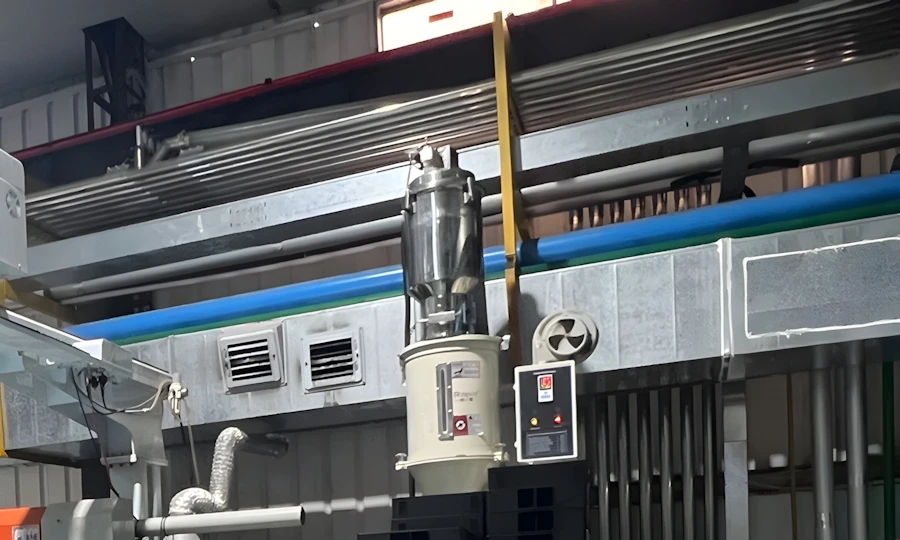
ASA injection molding is one of the most accessible high-performance polymer processes — the parameters are close to ABS, the processing window is broad, and the material is forgiving of minor deviations from optimal settings. Engineers transitioning from ABS programs will find the adjustment minimal.
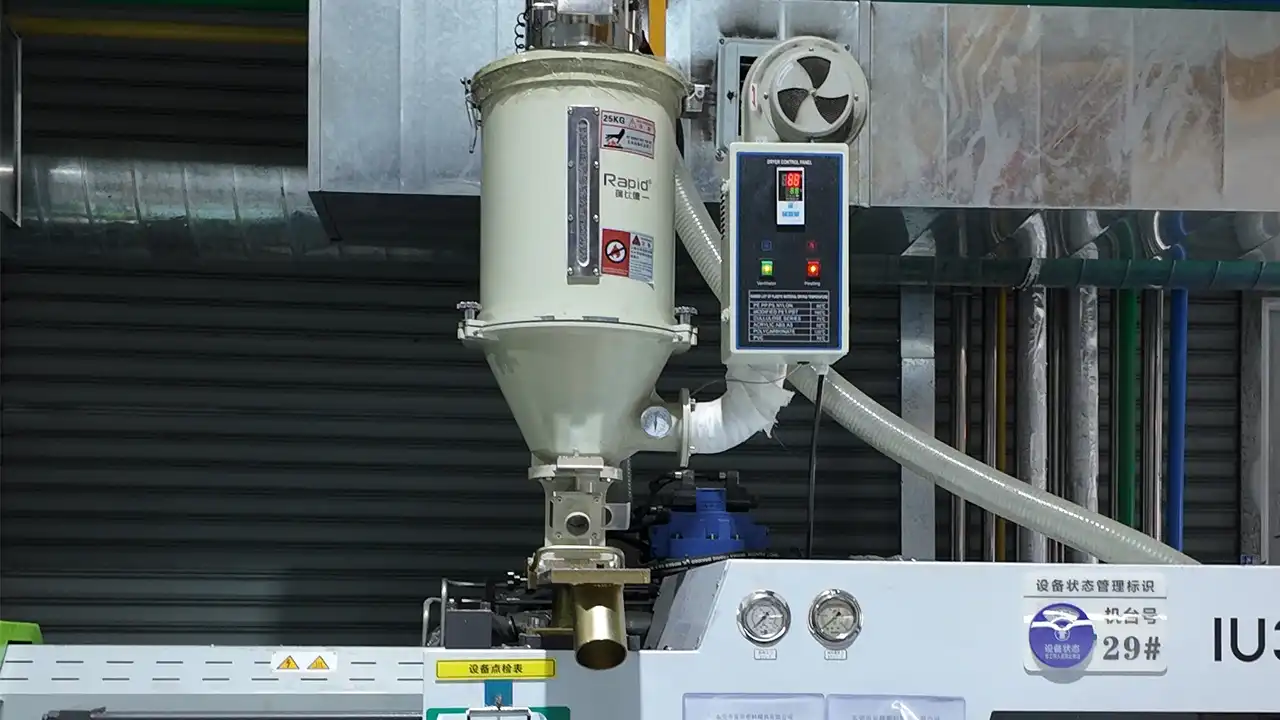
Protocole de séchage
ASA plastics absorbs moisture at 0.15–0.25% over 24 hours — similar to ABS. Undried ASA produces silver streaks, surface splay, and reduced gloss:
| Paramètre | ASA standard | Mélange PC/ASA | GF-ASA | Regrind |
|---|---|---|---|---|
| Type de sèche-linge | Trémie de déshumidification | Trémie de déshumidification | Trémie de déshumidification | Trémie de déshumidification |
| Température | 80–90 °C | 90–100 °C | 80–90 °C | 80 °C |
| Durée | 2 à 4 heures | 3–5 hours | 2 à 3 heures | 2 à 3 heures |
| Taux d'humidité cible | < 0.10 % | < 0,05 % | < 0.10 % | < 0.10 % |
| Taux maximal de rebroyage | 20–25 % | 10–15 % | 15 % | — |
Température du cylindre et de la masse fondue
| Zone | ASA standard | Mélange PC/ASA | GF-ASA | Remarques |
|---|---|---|---|---|
| Arrière (alimentation) | 185–205 °C | 220–240 °C | 190–210 °C | Controlled; no cold zones |
| Moyen (compression) | 205–230 °C | 240–265 °C | 210–235 °C | Zone de fusion primaire |
| Avant (comptage) | 220–250 °C | 255–280 °C | 225–250 °C | Température finale de fusion |
| Buse | 215–240 °C | 245–265 °C | 220–240 °C | Open-tip nozzle preferred |
Key difference from ABS: ASA plastics tolerates slightly higher melt temperatures without yellowing — degradation ceiling is approximately 280–290 °C for standard ASA (vs. 270–280 °C for ABS). PC/ASA follows PC’s degradation ceiling of 310–320 °C and requires the same strict residence time management as pure PC.
Température du moule
Mold temperature for ASA injection molding: 40–80 °C
- 40–55 °C: Standard for structural outdoor parts where cosmetics are secondary; faster cycle time.
- 55–70 °C: Recommended for high-gloss automotive exterior ASA parts (mirror housings, grille inserts). Higher mold temperature improves surface gloss, reduces weld-line visibility, and decreases residual stress — all critical for exterior appearance components.
- 70–80 °C: Maximum useful range for PC/ASA programs; high-temperature automotive specifications.
For unpainted automotive exterior programs where ASA’s natural surface gloss is the final finish, Dimud targets mold temperature at 60–70 °C with SPI A2 polished cavity steel as standard — achieving natural gloss levels of 70–85 GU (60° geometry) that meet most automotive exterior appearance specifications without painting.
Vitesse et pression d'injection
- Pression d'injection : 80 à 130 MPa (similar to ABS; PC/ASA requires 100–150 MPa)
- Hold pressure: 50–70% of injection pressure
- Contre-pression : 5–15 MPa (low; excessive back pressure generates shear heating)
- Injection speed: Moderate — ASA’s good flow characteristics allow controlled fill without the slow-fill requirement of PC; fast fill on textured automotive surfaces can cause uneven texture replication
Défauts courants et mesures correctives
| Défaut | Cause première | Mesures correctives |
|---|---|---|
| Mèches argentées / effet éparpillé | Moisture > 0.10%; shear overheating | Extend drying; reduce back pressure; lower barrel temp |
| Gloss variation (cosmetic parts) | Mold temp inconsistency; contamination | Stabilize mold temp at 60–70 °C; clean tool and runner |
| Weld line visibility | Température de fusion faible ; mauvais positionnement de l'entrée de matière | Augmenter la température de fusion ; déplacer l'entrée de matière ; augmenter la température du moule |
| Warpage (flat exterior panels) | Non-uniform cooling; wall thickness variation | Balance cooling; uniform wall; optimize gate position |
| Marques d'affaissement | Sections épaisses ; maintien insuffisant | Core out thick areas; increase hold pressure/time |
| Jetting | Gate too small; fill too fast | Enlarge gate; reduce injection speed; use fan gate |
| Texture inconsistency (textured parts) | Vitesse de remplissage trop élevée ; température du moule trop basse | Slow injection; raise mold temp; verify texture depth |
| Color shift between batches | Regrind contamination; resin lot variation | Reduce regrind ratio; specify approved supplier lots |
| Short shot (PC/ASA) | Viscosité élevée ; pression insuffisante | Augmenter la pression d'injection ; augmenter la température du cylindre |
Mold Design Considerations for ASA Plastics Components
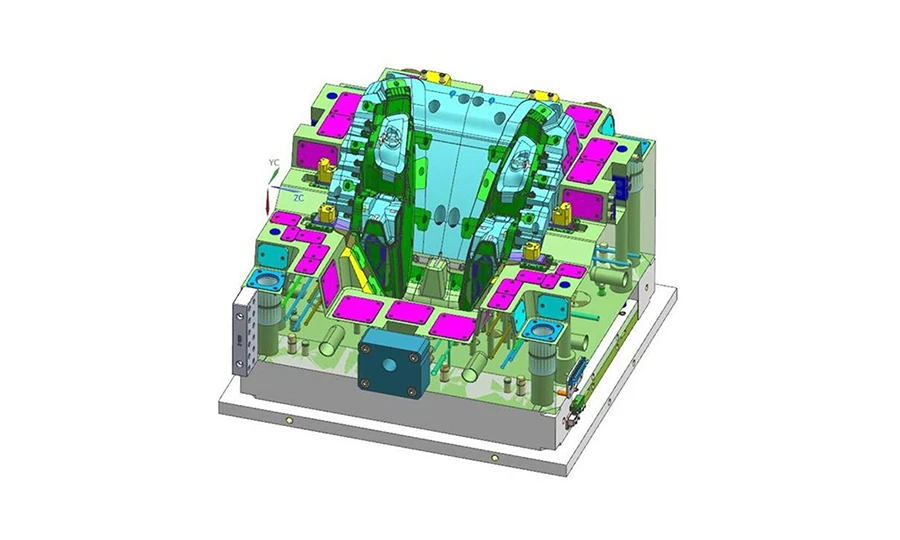
ASA injection molding mold design follows the same fundamental principles as ABS, with specific considerations for high-gloss exterior finish requirements and the elevated mold temperatures used on premium automotive programs.
Conception de portails
ASA plastics’ good flow characteristics and moderate viscosity are compatible with most gate types:
- Portails pour supporters : Preferred for flat automotive exterior panels (grille faces, cladding inserts, spoiler surfaces) where uniform fill and minimum weld lines preserve appearance quality.
- Portes de tunnel sous-marin : Effective for structural outdoor parts and non-cosmetic surfaces; automatic degating reduces labor on high-volume programs.
- Vannes d'injection à canal chaud : Recommended for high-volume automotive exterior programs — eliminates cold runners, provides cosmetic gate placement flexibility, and enables fill-timing optimization for gloss uniformity. Dimud specifies hot-runner systems on all automotive ASA programs above 4 cavities.
- Direct gates: Used on single-cavity large exterior parts (bumper covers, body panels) where gate size maximization reduces fill pressure and shear stress on the gate area surface.
Gate land: 0.5–1.0 mm maximum. Gate thickness: minimum 70–80% of wall at gate location to prevent premature freeze-off during packing of high-gloss exterior surfaces.
Choix de l'acier
| Acier | Candidature | Remarques |
|---|---|---|
| P20 (pré-trempé) | Standard ASA structural outdoor parts | 300,000–500,000 shot life |
| H13 (trempé à 48–52 HRC) | High-volume automotive exterior; GF-ASA | 600,000–1,000,000 shots; abrasion resistance |
| Acier inoxydable S136 | High-gloss automotive ASA; PC/ASA cosmetic parts | Mirror polish; corrosion resistance for PC/ASA |
| Textured P20 / H13 | Construction / industrial ASA with grain finish | Chemical texture per VDI or MT scale |
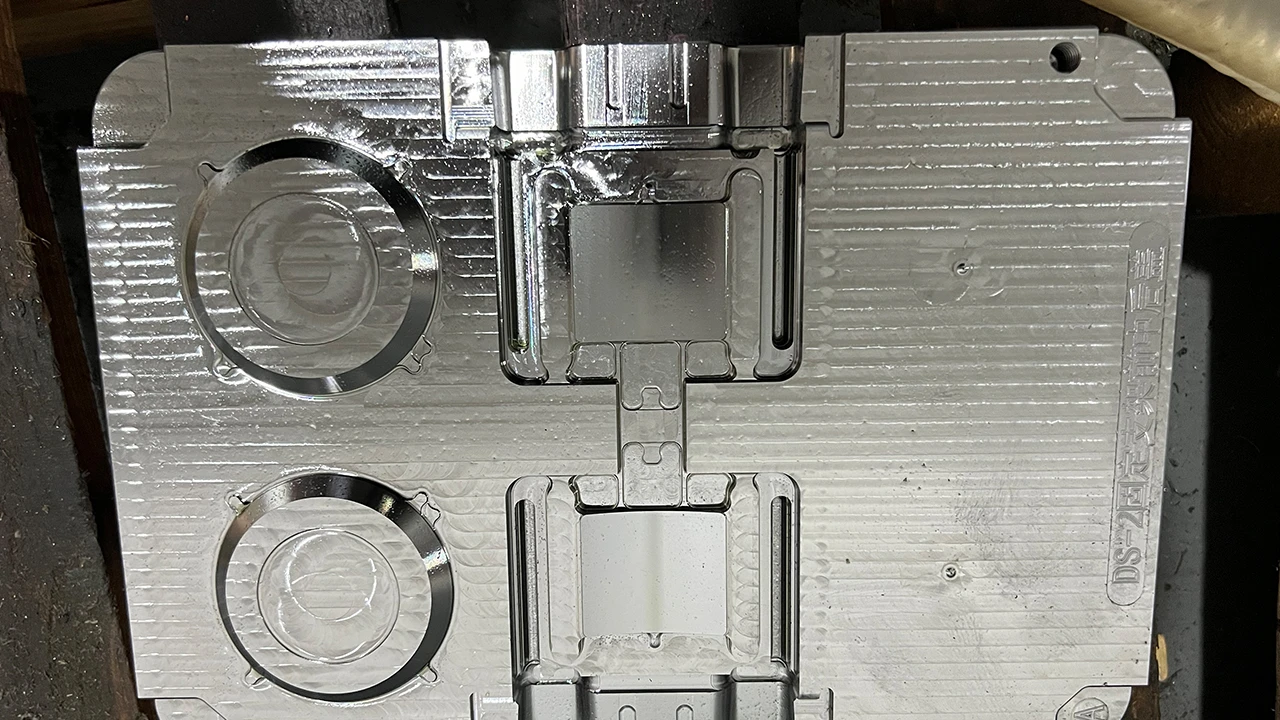
For high-gloss unpainted automotive ASA programs, Dimud specifies S136 stainless or nickel-plated P20 with SPI A2 polish. The investment in polished cavity steel on ASA exterior programs is justified by the elimination of post-mold painting — the ASA surface IS the final finish.
Surface Texture Specification
ASA plastics accepts chemical texture etching (VDI, Mold-Tech, YS) as faithfully as ABS, and its superior UV stability means textured ASA surfaces retain their grain definition and color over service life without the grain washout that UV-degraded ABS exhibits after 2–3 years outdoor exposure. Dimud’s standard texture guidance for ASA exterior programs:
- Automotive exterior gloss parts: SPI A2 polish (60–80 GU target)
- Automotive exterior matte/satin: VDI 27–30 (fine grain)
- Construction cladding: VDI 33–36 (medium grain); draft minimum 3° per side
- Outdoor equipment housing: MT-11020 to MT-11040 (fine to medium grain)
Conception du système de refroidissement
ASA injection molding at elevated mold temperatures (60–80 °C) for cosmetic exterior programs requires temperature-controlled cooling rather than passive water cooling:
- Hot-water temperature controllers (60–80 °C range) for automotive high-gloss ASA programs
- Standard water cooling acceptable for structural ASA at mold temperatures below 50 °C
- Temperature uniformity target: ±3 °C across cavity surface for cosmetic exterior programs
- For large automotive exterior panels (> 400 × 300 mm): conformal cooling to prevent differential cooling-driven warpage
Éjection et tirage
ASA’s toughness (elongation at break 20–40%) provides good ejection tolerance, but high-gloss exterior surfaces require careful pin placement:
- All ejector pins in non-cosmetic zones on exterior appearance surfaces
- Blade ejectors or sleeve ejectors for long, flat exterior panels
- Draft angles: minimum 1° for standard ASA; 1.5°–2° for polished high-gloss surfaces; 3° minimum for textured surfaces with VDI 33+ grain depth
Weatherability: What the Test Data Actually Means
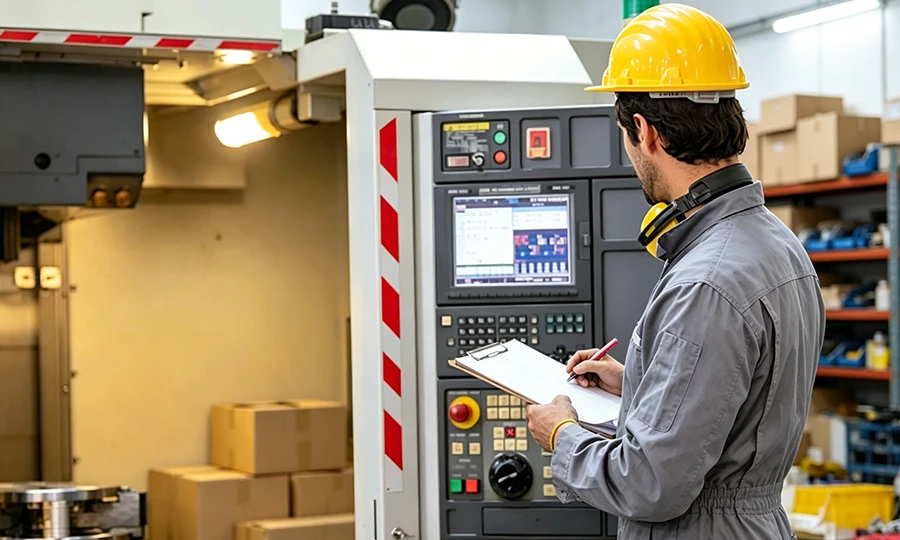
Weatherability claims for ASA plastics are ubiquitous in resin supplier datasheets, but the test conditions behind the numbers vary significantly. Engineers specifying ASA for regulated or warranty-critical outdoor applications need to understand what the test data actually validates.
Accelerated Weathering Test Standards
The two primary accelerated weathering protocols used for ASA plastics qualification:
ISO 4892-2 (Xenon arc weathering): The gold standard for outdoor-exposure simulation. A xenon arc lamp with filters replicates the full solar spectrum including UV-A, UV-B, and visible light. Standard ASA qualification programs run 1,000–3,000 hours of xenon arc exposure per OEM specification, with periodic measurement of:
- ΔE (color change): < 2.0 typically required for automotive exterior acceptance
- Gloss retention: > 70% of initial value at end of test
- Tensile strength retention: > 80% of initial value
ISO 4892-3 (Fluorescent UV weathering): Uses UV-A or UV-B fluorescent lamps to accelerate UV degradation without replicating the full solar spectrum. Results are less correlated with real outdoor exposure than xenon arc but provide faster screening at lower cost.
Real-World vs. Accelerated Exposure Correlation
Industry correlation for ASA plastics in Central European climatic conditions:
| Accelerated Test Duration | Approximate Real-World Correlation | Application Standard |
|---|---|---|
| 500 hours xenon arc (ISO 4892-2) | ~1 year southern European exposure | Baseline outdoor check |
| 1,500 hours xenon arc | ~3 years Central European exposure | Standard automotive exterior |
| 3,000 hours xenon arc | ~5–7 years Central European exposure | Premium automotive; construction |
| 5,000 hours xenon arc | ~10 years Central European exposure | Long-life infrastructure components |
Dimud conducts xenon arc validation on ASA programs for European and Middle Eastern automotive customers where OEM specifications define minimum weathering performance requirements. Third-party laboratory test reports (Intertek, SGS, TÜV) are available as program deliverables on request.
Florida Outdoor Exposure
For North American automotive and construction customers, Florida outdoor exposure (ASTM D4141 or SAE J1960) at 0° or 5° south-facing angle provides the most demanding real-world weathering benchmark:
- Standard ASA maintains ΔE < 3.0 after 12 months Florida exposure (equivalent to approximately 3,000 hours xenon arc)
- PC/ASA alloys maintain ΔE < 2.0 after 24 months Florida exposure for premium automotive exterior OEM qualification
Applications industrielles
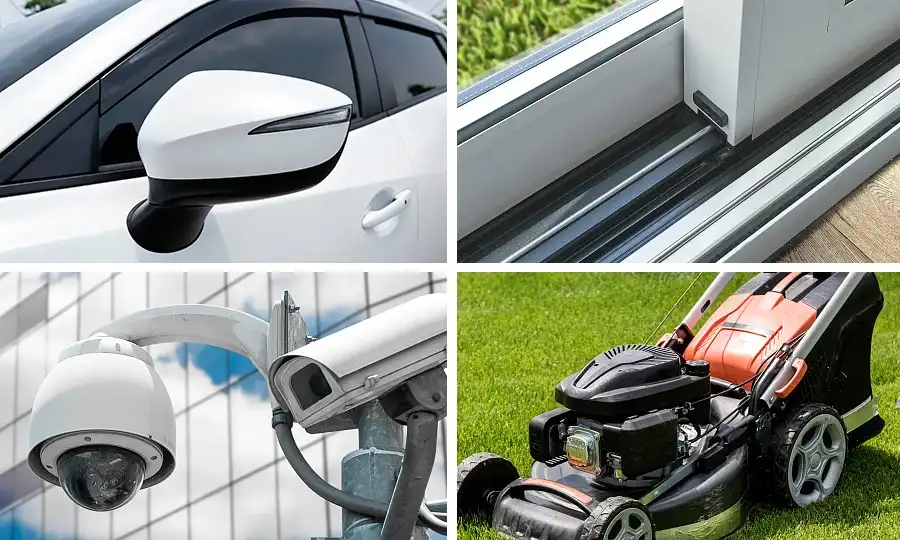
Automotive Exterior
Automotive is the highest-volume application domain for ASA plastics globally, where OEM requirements for unpainted exterior parts have made ASA injection molding the default specification for exterior components that would otherwise require secondary painting operations.
Side mirror housings (standard ASA / PC/ASA): The largest single-volume ASA plastics application in automotive. Mirror housings face continuous UV, thermal cycling, stone chip, car wash chemical, and road salt exposure throughout a 10–15 year vehicle service life. Standard ASA meets economy-segment OEM weathering specifications; PC/ASA is specified for premium and luxury segments where low-temperature impact performance (−40 °C cold-area market requirements) and higher HDT (for markets with extreme summer temperatures) add necessary performance margin.
Dimud produces mirror housing components to automotive OEM weathering and dimensional specifications with PPAP Level 3 documentation as standard — including xenon arc test certificates from qualified third-party laboratories when specified.
Front grilles and radiator grille inserts (standard ASA / GF-ASA): Grille components combine UV exposure with thermal cycling between −40 °C and +95 °C surface temperature. Standard ASA handles the UV and weathering requirements; glass-fiber reinforced ASA (15–20% GF) is specified when stiffness requirements (grille face deflection < 2 mm at 100 N load) or dimensional stability at elevated temperatures exceeds standard ASA’s capability.
Exterior trim moldings and body side moldings (standard ASA): Door edge protectors, body side moldings, and window surround trim. ASA’s intrinsic color stability means these parts maintain consistent appearance with surrounding painted body panels throughout vehicle life without the fading and color shift that would require replacement.
Spoilers and aerodynamic components (PC/ASA): Rear spoilers and aerodynamic add-on components that combine UV exposure, stone chip impact, and structural loading. PC/ASA’s superior cold-impact performance versus pure ASA addresses the brittle fracture risk at low temperatures that would disqualify standard ASA from high-impact aerodynamic applications.
EV charge port surrounds and exterior sensor housings (FR-ASA / GF-ASA): The transition to electric vehicles has created new ASA plastics applications — charge port door surrounds, exterior LIDAR sensor housings, and charge cable management brackets. These components combine UV exposure with the additional requirement for FR-ASA at V-0 for charge-port-adjacent electrical components.
Construction and Building Materials
Construction is the second-largest application sector for ASA plastics, where long service life under direct outdoor exposure without painting or coating is a fundamental requirement.
Roofing system components (standard ASA / ASA-capped ABS): Roof ventilation caps, ridge covers, and roof-light dome surrounds. ASA injection-molded roofing components must retain structural integrity and appearance across a 20–25 year design life in all climatic zones. ASA-capped ABS systems — where an ASA weathering layer is co-extruded or co-injected over an ABS structural core — deliver ASA’s UV durability at reduced material cost for large-format roofing components.
Window and door profile end caps (standard ASA): Injection-molded end caps, corner joints, and profile terminations for uPVC and aluminum window systems. These components must color-match to the profile system and maintain appearance without UV degradation for the window system service life.
Outdoor signage and architectural trim (standard ASA): Directional signage supports, architectural trim brackets, and decorative cladding fastener caps where long-term color stability under sunlight is a design and warranty requirement.
Outdoor Electronics and Telecommunications
Security camera housings and CCTV enclosures (standard ASA / FR-ASA): Security cameras and surveillance equipment are permanently mounted in outdoor environments, requiring housings that maintain structural integrity, color, and IP-rating seal integrity after years of UV and weather exposure. ASA plastics is the dominant material for security camera housing programs globally. FR-ASA at UL 94 V-2 or V-0 is specified where electrical safety certification requires flame-rated materials.
Telecommunications equipment enclosures (FR-ASA): Outdoor telecom junction boxes, antenna mounts, and distribution enclosures face the same UV and weathering demands as security housings with the additional requirement for UL 94 V-0 flame rating for equipment containing active electronic components.
Smart meter and utility infrastructure housings (standard ASA / FR-ASA): Electricity, gas, and water smart meter housings mounted on building exteriors. ASA’s combination of UV stability, chemical resistance to atmospheric pollutants, and color stability satisfies the 10–15 year service life requirements of utility infrastructure programs without secondary coatings.
EV charging station enclosures and panels (GF-ASA / FR-ASA): With EV charging infrastructure deployed in outdoor environments globally, ASA plastics has become the specification standard for charging station front panels, cable management housings, and user interface surrounds. GF-ASA provides the dimensional stability and stiffness that large-format charging station panels require, while FR-ASA addresses the electrical safety certification requirements of grid-connected equipment.
For Dimud’s full approach to electronics and outdoor industrial manufacturing, visit our Page consacrée au secteur de l'électronique et des semi-conducteurs.
Automotive Exterior — Robotics and Industrial Equipment
Outdoor robotic system enclosures (standard ASA / FR-ASA): Autonomous mobile robots (AMRs) and outdoor logistics robots deployed in logistics yards, construction sites, and agricultural environments require enclosures that withstand UV exposure, rain, and temperature cycling without the coating maintenance that painted ABS enclosures require.
Agricultural equipment housings (standard ASA): Lawn mower decks, string trimmer housings, and outdoor power tool enclosures. ASA plastics is the standard material for outdoor power equipment housings globally — its UV stability, impact resistance, and color retention eliminate the surface degradation that occurs with ABS in these high-UV, mechanical-impact environments.
Solar energy component brackets and enclosures (GF-ASA / FR-ASA): Solar panel junction box housings, optimizer enclosures, and cable management clips permanently mounted on outdoor solar installations. The 25-year design life of solar installations sets a UV and weathering performance bar that ASA injection molding meets cost-effectively; GF-ASA provides the dimensional stability at elevated installation temperatures (up to 90 °C surface temperature on dark-colored components in direct sunlight).
ASA Plastics vs. Competing Materials
| Propriété | ASA | ABS | PC/ABS | PP (UV stabilized) | PC |
|---|---|---|---|---|---|
| UV / Weatherability | ★★★★★ | ★★☆☆☆ | ★★★☆☆ | ★★★☆☆ | ★★★☆☆ |
| Impact Resistance (23 °C) | ★★★★☆ | ★★★★★ | ★★★★★ | ★★★★☆ | ★★★★★ |
| Impact Resistance (−30 °C) | ★★★☆☆ | ★★★☆☆ | ★★★★☆ | ★★☆☆☆ | ★★★★★ |
| Résistance à la chaleur (HDT) | ★★★☆☆ | ★★★☆☆ | ★★★★☆ | ★★★★☆ | ★★★★★ |
| Chemical / ESC Resistance | ★★★★☆ | ★★★☆☆ | ★★★☆☆ | ★★★★★ | ★★★☆☆ |
| Surface Gloss (natural) | ★★★★★ | ★★★★★ | ★★★★☆ | ★★★☆☆ | ★★★★☆ |
| Stabilité dimensionnelle | ★★★★★ | ★★★★★ | ★★★★☆ | ★★★☆☆ | ★★★★☆ |
| Facilité de traitement | ★★★★★ | ★★★★★ | ★★★★☆ | ★★★★★ | ★★★☆☆ |
| Coût des matières premières | $$ Moyen | $$ Moyen | $$$ Élevé | $ Faible | $$$ Élevé |
| Color Stability (outdoor) | ★★★★★ | ★★☆☆☆ | ★★★☆☆ | ★★★★☆ | ★★★☆☆ |
ASA vs. ABS: The fundamental comparison. ABS wins on cost (15–30% lower) and slightly higher ambient-temperature impact strength. ASA wins decisively on everything that matters outdoors: UV resistance (10× better), color stability, chemical resistance to cleaning agents, and ESC resistance to alcohols. For any exterior application exposed to sunlight, ABS’s lower cost is not a saving — it is a deferred replacement cost within 2–3 years.
ASA vs. UV-stabilized PP: PP with UV stabilizer packages offers similar outdoor durability to ASA at lower material cost and lower density. PP wins on chemical resistance, cost, and lightweight. ASA wins on surface gloss retention (PP’s surface dulls under UV exposure even with stabilizers), dimensional stability (PP’s high shrinkage creates fitting challenges), and paint adhesion for programs requiring secondary decoration.
ASA vs. PC: PC provides superior low-temperature impact, higher HDT, and optical clarity. ASA provides better inherent UV stability (PC yellows under UV without hard-coat), better chemical resistance to disinfectants and alcohols (PC ESC risk), and lower cost. For outdoor applications where impact performance exceeds ASA’s capability and where hard-coat UV protection is applied anyway, PC is the upgrade path. For applications within ASA’s impact envelope where UV stability is the primary driver, ASA avoids PC’s cost premium and ESC sensitivity simultaneously.
For a comprehensive material selection overview covering all injection molding polymers in Dimud’s portfolio, see the Guide des matériaux pour le moulage par injection.
DFM Guidelines for ASA Plastics Parts
ASA plastics DFM follows the same core principles as ABS, with additional attention to surface finish requirements for unpainted exterior programs and the anisotropic shrinkage management relevant to GF-ASA structural programs.
Dimud's Product Design & DFM analysis service reviews every ASA program before tooling commitment — covering grade recommendation, wall thickness analysis, gate position optimization for exterior surface cosmetics, and weatherability specification alignment.
Épaisseur de la paroi
Plage recommandée : 1,5 à 4,0 mm for standard structural ASA; 2.0–4.5 mm for PC/ASA structural exterior parts.
Uniform wall thickness is more critical in outdoor programs than in interior applications — differential shrinkage in variable-wall ASA parts creates residual stress that, combined with real-world thermal cycling (−40 °C to +95 °C for automotive exterior), can cause progressive warpage over the part’s service life. A 2:1 maximum wall thickness ratio is Dimud’s standard DFM rule for all ASA exterior programs.
Rayons des virages
Rayon minimal des angles internes : 0,5 mm. Recommandé : 1,0 mm ou 25–50% de l'épaisseur de la paroi.
For outdoor ASA programs that experience thermal cycling in service, corner radii serve double duty: stress relief during molding ejection and fatigue crack prevention under repeated thermal expansion/contraction cycles over the service life.
Ribs and Bosses
- Épaisseur des nervures : 50–60% de paroi nominale — strictly enforced on gloss exterior surfaces where sink marks from thick ribs are visible in raking light inspection
- Boss outer diameter: maximum 2× nominal wall; cored bosses preferred
- All rib and boss junctions: filletted (minimum 0.5 mm; 1.0 mm preferred)
Draft Angles for Textured Exterior Surfaces
This is the most frequently under-specified parameter in first-time ASA exterior programs:
- Polished surface (SPI A2): 1.0°–1.5° per side minimum
- Fine texture (VDI 27–30): 2.0°–3.0° per side minimum
- Medium texture (VDI 33–36): 3.0°–5.0° per side minimum
- Deep grain (VDI 39+): 5.0°+ per side; consult mold designer
Insufficient draft on textured ASA exterior molds is the primary cause of surface drag marks and texture tearing that are immediately visible on unpainted parts and impossible to correct without mold steel modification.
Tolérances réalisables
- Standard ASA: ±0.15–0.20 mm on controlled dimensions
- PC/ASA: ±0.10–0.15 mm (lower shrinkage than pure ASA)
- GF-ASA: flow direction ±0,05–0,10 mm; transverse direction ±0.10–0.15 mm
- For large-format exterior panels (> 300 mm dimension): warpage tolerance must be specified and validated by Moldflow simulation before tool design freeze
Dimud's ASA Plastics Injection Molding Capabilities
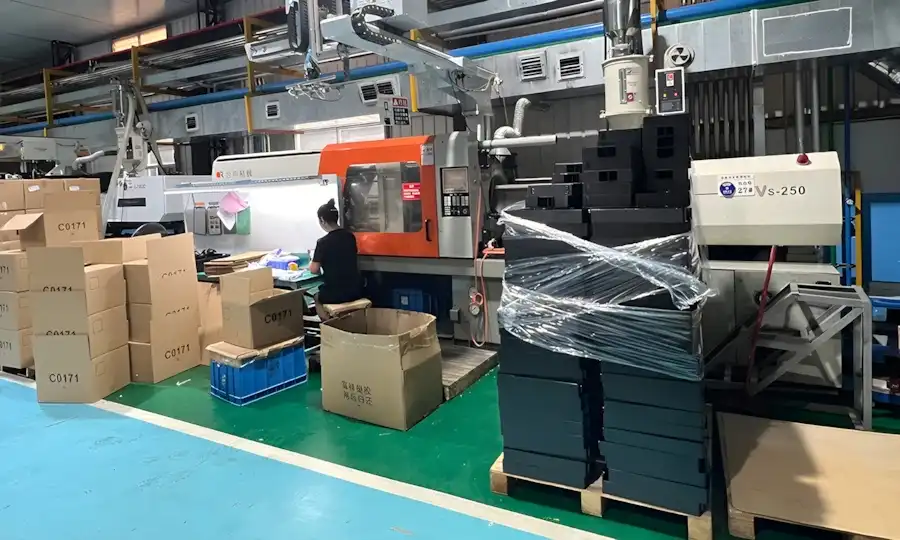
Dimud provides ASA injection molding as part of a vertically integrated manufacturing system — three coordinated plants covering mold development, CNC machining, and electronics assembly — serving automotive, outdoor electronics, construction, and industrial customers in Europe, North America, and the Middle East.
| Étape de service | Capacité Dimud | Avantage pour le client |
|---|---|---|
| DFM et révision des notes | Grade recommendation (ASA vs PC/ASA vs ABS); weathering spec alignment; texture draft audit; gloss spec validation | Eliminate the most common outdoor program failures before tooling |
| Prototypage rapide | SLA/SLS functional models + aluminum soft tools in standard or PC/ASA | Appearance and functional samples in 10–15 working days |
| Développement des moisissures | P20 / H13 / S136; hot-runner valve gate; Moldflow pre-validated; 1–64+ cavities; hot-water temp control for cosmetic programs | Production-ready exterior tooling with guaranteed shot life |
| Moulage de série | 50T–1,600T machines; hot-water temp controllers 60–80 °C for cosmetic programs; FR-ASA, PC/ASA, GF-ASA capable | Automotive exterior to industrial outdoor volumes |
| Surface Quality | SPI A2 polished cavities; VDI/MT texture; color and gloss acceptance measurement per batch | Consistent appearance quality from pilot to volume |
| Weathering Qualification | Third-party xenon arc (ISO 4892-2) and Florida exposure (SAE J1960) coordination | Automotive OEM-ready weathering documentation |
| Documentation de qualité | PPAP Level 3, CoC, ΔE/GU measurement records, CMM reports, weathering test certificates | Audit-ready for automotive Tier-1 and outdoor industrial OEMs |
| Chaîne d'approvisionnement | INEOS Styrolution/Covestro/BASF resin sourcing; incoming color lot verification; DDP logistics | Color-consistent resin from approved producers to finished part |
Foire aux questions
La différence fondamentale réside dans la résistance aux UV. L’ABS contient du caoutchouc polybutadiène doté de doubles liaisons carbone-carbone qui absorbent l’énergie UV et déclenchent une dégradation photo-oxydative — entraînant un jaunissement, un farinage et une fragilisation après 200 à 400 heures de vieillissement accéléré, équivalentes à 6 à 12 mois d’exposition en extérieur. L’ASA remplace le butadiène par un caoutchouc d’ester acrylique saturé dépourvu de doubles liaisons réactives aux UV, ce qui lui permet de conserver sa couleur (ΔE < 2,0), sa brillance et ses propriétés mécaniques après plus de 3 000 heures de vieillissement accéléré, équivalentes à 7 à 10 ans d’exposition en extérieur. Pour tout composant destiné à passer sa durée de vie en extérieur, le coût inférieur de l’ABS ne constitue pas une économie, mais un coût de remplacement différé. Le surcoût lié au matériau ASA 15–30% est généralement amorti dès le premier cycle de remplacement évité.
Non — c’est là le principal avantage commercial de l’ASA. Les grades ASA standard et haute brillance atteignent des niveaux de brillance de surface naturels compris entre 70 et 85 GU (géométrie à 60°) dès la sortie du moule d’injection, répondant ainsi à la plupart des spécifications esthétiques automobiles pour les éléments de finition extérieurs de la couleur de la carrosserie ou noirs, sans nécessiter de peinture secondaire. Les moules ASA à haute brillance nécessitent de l’acier inoxydable S136 poli ou de l’acier P20 nickelé pour les cavités, un contrôle de la température du moule entre 60 et 70 °C, ainsi qu’une gestion précise de la vitesse de remplissage — autant d’éléments qui font partie intégrante des programmes ASA de Dimud destinés aux extérieurs automobiles. La suppression de la peinture permet de réduire simultanément les coûts du programme, les émissions de COV et la complexité de la chaîne d’approvisionnement.
Les mélanges PC/ASA associent le polycarbonate à l'ASA pour offrir une meilleure résistance aux chocs à basse température (résistance Charpy avec entaille > 30 kJ/m² à −30 °C contre 15 à 25 kJ/m² pour l'ASA) et une température de déformation à chaud (HDT) plus élevée (115–130 °C contre 95–105 °C pour l’ASA), tout en conservant les performances de l’ASA en matière de résistance aux UV et aux intempéries. Le PC/ASA est privilégié par rapport à l’ASA standard lorsque : (1) l’application concerne des marchés situés dans des régions au climat froid où une résistance aux chocs à −40 °C est une exigence des équipementiers ; (2) la pièce atteint des températures de surface supérieures à 100 °C sous l’ensoleillement direct en été dans les climats chauds ; ou (3) les spécifications dimensionnelles de l’équipementier exigent le faible retrait et le module de rigidité plus élevé du PC/ASA pour un panneau extérieur de grand format. Pour des conditions climatiques standard et des garnitures extérieures de taille normale, l’ASA standard constitue la solution la plus économique.
Oui — Le moulage par injection d’ASA est largement utilisé pour les boîtiers électriques d’extérieur classés IP65/IP66, en particulier pour les caméras de sécurité, les boîtiers de raccordement de télécommunications et les boîtiers de compteurs intelligents. L'indice de protection IP des boîtiers moulés par injection est déterminé par la géométrie du joint (conception de la rainure du joint) et la cohérence dimensionnelle des surfaces de contact — et non par le polymère de base. L'ASA offre la stabilité aux UV et la précision dimensionnelle qui garantissent que la géométrie du joint maintient les performances de l'indice de protection IP pendant toute la durée de vie du boîtier. Pour les boîtiers contenant des composants électroniques actifs, l’utilisation d’ASA ignifugé (FR-ASA) conforme à la norme UL 94 V-2 ou V-0 est requise afin de répondre aux exigences de certification en matière de sécurité électrique sur les marchés de l’Union européenne, d’Amérique du Nord et du Moyen-Orient.
Pour la plupart des programmes des équipementiers européens, l’exigence minimale en matière d’exposition aux intempéries pour les pièces extérieures automobiles est de 1 500 à 2 000 heures d’exposition à l’arc au xénon, conformément à la norme ISO 4892-2, les critères de réussite étant un ΔE 70%. Les programmes des équipementiers européens haut de gamme (BMW, Mercedes, Volkswagen) exigent généralement 3 000 heures. Les programmes des équipementiers nord-américains (GM, Ford, Stellantis) spécifient une exposition en extérieur en Floride selon la norme SAE J1960 pendant 12 à 24 mois comme principale qualification de résistance aux intempéries. Dimud assure la coordination des essais de vieillissement en collaboration avec les laboratoires SGS, Intertek et TÜV Rheinland dans le cadre des programmes automobiles ASA pour les pièces extérieures, les certificats d’essai étant inclus dans le dossier de documentation PPAP de niveau 3.
Conclusion
ASA plastics occupies a specific and irreplaceable position in the engineering thermoplastic landscape: the highest-UV-resistant, best-weathering-performance material in the ABS processing family, available at a cost point and processing familiarity that makes it accessible to engineers who have never worked with engineering polymers like PEEK or PPS.
The specification case is straightforward. For any component that will be exposed to outdoor UV, rain, temperature cycling, and chemical contact over a multi-year service life, ASA injection molding delivers a service life 3–5× longer than ABS, eliminates the secondary painting operation and its associated cost and environmental burden, and maintains appearance quality that translates directly to brand perception and warranty cost reduction.
Dimud brings the tooling precision, process discipline, and automotive-grade quality documentation to deliver ASA plastics programs that perform to specification from T1 sample through end of production life — for automotive exterior, outdoor electronics, construction, and industrial customers who need weathering-performance components without the process complexity of higher-tier engineering polymers.