
Consumer electronics housings often look simple from the outside, but their internal structure usually carries multiple engineering functions. A plastic electronic enclosure must protect internal components, support PCB and speaker assembly, maintain dimensional stability, and deliver a clean appearance that matches the final product design.
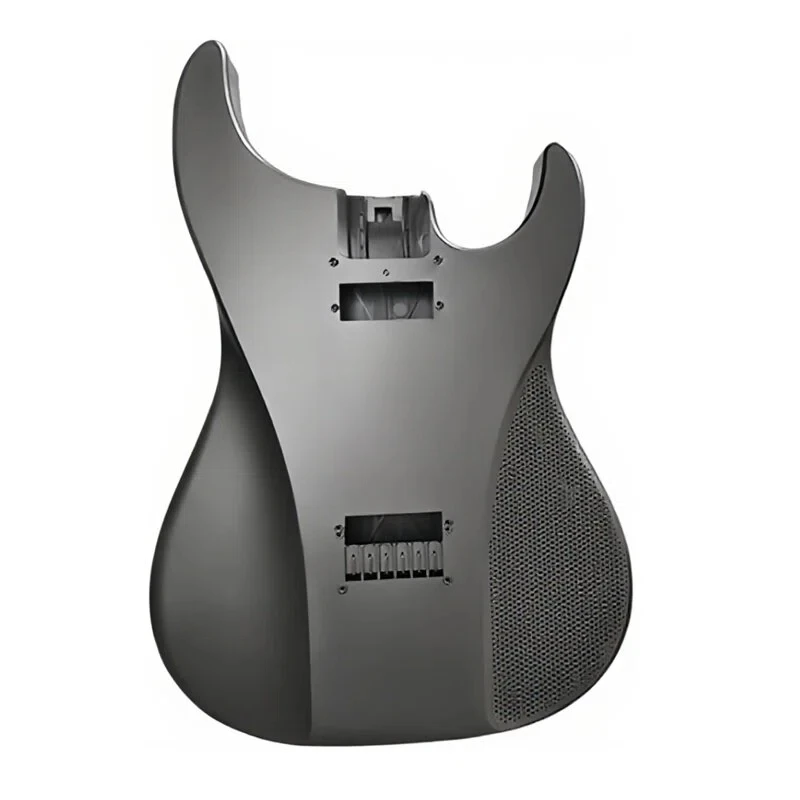
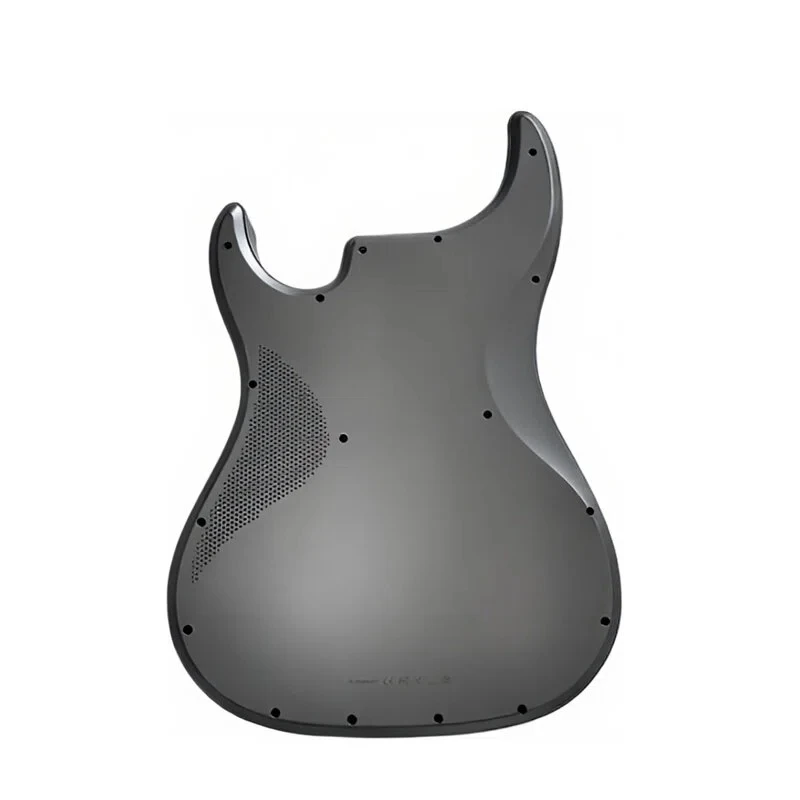
This case study focuses on a custom electronic guitar controller housing manufactured by Dimud through plastic injection molding. The product featured a guitar-shaped outer profile, integrated speaker grille area, internal screw bosses, reinforcing ribs, electronic component windows, and assembly structures. These details made the project more complex than a standard plastic cover.
Dimud supported the customer from early DFM review and mold design to injection molding production and final inspection, helping convert a consumer electronics concept into a production-ready plastic housing.
Project Overview
A United States-based consumer electronics brand contacted Dimud to manufacture a customized plastic housing for a new electronic guitar controller. The customer had more than 12 years of experience in interactive music devices, smart learning toys, and consumer electronics accessories.
This was a new product development project, but the customer had already experienced problems during the early prototype and supplier evaluation stage. Their previous supplier could produce appearance samples, but the parts were not stable enough for mass production. The main issues included warpage on the large guitar-shaped shell, poor matching between the front and back covers, weak screw bosses, visible weld lines around the speaker grille, and inconsistent matte black surface texture.
Because the product had both cosmetic and functional requirements, the customer needed a manufacturing partner who could do more than basic plastic molding. They needed engineering support for DFM review, material selection, mold structure optimization, speaker grille molding, assembly fit, and production quality control.
À Dimud, our engineering and production teams supported the project from design review to injection molding production. The goal was to create a durable, accurate, and visually consistent plastic electronic enclosure suitable for consumer electronics assembly.
Product Identification
Based on the product structure and appearance, this component can be identified as an electronic guitar controller housing.
It can also be described as:
- Guitar-shaped electronic device plastic enclosure
- Plastic housing for electronic music controller
- Injection molded guitar controller shell
- Consumer electronics plastic housing
- Speaker grille plastic enclosure
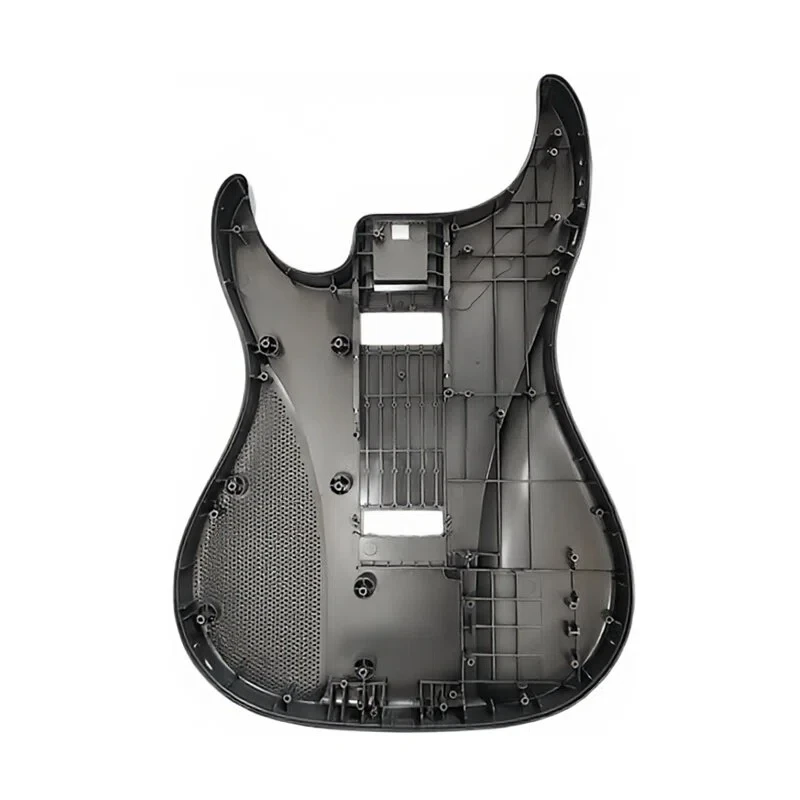
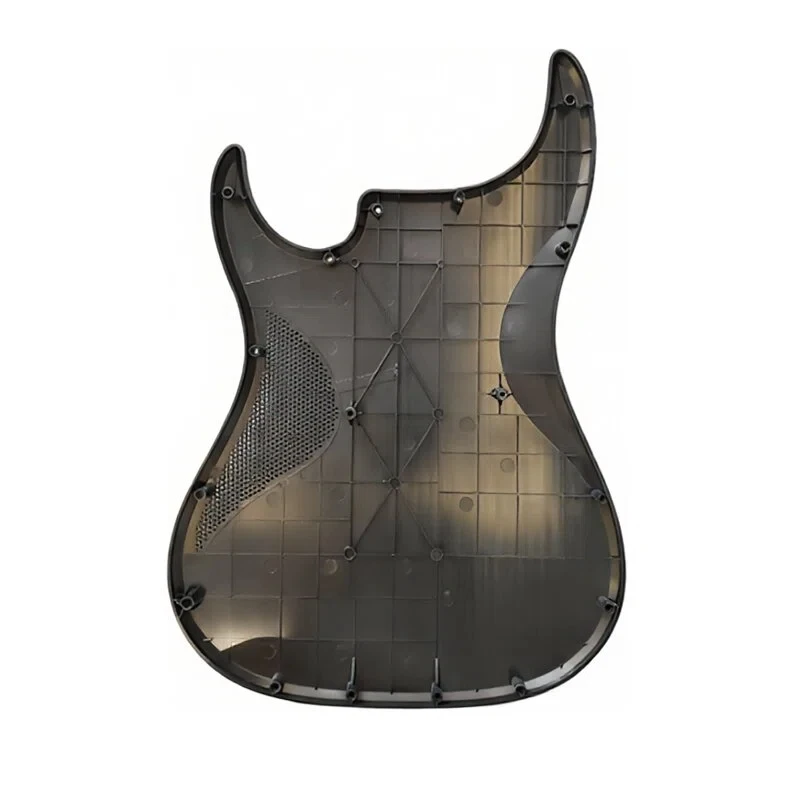
The part is not a traditional wooden guitar body. It is an injection molded plastic shell designed for an electronic device. The internal side includes screw bosses, ribs, PCB mounting areas, rectangular assembly openings, and speaker grille holes. The outer side requires a smooth matte black cosmetic finish.
Product Parameters
| Objet | Specification |
|---|---|
| Product Name | Electronic Guitar Controller Housing |
| Product Category | Consumer electronics plastic enclosure |
| Candidature | Interactive music device / electronic guitar controller / smart learning toy |
| Manufacturing Process | Plastic injection molding |
| Suggested Material | PC/ABS or ABS engineering plastic |
| Alternative Materials | ABS, PC, PC/ABS, flame-retardant ABS, or modified engineering plastic |
| Approx. Product Size | 430 mm × 310 mm × 35 mm |
| Part Structure | Front housing and rear housing assembly |
| Épaisseur de la paroi | 2.0–2.5 mm recommended |
| Rib Thickness | 0.8–1.2 mm recommended, depending on main wall thickness |
| Screw Boss Type | M2.5 / M3 screw boss structure, customized by assembly design |
| Speaker Grille Area | Integrated perforated grille structure |
| Speaker Hole Diameter | Approx. 1.2–1.8 mm, customized by acoustic design |
| Finition de surface | Matte black textured finish |
| Appearance Requirement | No obvious weld lines, sink marks, flash, scratches, or gloss inconsistency |
| Key Functional Areas | Screw bosses, cover matching edge, speaker grille, PCB window, assembly openings |
| Recommended Critical Tolerance | ±0.05–0.10 mm on key assembly features |
| General Tolerance | ±0.15–0.20 mm depending on drawing requirements |
| Type de moule | Precision injection mold for large plastic housing |
| Gate Option | Edge gate, fan gate, or hot runner depending on mold flow result |
| Mold Steel Option | P20 / H13 / S136 depending on volume and surface requirements |
| Quality Control | Dimensional inspection, visual inspection, assembly fit test, screw boss strength check |
| Color | Matte black |
| Customer Information | Confidential |
Note: The above parameters are based on product characteristics and typical engineering evaluation. Final dimensions, tolerances, material grade, and validation requirements should follow the customer’s 2D drawings, 3D CAD files, and product assembly specifications.
Customer Challenge
The customer’s main challenge was to move from prototype validation to stable injection molding production.
The guitar-shaped housing had a large curved outline and an uneven internal structure. One side included a speaker grille area with many small holes, while the inner side included ribs, screw bosses, rectangular openings, and multiple mounting features. These design elements created several injection molding risks.
The previous supplier’s samples showed problems such as:
- Warpage on the large housing surface
- Poor fit between the front and rear covers
- Sink marks near thick screw boss areas
- Visible weld lines around the speaker grille
- Weak screw bosses after repeated assembly
- Inconsistent matte black texture
- Flash around the outer edge and small holes
- Difficulty controlling shrinkage across the large shell
For a consumer electronics product, these issues can directly affect product quality, assembly efficiency, and customer perception. A housing with poor fit may create gaps, rattling, or internal component misalignment. A visible surface defect may reduce the perceived value of the final product.
Sélection des matériaux
For this electronic guitar controller housing, material selection needed to balance appearance, impact resistance, dimensional stability, moldability, and cost.
Dimud recommended PC/ABS as the preferred material option because it combines the processability of ABS with the improved toughness and heat resistance of PC. This makes it suitable for consumer electronics housings that need a strong structure and a clean cosmetic surface.
ABS was also evaluated as a cost-effective option for applications where impact and heat requirements were lower. If the product needed stricter flame resistance, flame-retardant PC/ABS or flame-retardant ABS could be selected according to the customer’s compliance requirements.
The final material decision depended on:
- Drop test requirements
- Screw boss strength
- Surface texture requirement
- Assembly method
- Speaker grille strength
- Product cost target
- Compliance requirements such as RoHS or flame rating
DFM Review
Before mold manufacturing, Dimud performed a DFM review to identify potential production risks. For large consumer electronics housings, early DFM is especially important because small design problems can become expensive mold modifications later.
The DFM review focused on the following areas:
- Wall Thickness Balance
The shell had both large flat areas and thick local structures. Dimud reviewed the wall thickness transition to reduce sink marks, shrinkage, and internal stress. - Conception des nervures et des bossages
Internal ribs and screw bosses were checked to avoid excessive thickness. Boss base design was optimized to improve strength while reducing surface sink marks. - Speaker Grille Molding Risk
The perforated speaker grille area included many small holes. This required careful flow analysis, venting, and mold insert design to avoid short shots, burn marks, and weak hole edges. - Cover Matching Accuracy
The front and rear housings needed to align correctly after assembly. Dimud reviewed edge matching, screw locations, and internal positioning features. - Draft Angle and Ejection
The deep side walls, ribs, and bosses required proper draft angles. Without enough draft, the part could stick to the mold, deform during ejection, or show drag marks. - Gate Location
Gate position had to support smooth filling while protecting cosmetic surfaces. Poor gate placement could cause weld lines, flow marks, and uneven shrinkage.
For customers who want to understand mold design risks in more detail, Dimud’s injection mold design guide explains how product geometry, tooling structure, cooling, and production economics affect final part quality.
Mold Flow Analysis
Because this part had a large guitar-shaped profile and an integrated speaker grille, mold flow analysis was used to evaluate filling behavior before cutting steel.
The analysis helped Dimud review:
- Melt flow balance across the large housing
- Weld line position around the speaker grille
- Air trap risk near small holes and edge features
- Warpage risk after cooling
- Gate location options
- Cooling balance
- Potential sink marks near screw bosses and ribs
The speaker grille area was one of the most important risk points. Many small holes can interrupt melt flow and create weld lines or incomplete filling. By reviewing flow behavior early, Dimud could optimize gate design, venting, and local wall structure before mold manufacturing.
For similar projects, Dimud’s mold flow analysis guide provides more details on how simulation helps reduce warpage, weld lines, air traps, sink marks, and tooling modification risk.
Mold Design Strategy
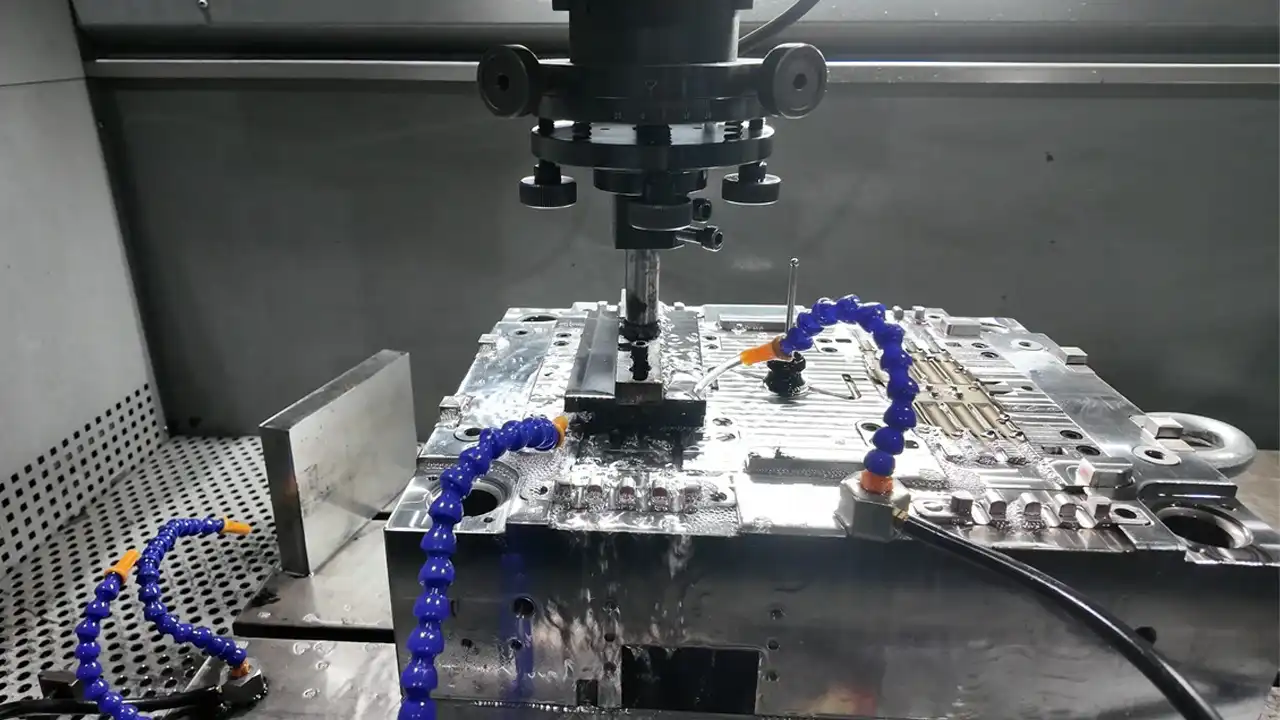
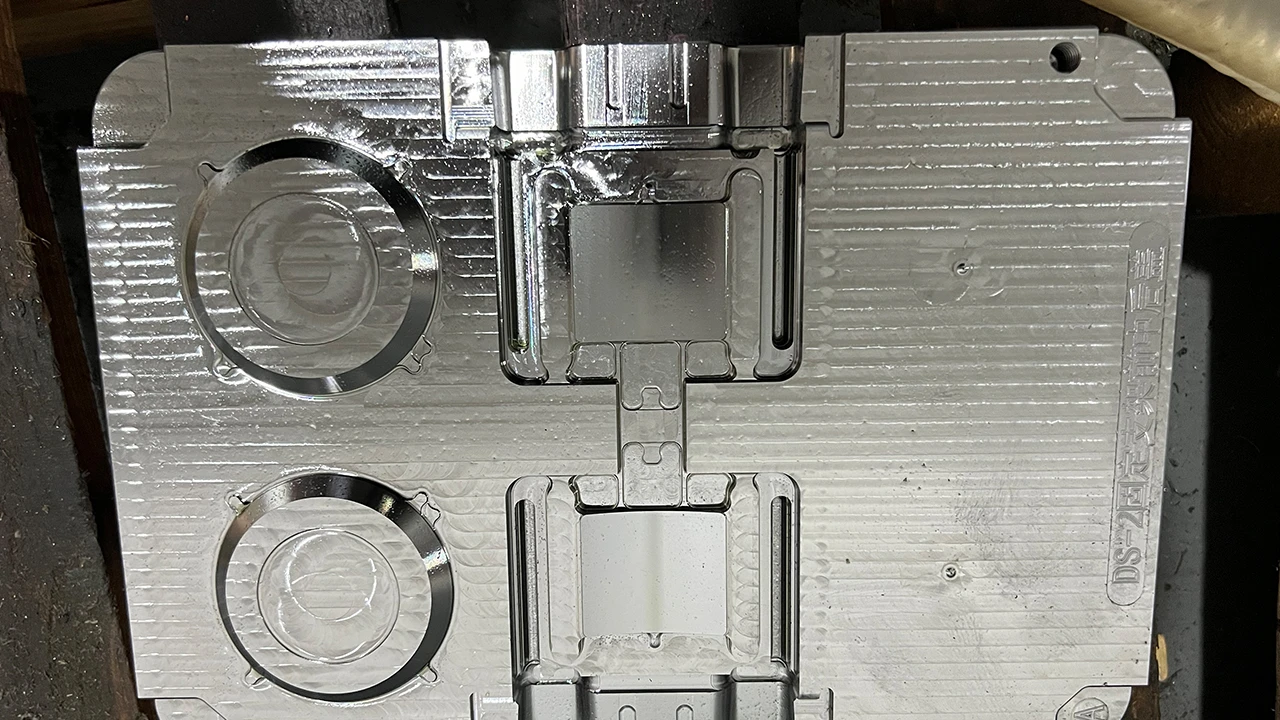
The mold needed to produce a large plastic housing with a stable outer shape, clean appearance, and accurate internal assembly features. Dimud designed the tooling around part stability, cosmetic quality, and repeatable production.
The mold design strategy included:
- Balanced filling design to reduce weld lines and flow marks
- Optimized cooling layout to control warpage
- Proper venting around the speaker grille and thin-wall areas
- Stable core and cavity structure for large shell geometry
- Mold inserts for speaker grille hole accuracy
- Ejector layout positioned away from cosmetic areas
- Reinforced steel areas around screw bosses and openings
- Texture control for the matte black visible surface
The goal was not only to mold the part successfully, but to ensure repeatable production quality across batches.
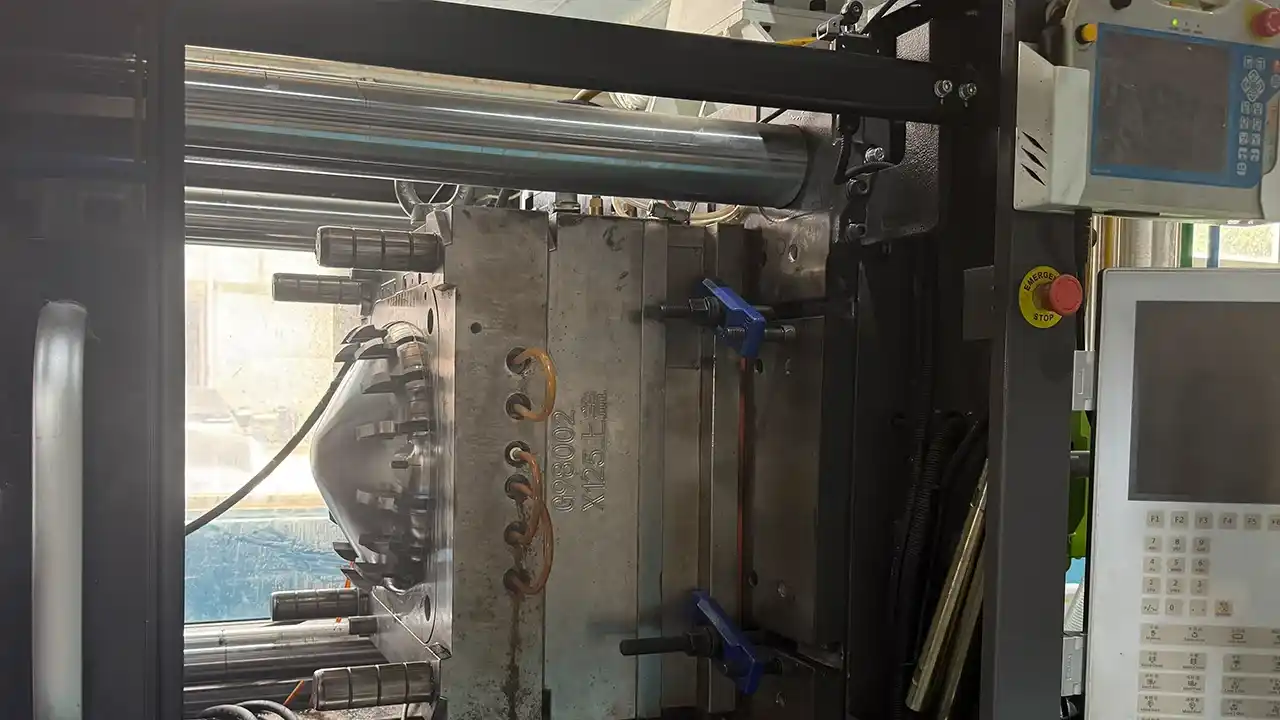
Injection Molding Process
Dimud manufactured the housing through controlled services de moulage par injection de matières plastiques. For this type of custom plastic enclosure, process stability is critical because the final part must meet both cosmetic and assembly requirements.
The production process included:
- Material drying and preparation
- Mold setup and process parameter setting
- First-shot trial and sample inspection
- Gate, pressure, and cooling adjustment
- Warpage and shrinkage evaluation
- Surface appearance inspection
- Front and rear cover assembly fit test
- Screw boss strength verification
- Batch production after sample approval
Key molding parameters included melt temperature, mold temperature, injection speed, holding pressure, cooling time, and ejection control. For matte black housings, stable temperature and pressure control are important because gloss variation and flow marks can easily appear on visible surfaces.
Quality Control
Quality control was focused on appearance, dimensions, assembly, and structural reliability.
Dimud inspected the following areas:
- Overall housing size
- Outer contour accuracy
- Front and rear cover matching
- Screw boss position and strength
- Speaker grille hole quality
- Rib deformation and local sink marks
- Rectangular assembly openings
- Surface texture consistency
- Flash around edges and holes
- Warpage on large curved surfaces
- Assembly fit with internal electronic components
The inspection process included visual inspection, dimensional measurement, first article inspection, assembly fit check, and functional structure review. For production projects, Dimud can also provide inspection reports according to customer requirements.
Manufacturing Results
After DFM review, mold flow analysis, mold optimization, and controlled injection molding, the final housing achieved the customer’s production requirements.
The project results included:
- Improved fit between front and rear housings
- Reduced warpage on the large guitar-shaped shell
- Cleaner matte black surface appearance
- Better control of speaker grille molding quality
- Stronger screw boss structure for repeated assembly
- Improved consistency of edge matching and internal mounting features
- Production-ready tooling for future batch manufacturing
The customer approved the injection molded housing for the next assembly and product validation stage.
Why This Case Matters
This project shows why consumer electronics injection molding requires strong engineering support from the beginning. A product housing is not just a plastic cover. It affects product appearance, assembly quality, internal component stability, acoustic performance, and user experience.
For this electronic guitar controller housing, the large curved shape, speaker grille, internal ribs, screw bosses, and cosmetic surface created multiple molding challenges. Without proper DFM review and mold flow analysis, the project could easily face warpage, sink marks, weld lines, poor assembly fit, and repeated mold modifications.
Dimud helped the customer reduce these risks by combining product structure review, mold design, material selection, injection molding production, and quality inspection in one manufacturing workflow.
You can explore more manufacturing examples in Dimud’s case studies section, including projects related to injection molding, mold manufacturing, CNC machining, and custom plastic part production.
FAQ
An electronic guitar controller housing is a plastic enclosure used for a guitar-shaped consumer electronics device. It protects internal components, supports assembly, and provides the final product appearance.
ABS and PC/ABS are commonly used for consumer electronics injection molding. PC/ABS is often preferred when the housing needs better impact resistance, dimensional stability, and a high-quality cosmetic surface.
A plastic electronic enclosure needs DFM review to prevent warpage, sink marks, weak screw bosses, poor assembly fit, and cosmetic defects. Dimud uses DFM review to identify these risks before mold manufacturing starts.
Warpage can be reduced by balancing wall thickness, optimizing ribs, improving cooling layout, selecting proper gate locations, and controlling molding parameters. Dimud applies mold design optimization and process control to improve part stability.
The speaker grille area contains many small holes, which can interrupt plastic flow and create weld lines, air traps, burn marks, or short shots. Proper mold venting, gate design, and flow analysis are important for stable molding.
Yes. Dimud can manufacture custom plastic enclosures based on 3D CAD files, 2D drawings, or physical samples. Our team can support DFM analysis, mold design, plastic injection molding, and quality inspection.
Typical tolerances depend on material, part size, geometry, and mold design. For key assembly features, Dimud can help evaluate tighter tolerance requirements during the DFM and tooling stage.
Dimud provides engineering-led support for consumer electronics injection molding, including material selection, DFM review, mold flow analysis, mold manufacturing, injection molding, and quality control. This helps customers reduce tooling risk and improve production consistency.
Conclusion
This electronic guitar controller housing case shows how a creative consumer electronics design can be converted into a manufacturable plastic product through proper engineering and injection molding control.
The customer needed a supplier who could solve warpage, assembly fit, screw boss strength, speaker grille molding, and surface appearance challenges. Through DFM review, mold flow analysis, precision mold design, controlled injection molding, and quality inspection, Dimud helped deliver a production-ready plastic housing for the customer’s electronic music device.
For brands developing custom consumer electronics housings, Dimud can support the full process from early design review to tooling, injection molding, assembly support, and batch production.