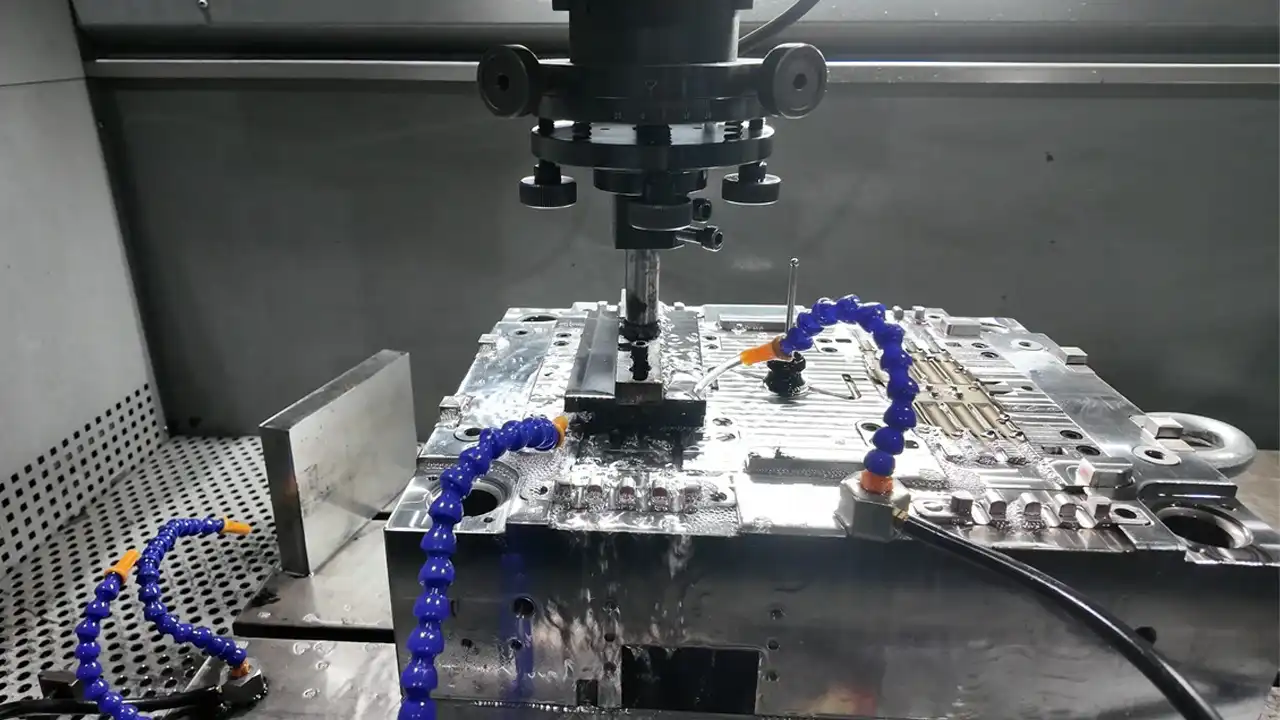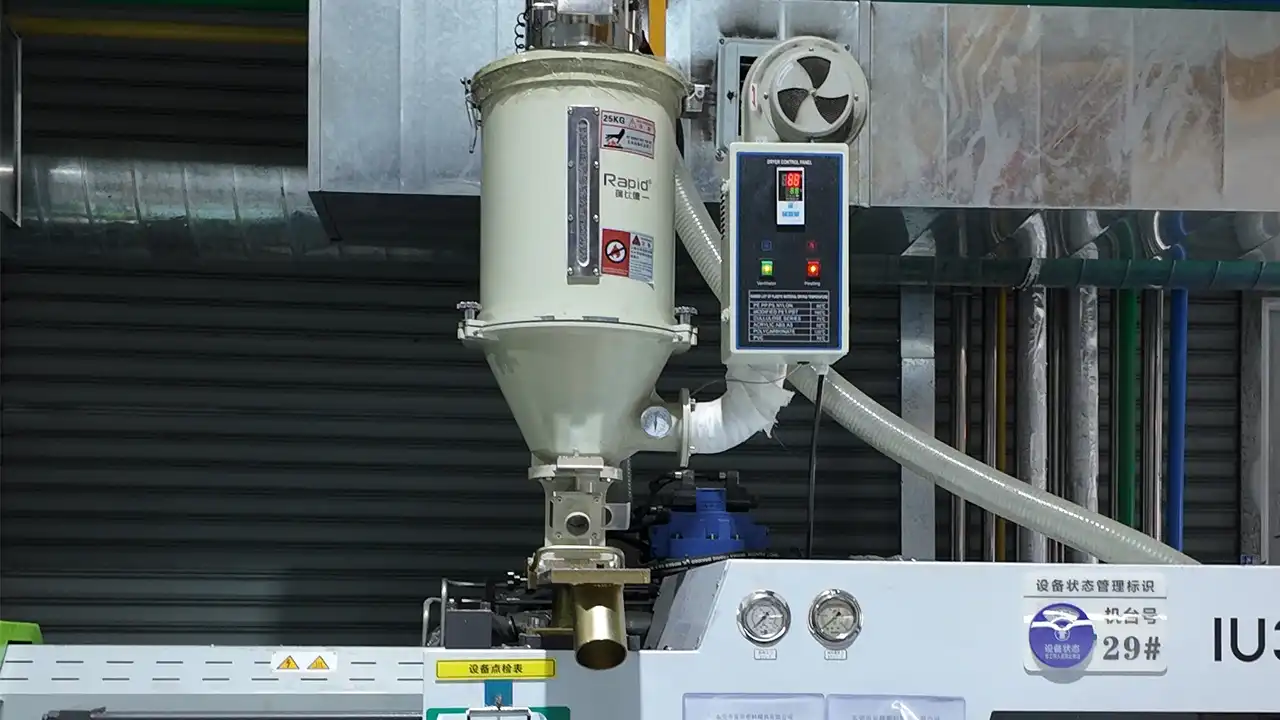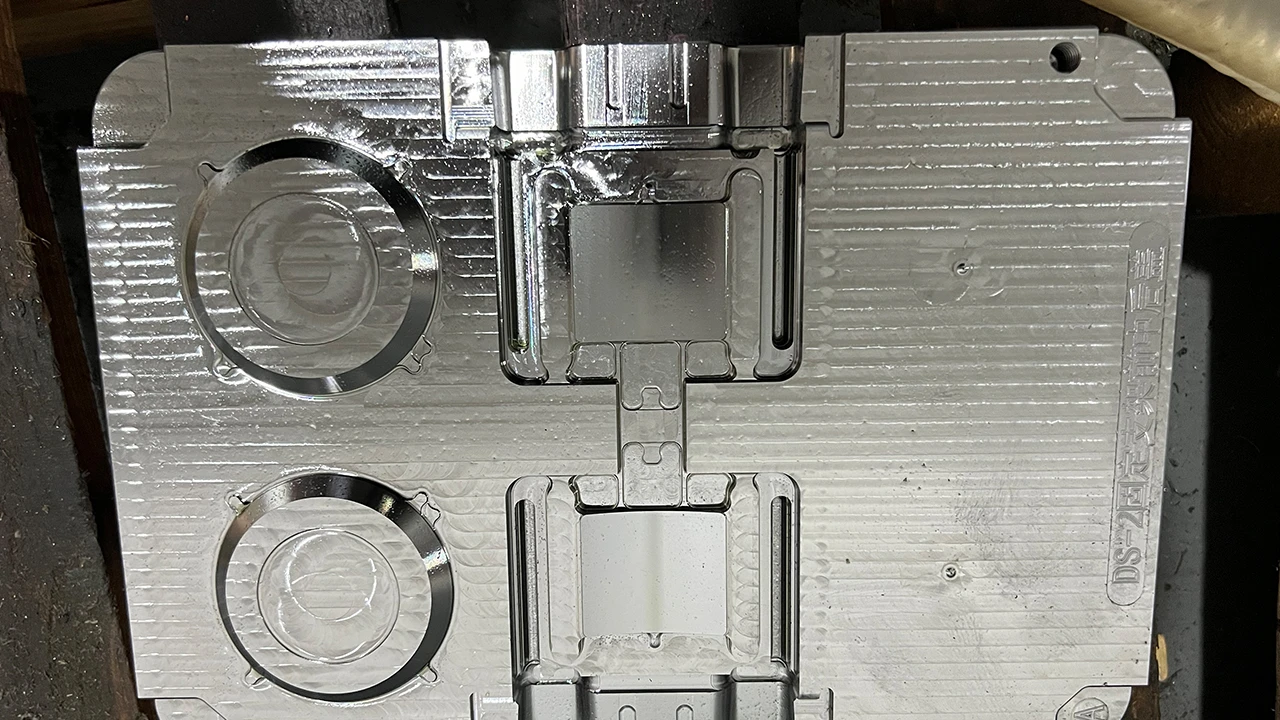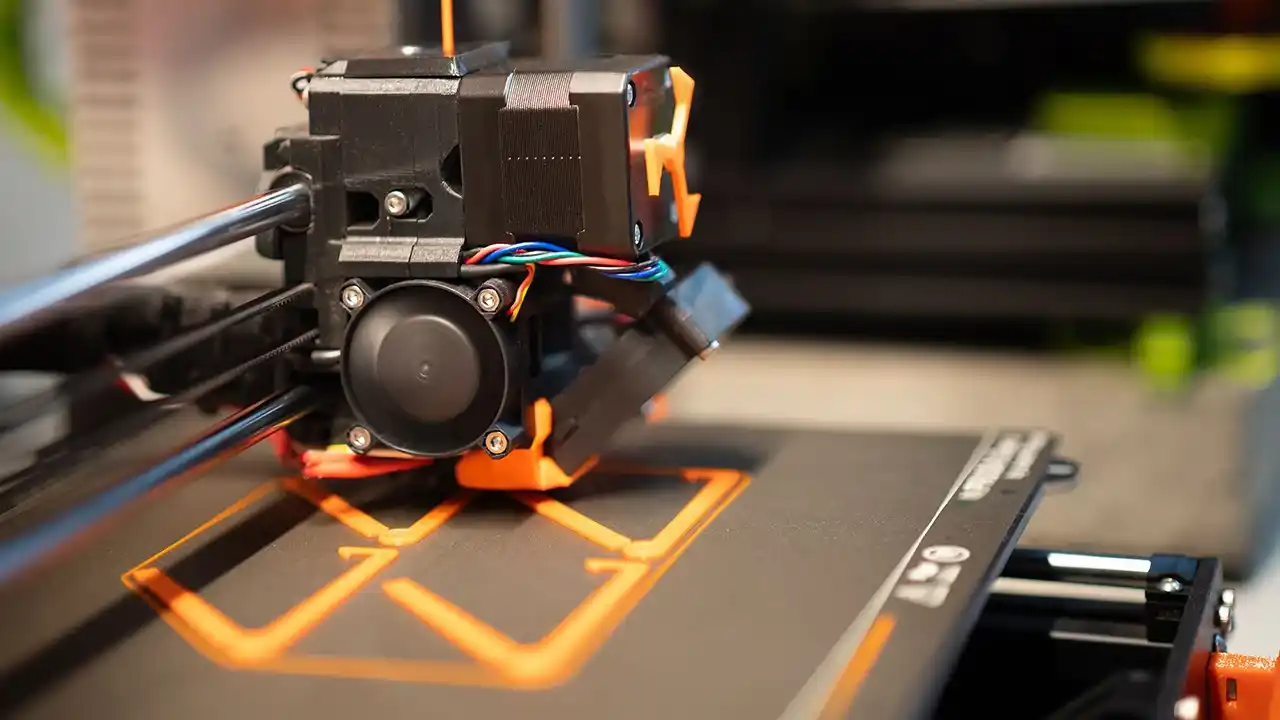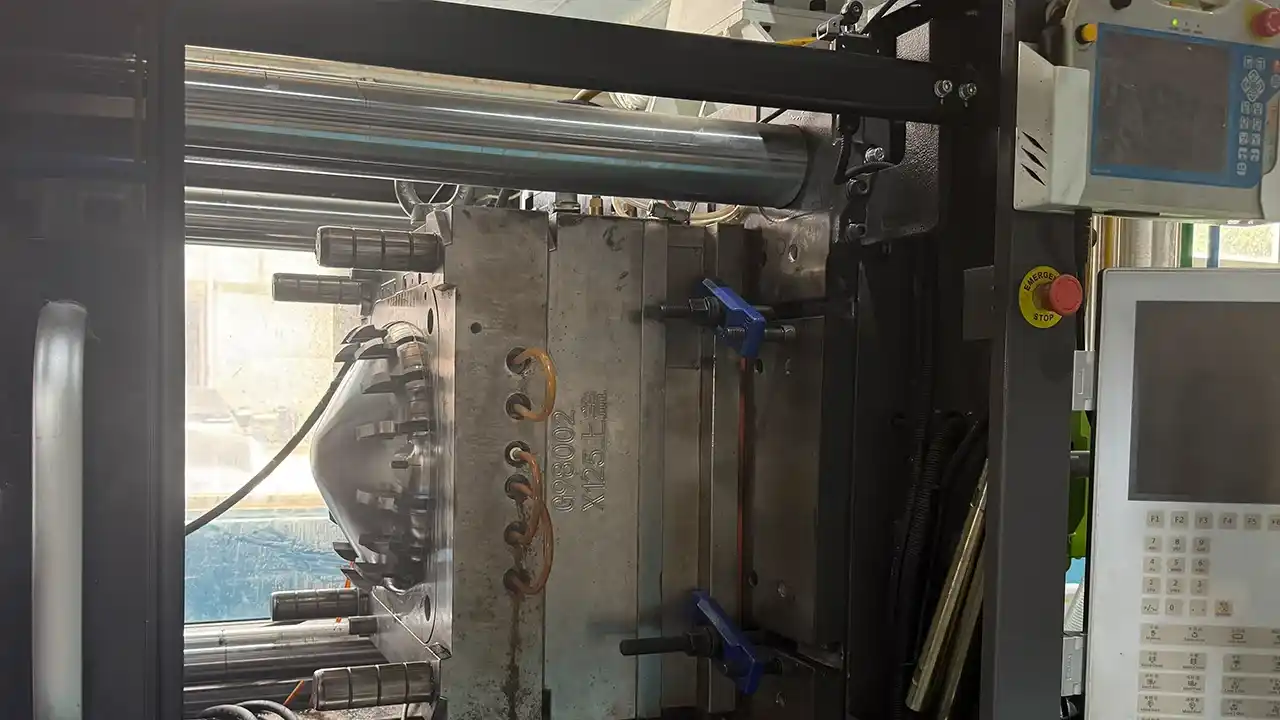

Styrene acrylonitrile sits in a performance window that is genuinely underutilized in precision injection molding programs — better optical clarity and chemical resistance than GPPS, significantly more rigid and dimensionally stable than LDPE or PP, and less expensive than PC or PMMA, while sharing the processing familiarity of its styrenic cousins. For engineers specifying transparent, chemically resistant, or dimensionally precise components in consumer electronics, medical devices, household appliances, and automotive instrument displays, SAN plastic offers a combination of properties that often makes it the most rational specification choice — once engineers know it’s available.
The gap is usually knowledge, not performance. This guide closes it.
Drawing on Dimud’s production experience across SAN plastic programs for electronic device panels, medical diagnostic components, automotive gauge lenses, and precision industrial parts, it covers material chemistry, grade selection, process parameters, mold design, industry applications, DFM rules, and compliance requirements — giving engineers the complete picture needed to evaluate, specify, and successfully manufacture SAN components.
What Is SAN Plastic?
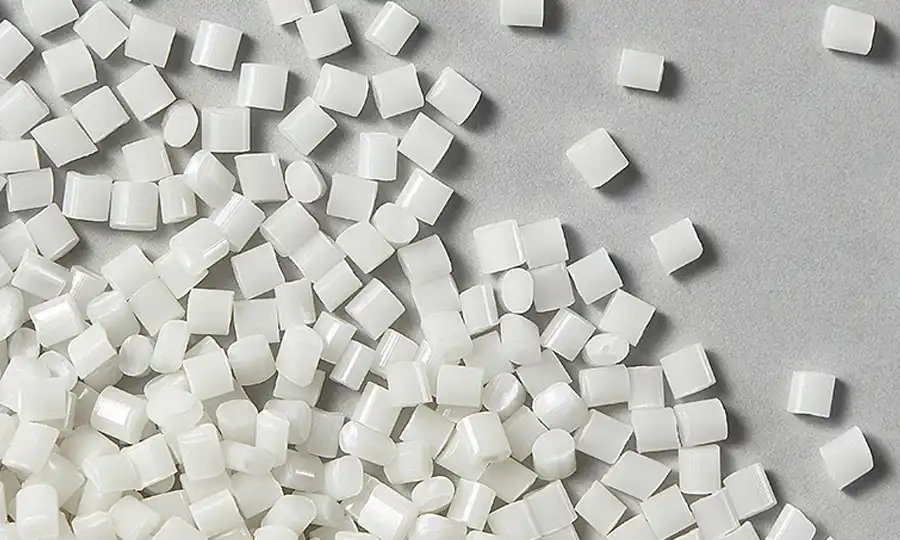
SAN plastic — styrene acrylonitrile — is an amorphous thermoplastic copolymer produced by the free-radical copolymerization of styrene (typically 65–80% by weight) and acrylonitrile (20–35% by weight). The proportions are not arbitrary: the styrene component contributes optical clarity, surface gloss, and the processing characteristics familiar from polystyrene, while the acrylonitrile component delivers chemical resistance, surface hardness, and the thermal stability that pure polystyrene lacks.
This two-component architecture makes SAN plastic the direct structural foundation of ABS — acrylonitrile butadiene styrene is produced by polymerizing styrene and acrylonitrile in the presence of a polybutadiene rubber phase. Remove the rubber phase, and what remains is SAN: the rigid, transparent matrix that gives ABS its stiffness, surface quality, and chemical resistance. Understanding this relationship immediately explains SAN’s performance envelope — it captures ABS’s best optical and chemical properties without the opacity introduced by rubber modification.
What the acrylonitrile content gives SAN over GPPS:
- Chemical resistance to oils, greases, dilute acids, and alcohols — a weakness that limits GPPS in cleaning-agent and food-contact environments
- Higher surface hardness (Rockwell M scale: 80–90 vs 60–75 for GPPS)
- Better scratch resistance — relevant for any component with a visible optical surface
- Marginally higher heat deflection temperature (85–105 °C vs 75–95 °C for GPPS)
- Reduced tendency to stress-whiten under snap-fit deflection
What distinguishes SAN from ABS in applications:
- Full optical transparency — light transmittance 87–90%, comparable to GPPS and approaching PMMA
- Lower haze values (typically < 2%) versus ABS which is inherently opaque
- Higher surface gloss in natural (unpigmented) form
- Slightly lower impact resistance than HI-ABS, which is the material’s primary limitation
Where SAN loses to competitors:
- Impact resistance is significantly lower than ABS or PC — SAN is a brittle polymer at stress concentrations without rubber modification
- UV stability requires additive packages for outdoor or long-term indoor lighting exposure
- Chemical resistance, while better than GPPS, is inferior to PP or PE for contact with solvents, ketones, and concentrated acids
В Димуд, SAN plastic programs appear most frequently in two scenarios: as the primary specification for transparent precision components where GPPS’s chemical susceptibility is disqualifying, and as a cost-effective alternative to PMMA or PC in applications where impact loading is not a primary design requirement.
Grade Landscape: Standard, Impact-Modified, and Specialty SAN
Standard SAN (General Purpose)
The base grade: 70–75% styrene, 25–30% acrylonitrile, fully amorphous, no rubber modification. Light transmittance 87–90%, haze < 2%, natural color water-clear to very slightly amber. Processes similarly to GPPS but with higher melt viscosity due to the polar acrylonitrile units.
К коммерческим обозначениям относятся Lustran® SAN (INEOS Styrolution), Tyril® (Trinseo), Kostil® (Versalis), and Kibisan® (Chi Mei).
Standard SAN is the specification starting point at Dimud for transparent housing panels, optical covers, cosmetic instrument components, and food-contact transparent parts.
Impact-Modified SAN (MSAN / Rubber-Toughened SAN)
Standard SAN’s primary weakness — notched Izod impact strength of 15–25 J/m — limits its use in applications with drop risk or mechanical shock loading. Impact-modified SAN incorporates rubber particles (typically polybutadiene or MBS core-shell) at 5–15% loading to improve toughness:
- Notched Izod impact: 40–80 J/m (vs 15–25 J/m standard)
- Light transmittance: reduced to 82–87% depending on rubber loading and particle morphology
- Haze: increases to 2–5%
Impact-modified SAN occupies a niche between GPPS and HI-ABS — more impact-resistant than GPPS, more transparent than ABS, less tough than PC. For cosmetic device panels with moderate impact risk, it is frequently the optimal compromise.
Heat-Resistant SAN (HR-SAN)
Alpha-methylstyrene (AMS) or maleic anhydride (MAH) modified SAN grades raise the heat deflection temperature to 105–120 °C, enabling use in applications near light sources, near hot-fill packaging processes, or in automotive instrument clusters with elevated thermal exposure. These grades sacrifice some optical clarity (transmittance drops to 83–86%) and process more narrowly than standard SAN.
Food-Contact and Medical-Grade SAN
SAN plastic is approved for food contact under FDA 21 CFR 177.1900 (styrene-acrylonitrile copolymers) and EU Regulation 10/2011 when formulated with compliant additives. Medical-grade SAN with USP Class VI certification is available from selected resin suppliers and is used in diagnostic device windows, laboratory consumable covers, and transparent medical packaging components.
Specialty Grades Summary
| Класс | Изменение | Основное преимущество | Заявка |
|---|---|---|---|
| Standard SAN | — | Optical clarity + chemical resistance | Device panels, covers, cosmetic parts |
| Impact-modified SAN | Rubber particles | Toughness + partial transparency | Appliance panels, device covers |
| HR-SAN (AMS-modified) | Alpha-methylstyrene | HDT to 105–120 °C | Automotive gauge lenses, lighting components |
| Food-grade SAN | Compliant additives | FDA/EU food contact approval | Food containers, kitchen appliance parts |
| Medical-grade SAN | Класс VI по стандарту USP | Биосовместимость | Diagnostic windows, medical covers |
| UV-stabilized SAN | HALS + УФ-поглотители | Extended UV resistance | POS displays, outdoor-adjacent applications |
| ESD-dissipative SAN | Углеродные добавки | Static control | Electronics handling fixtures |
Основные физические и механические свойства

| Недвижимость | Standard SAN | Impact-Modified SAN | HR-SAN | Стандарт испытаний |
|---|---|---|---|---|
| Плотность | 1.07–1.08 g/cm³ | 1.05–1.08 g/cm³ | 1.07–1.09 g/cm³ | ISO 1183 |
| Прочность на разрыв (предел текучести) | 65–85 MPa | 45–65 MPa | 70–90 MPa | ISO 527 |
| Модуль упругости при изгибе | 3 500–4 000 МПа | 2,800–3,500 MPa | 3,600–4,200 MPa | ISO 178 |
| Ударная прочность по методу Изода с надрезом | 15–25 J/m | 40–80 J/m | 12–22 J/m | ISO 180 |
| Относительное удлинение при разрыве | 2–4 % | 5–15 % | 2–4 % | ISO 527 |
| Температура термического отклонения | 85–105 °C | 78–95 °C | 105–120 °C | ISO 75 (1,82 МПа) |
| Температура размягчения по Викату | 100–115 °C | 90–105 °C | 115–130 °C | ISO 306 |
| Усадка при формовании | 0,3–0,6 % | 0,3–0,7 % | 0,3–0,6 % | ISO 294-4 |
| Водопоглощение (24 ч) | 0,15–0,25 % | 0,15–0,25 % | 0,15–0,25 % | ISO 62 |
| Коэффициент пропускания света | 87–90 % | 82–87 % | 83–87 % | ISO 13468 |
| Туман | < 2.0 % | 2–5 % | 1.5–3.5 % | ISO 14782 |
| Surface Hardness | Rockwell M 80–90 | Rockwell M 65–80 | Rockwell M 82–92 | ISO 2039-2 |
| Диэлектрическая прочность | 14–17 кВ/мм | 13–16 кВ/мм | 14–17 кВ/мм | IEC 60243 |
| Воспламеняемость | HB | HB | HB | UL 94 |
| Химическая стойкость | Good (oils, dilute acids) | Хорошо | Хорошо | — |
| Устойчивость к царапинам | Superior to GPPS and ABS | Умеренный | Superior | — |
Dimud Engineering Note — SAN’s Shrinkage Advantage
SAN plastic’s mold shrinkage of 0.3–0.6% is among the lowest of any commodity thermoplastic — similar to ABS (0.4–0.8%) and significantly lower than PP (1.0–2.5%) or LDPE (1.5–3.0%). In transparent component programs where multi-piece assemblies must align precisely — gauge clusters, device panel stack-ups, diagnostic instrument windows — this tight, predictable shrinkage allows Dimud to hold dimensional tolerances of ±0.10 mm on critical fitting surfaces without the cavity adjustment cycles that higher-shrinkage materials require. For optical components where the lens or cover must sit flush against a display substrate with < 0.2 mm gap variation, SAN’s shrinkage behavior is a direct production cost advantage.
SAN Injection Molding: Process Parameters and Best Practices
SAN plastic processes more like ABS than like GPPS — its polar acrylonitrile units increase melt viscosity relative to pure polystyrene, requiring slightly higher barrel temperatures and injection pressures. The processing window is broad and forgiving, but two areas require specific attention: moisture control (more demanding than PS, though less so than PC) and gate design for optical clarity.
Порядок сушки
SAN plastic absorbs moisture at 0.15–0.25% over 24 hours — sufficient to cause silver streaks, surface splay, and reduced optical clarity if the resin is not dried before processing:
| Параметр | Standard SAN | Medical / Optical-Grade SAN | Regrind SAN |
|---|---|---|---|
| Тип сушилки | Бункер для осушения | Бункер для осушения | Бункер для осушения |
| Температура | 75–85 °C | 80–85 °C | 75–80 °C |
| Продолжительность | 2–4 часа | 3–4 часа | 2–3 часа |
| Целевой уровень влажности | < 0,10 % | < 0,05 % | < 0,10 % |
| Максимальный коэффициент повторного измельчения | 20–25 % | 0% (virgin only) | — |
Температура цилиндра и расплава
| Зона | Standard SAN | HR-SAN | Примечания |
|---|---|---|---|
| Задняя часть (подача) | 175–195 °C | 190–210 °C | Conservative entry; no cold zones |
| Средний (компрессия) | 195–220 °C | 210–235 °C | Зона первичного плавления |
| Передняя часть (дозирующий узел) | 210–235 °C | 225–250 °C | Final melt temp; clarity target |
| Сопло | 205–225 °C | 220–240 °C | Предпочтительно использовать сопло с открытым концом |
Предельное значение деградации: SAN degrades above 270–280 °C with yellowing, reduced molecular weight, and release of volatile acrylonitrile-derived compounds. Barrel temperature must be kept well below this ceiling, and residence time must be minimized on small-shot programs. Yellow discoloration is the primary indicator of thermal degradation — parts that pass dimensional inspection but show yellow tint must be quarantined for root-cause investigation, as they indicate compromised molecular weight.
Температура пресс-формы
Mold temperature for SAN plastic: 40–80 °C
- 40–55 °C: Standard structural parts; faster cycle; adequate clarity for non-optical applications.
- 55–70 °C: Preferred for transparent SAN panels, optical covers, and cosmetic instrument components. Higher mold temperature improves surface gloss, reduces weld-line visibility, and decreases residual stress (important for chemical resistance — see Section 7 on SAN vs. GPPS).
- 70–80 °C: Maximum useful range; for HR-SAN grades and applications requiring minimum residual stress.
For optical-grade SAN programs, Dimud maintains mold temperature at 60–70 °C using precision temperature controllers (±2 °C stability) as standard equipment — the same approach applied to ABS optical programs.
Скорость и давление впрыска
- Давление впрыска: 80–130 МПа (higher than GPPS due to SAN’s elevated melt viscosity from acrylonitrile content)
- Давление удержания: 50–70% от давления впрыска
- Противодавление: 5–10 МПа — low; excessive back pressure generates shear heating that causes yellowing
- Injection speed: Moderate — fast fill causes jetting and gate blush on transparent SAN surfaces; controlled fill is critical for optical part cosmetics
Распространенные дефекты и меры по их устранению
| Дефект | Основная причина | Корректирующие меры |
|---|---|---|
| Серебряные полосы / расхождение | Moisture > 0.10%; shear degradation | Увеличить время сушки; снизить противодавление; понизить температуру в цилиндре |
| Yellow tint | Термическое разложение; длительное время пребывания | Reduce barrel temp; purge machine; rightsize barrel |
| Оптическая мутность / помутнение | Слишком низкая температура формы; загрязнение; влага | Raise mold temp to 60°C+; verify drying |
| Gate blush / stress marks | Fill speed too fast; gate too small | Slow injection at gate; enlarge gate; use fan gate |
| Weld lines (visible) | Низкая температура плавления; неудачное расположение литника | Повысить температуру плавления; изменить положение литникового канала; повысить температуру формы |
| Вмятины от раковины | Толстые участки; недостаточная фиксация | Просверлите толстые участки; увеличьте давление и время удержания |
| Деформация | Differential cooling; wall thickness variation | Balance cooling; uniform wall; optimize gate |
| Brittle fracture | Sharp corners; excessive residual stress | Add corner radii; raise mold temp; anneal parts |
| Короткий удар | Viscosity too high; insufficient pressure | Raise barrel temp; increase injection pressure |
| Surface scratching | Handling without protection | Add protective film; specify anti-scratch grade |
Mold Design Considerations for SAN Plastic Components
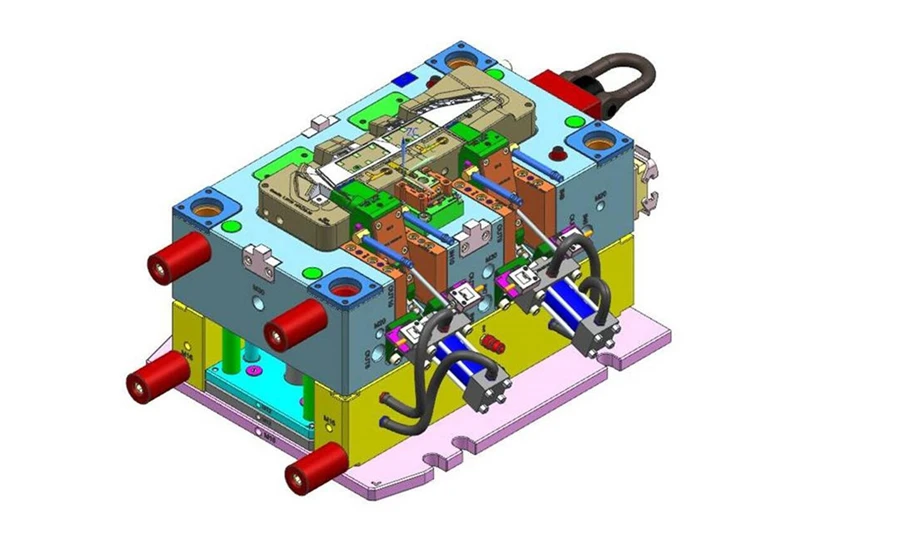
SAN plastic shares mold design requirements with GPPS and ABS, but its optical clarity requirement introduces specific constraints on gate design, steel selection, and surface finishing that go beyond standard structural molding programs.
Gate Design for Optical Clarity
Gate design is the highest-impact mold engineering decision for transparent SAN parts. An undersized or poorly located gate on an optical SAN cover produces stress marks and flow-induced birefringence that are visible to the end user and cannot be corrected after tool steel is cut.
- Входы для болельщиков: First choice for flat SAN panels (display covers, gauge faces, device lenses) — distribute fill stress across a wide front, minimize gate blush, and reduce birefringence concentration at the gate region.
- Ворота подводного туннеля: Acceptable for structural SAN parts and non-optical surfaces; avoid for primary cosmetic faces where gate witness marks are unacceptable.
- Клапанные затворы для систем с горячеканальным литьем: Recommended for high-volume consumer electronics SAN programs — eliminates cold runner, provides gate location flexibility on cosmetic surfaces, and enables precise gate timing for optical quality control. Dimud specifies hot-runner systems on all multi-cavity SAN optical programs above 8 cavities.
- Gate land: 0.5–1.0 mm maximum; extended gate lands increase shear stress and produce visible gate marks on transparent SAN.
Steel Selection for SAN
| Сталь | Заявка | Примечания |
|---|---|---|
| S136 (полируемая нержавеющая сталь) | Optical SAN: lens covers, gauge panels, display windows | SPI A1 mirror polish; corrosion-resistant; enables haze < 1.5% |
| 718H (закаленная нержавеющая сталь) | Medical-grade SAN; transparent cosmetic covers | Хорошая обрабатываемость + коррозионная стойкость при более низкой стоимости по сравнению с S136 |
| P20 (предварительно закаленная) | Non-optical structural SAN; prototype tooling | Acceptable for short runs and non-cosmetic parts only |
| H13 (hardened) | High-volume SAN programs; abrasion-resistant requirement | Required only for filled or compounded SAN grades |
P20 is not recommended for optical SAN programs. Surface finish on P20 steel degrades faster than S136 under repeated molding of the slightly polar SAN melt — cavity surface scratches and micro-pit development degrade optical surface quality within 100,000–200,000 shots, producing haze values above specification. S136 stainless maintains SPI A1 polish integrity for 400,000+ shots with scheduled maintenance.
Проектирование системы охлаждения
SAN’s moderate mold temperature requirement (40–80 °C) is compatible with standard water-cooled tooling, but temperature uniformity is more important than maximum cooling rate:
- Cooling channel pitch: 2.5–3× channel diameter from cavity wall
- Temperature differential target: ≤ 5 °C across cavity surface (same standard as ABS optical programs at Dimud)
- For complex curved SAN optical surfaces: conformal cooling inserts to maintain surface temperature uniformity critical for consistent optical quality across multi-cavity tools
Система выброса
SAN plastic’s brittleness (elongation at break: 2–4%) makes ejection design more critical than for ABS. Ejector pin mark prevention is also a cosmetic priority on transparent parts:
- No ejector pins on optical/cosmetic surfaces — stripper ring or sleeve ejection only on transparent SAN parts
- Ejector pins placed in recessed zones on structural SAN parts where witness marks are hidden in assembly
- Minimum 1° draft on all polished SAN surfaces; 1.5° for textured surfaces
- Ejection force calculation at DFM stage — SAN’s high modulus requires higher ejection force than flexible polymers on equivalent geometry
Вентиляция
SAN plastic generates minimal venting-critical gas under normal processing, but high fill pressures require adequate venting to prevent burn marks:
- Vent depth: 0.02–0.04 mm
- Зазор: 3–5 мм
- Вентиляция по периферийной линии разъема плюс вентиляция зазора выталкивающего штифта на всех глубоких элементах
- Optical-grade SAN programs: vacuum-assisted venting considered on programs requiring haze < 1.5% on thick sections (> 3 mm)
Применение в промышленности
Бытовая электроника
Consumer electronics is the primary volume application for SAN plastic injection molding — specifically for transparent, semi-transparent, and cosmetically demanding components where GPPS’s chemical vulnerability, ABS’s opacity, and PC’s cost premium create a gap that SAN fills precisely.
Display cover panels and screen windows (optical-grade SAN): Transparent front panels for household electronics (air purifiers, smart speakers, control panels), display cover glasses for small appliances, and indicator lens panels for consumer devices. SAN plastic provides the combination of transparency (87–90% light transmittance), scratch resistance (Rockwell M 80–90), and chemical resistance to household cleaning agents that makes it more durable in consumer environments than GPPS.
Refrigerator and dishwasher interior components (food-grade SAN): Inner door panels, crisper box covers, and transparent vegetable drawer fronts in household refrigerators. FDA-approved SAN’s combination of optical clarity, resistance to food oils and dilute cleaning agents, dimensional stability at refrigerator operating temperatures (−20 °C to +10 °C), and food-contact compliance makes it the industry-standard material for these components globally.
Appliance control panels and trim rings (standard SAN / UV-stabilized SAN): Transparent cosmetic covers over display and control interfaces on washing machines, ovens, and small kitchen appliances. SAN’s superior scratch resistance over GPPS prevents the surface degradation from daily handling that shortens product aesthetic life.
Point-of-sale display and signage components (UV-stabilized SAN): Transparent display trays, product holders, and retail fixture components that require long-term optical clarity under indoor fluorescent and LED lighting. UV-stabilized SAN maintains clarity and color neutrality significantly longer than standard GPPS under sustained lighting exposure.
Dimud’s electronics manufacturing plant, operating alongside its mold factory, enables integrated secondary operations on SAN housings — pad printing, UV coating, assembly — under a single quality system. For a full overview of our electronics and semiconductor manufacturing capabilities, visit our Страница, посвящённая электронной и полупроводниковой промышленности.
Medical and Diagnostic Devices
Medical-grade SAN occupies a specific and valuable role in diagnostic device manufacturing: outer windows, inspection covers, and transparent housing panels where optical clarity, chemical compatibility with disinfectants, and biocompatibility must coexist.
Diagnostic test instrument windows and panels (medical-grade SAN): Transparent covers for analyzer instruments, diagnostic readers, and benchtop laboratory equipment. Medical-grade SAN’s combination of optical clarity, chemical resistance to 70% IPA and quaternary ammonium disinfectants (which ESC-crack PC), and USP Class VI certification addresses multiple requirements that no single alternative polymer satisfies simultaneously.
Specimen inspection covers and diagnostic tray lids (SAN): Transparent covers for PCR plates, reagent trays, and specimen inspection systems. SAN’s dimensional stability (low shrinkage 0.3–0.6%) ensures consistent lid-to-tray gap tolerances across production batches — critical for automated laboratory systems where lid interference causes system errors.
Medication dispenser housings and blister packaging windows (food/medical-grade SAN): Transparent viewing windows in medication dispensing equipment and pharmacy automation systems, where chemical resistance to pharmaceutical solvents and cleaning agents combines with optical clarity requirements.
Наш сайт Литье под давлением в сфере медицины и здравоохранения capabilities include dedicated clean production cells, resin lot traceability, and batch certificate of conformance as standard deliverables for SAN medical programs.
Интерьер автомобиля
SAN plastic’s combination of optical clarity, scratch resistance, and dimensional stability positions it for automotive interior applications where transparent or semi-transparent aesthetics are combined with functional requirements.
Instrument cluster gauge lenses (HR-SAN): Heat-resistant SAN grades (HDT 105–120 °C) are specified for gauge cluster cover lenses and instrument panel decorative windows where continuous exposure to solar radiation and HVAC-adjacent heat requires higher thermal stability than standard SAN. HR-SAN’s combination of optical clarity (83–87% transmittance) and HDT approaching PC at significantly lower material cost makes it a rational alternative in programs where PC’s full impact performance is not utilized.
Automotive interior trim windows and light-guide elements (standard SAN): Decorative transparent trim inserts, ambient light diffuser panels, and button cap lenses in automotive interior systems. SAN’s natural scratch resistance reduces the need for hard-coat post-processing that PC requires in contact-intensive interior zones.
HVAC control panel covers (standard SAN): Transparent or tinted covers over HVAC control displays and touch-input areas in center consoles. SAN’s resistance to skin oils, cleaning solvents, and conditioning sprays — all common in vehicle interior environments — extends cosmetic life beyond what GPPS can sustain.
Industrial and Laboratory Equipment
Sight glasses and process monitoring windows (standard SAN): Transparent inspection windows in industrial process equipment, chemical storage containers, and laboratory instruments. SAN’s chemical resistance to dilute acids, oils, and alcohols makes it suitable for industrial viewing applications where GPPS would fail within weeks of chemical contact.
Laboratory plasticware and analytical instrument covers (food/medical-grade SAN): Centrifuge tube racks, reagent bottle caps, and analytical instrument display covers. SAN’s combination of optical clarity, autoclave-adjacent (not autoclavable) chemical resistance, and dimensional stability for precision laboratory equipment supports a wide range of laboratory plastic applications.
Test fixture components and assembly jigs (standard SAN): Transparent inspection fixtures and alignment jigs in electronics assembly lines, where visual inspection through the fixture is required without compromising dimensional repeatability. SAN’s stiffness (flexural modulus 3,500–4,000 MPa) and low shrinkage make it a practical transparent alternative to machined acrylic for production-quantity fixtures.
SAN Plastic vs. Competing Transparent Materials
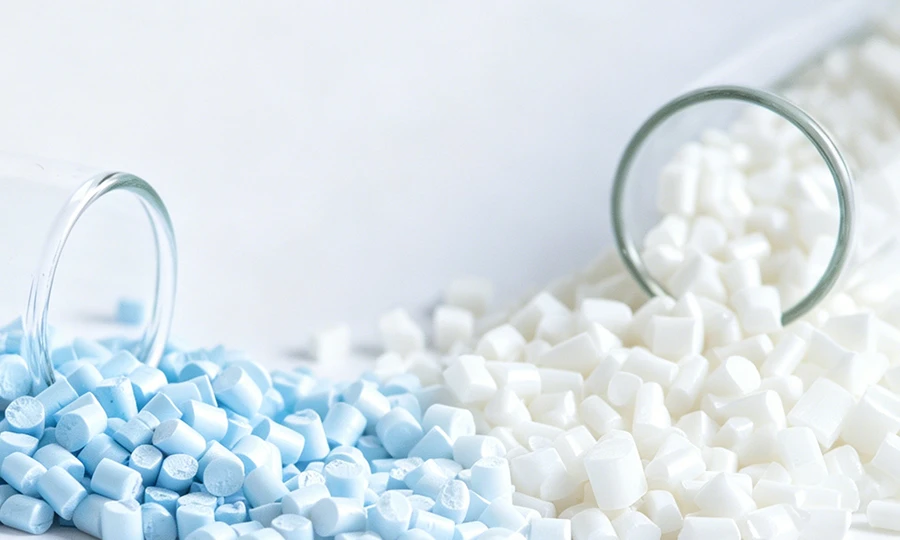
When engineers are evaluating transparent thermoplastic options, SAN typically competes directly with GPPS, PMMA, and PC. The decision matrix is clearer than it first appears:
| Свойство / Фактор | SAN | GPPS | ПММА | ПК | PETG |
|---|---|---|---|---|---|
| Optical Clarity (transmittance) | ★★★★☆ (88–90%) | ★★★★☆ (88–92%) | ★★★★★ (92–93%) | ★★★★☆ (88–90%) | ★★★★☆ (87–90%) |
| Химическая стойкость | ★★★★☆ | ★★☆☆☆ | ★★★★☆ | ★★★☆☆ (ESC risk) | ★★★★☆ |
| Устойчивость к царапинам | ★★★★☆ | ★★★☆☆ | ★★★★★ | ★★★☆☆ | ★★★☆☆ |
| Ударопрочность | ★★☆☆☆ | ★★☆☆☆ | ★★☆☆☆ | ★★★★★ | ★★★☆☆ |
| Термостойкость (HDT) | ★★★☆☆ (85–105 °C) | ★★☆☆☆ (75–95 °C) | ★★★☆☆ (90–100 °C) | ★★★★★ (130–140 °C) | ★★☆☆☆ (65–75 °C) |
| Стабильность размеров | ★★★★★ | ★★★★★ | ★★★★☆ | ★★★★☆ | ★★★☆☆ |
| UV Resistance (natural) | ★★★☆☆ | ★★☆☆☆ | ★★★★★ | ★★★☆☆ | ★★★☆☆ |
| Простота обработки | ★★★★★ | ★★★★★ | ★★★☆☆ | ★★★☆☆ | ★★★★☆ |
| Затраты на сырье | $$ Medium-low | $ Низкий | $$ Средний | $$$ Высокий | $$ Средний |
| Food/Medical Compliance | ✓ (certified grades) | ✓ | ✓ | ✓ (BPA question) | ✓ |
SAN vs. GPPS: SAN wins on chemical resistance (critical for food-contact and cleaning-agent exposure), scratch resistance, and dimensional stability. GPPS wins on raw material cost (10–20% lower than SAN) and slightly better optical clarity in the highest-purity grades. For any transparent component that will encounter household chemicals, food oils, or cleaning solvents, SAN is the rational specification upgrade from GPPS.
SAN vs. PMMA: PMMA delivers better scratch resistance (inherent surface hardness Rockwell M 95–105 vs SAN’s 80–90), marginally higher optical transmittance, and better UV stability in natural grades. SAN delivers better impact resistance (15–25 J/m vs PMMA’s 10–18 J/m), slightly better processing ease, and lower material cost. For applications where scratch resistance is the dominant selection criterion, PMMA wins. For applications where processing consistency, cost, and chemical resistance are balanced requirements, SAN is competitive.
SAN vs. PC: PC is decisive on impact resistance and heat resistance — there is no argument on these dimensions. SAN wins on cost (40–60% lower raw material cost than PC), processing ease, and chemical resistance to disinfectant agents that cause ESC in PC. For non-impact-critical transparent components in medical and laboratory environments where PC’s ESC susceptibility to common disinfectants is a field-reliability risk, SAN with medical-grade certification is frequently the better engineering choice.
For a comprehensive view of how these and other materials compare across Dimud’s full injection molding portfolio, see our injection molding materials overview.
Similarly, if you’re evaluating structural (opaque) thermoplastics, our detailed guide on HDPE plastic injection molding covers the selection logic for high-density polyethylene applications.
DFM Guidelines for SAN Plastic Parts
SAN plastic’s brittleness (elongation at break: 2–4%) and optical clarity requirements impose DFM rules that are stricter than for tougher polymers. The consequences of sharp corners, thick ribs, or inadequate gate design are more visible and more structurally significant in SAN than in ABS or PP programs.
Димудс Услуги по проектированию продукции и оптимизации производства (DFM) reviews every SAN program before tooling commitment — covering grade recommendation, corner radius audit, wall thickness analysis, gate position optimization, and optical specification validation.
Толщина стенок
Рекомендуемый диапазон: 1.0–4.0 mm for structural SAN; 0,8–2,0 мм for optical thin-wall panels with standard grades.
Uniform wall thickness is critical — differential shrinkage in thick/thin transitions produces residual stress that is visible as birefringence in transparent SAN parts and as a fracture initiation site under mechanical loading. Where transitions are unavoidable, taper over minimum 3× the thickness change on the non-optical face.
Corner Radii — The Most Critical DFM Rule for SAN
Sharp internal corners are the primary failure mode in injection-molded SAN plastic. The material’s brittleness (elongation at break 2–4%) means that stress concentration at zero-radius corners causes crack initiation under impact, snap-fit engagement, or drop loading at stress levels far below those that would cause visible deformation in ABS or PP.
Минимальный радиус внутреннего угла: 0,5 мм. Рекомендуемый: 1,0 мм или 25–50% от толщины стенки.
For transparent SAN parts, corner radii serve a dual function: structural stress relief and optical quality. Sharp corners at interfaces between transparent SAN walls produce visible dark lines in transmitted light — a cosmetic defect that becomes apparent when the part is installed in a backlit application.
Ребра и выступы
- Толщина ребра: 50–60% номинальной толщины стенки — strictly enforced in SAN; thick ribs produce sink marks that are highly visible on transparent surfaces from the opposite side
- Высота ребра: не более 3× номинальной толщины стенки; на более высоких ребрах предусмотрена опора в виде усилительного уголка
- Boss outer diameter: maximum 2× nominal wall; cored bosses on sections deeper than 6 mm
- All rib-to-wall and boss-to-wall intersections: filletted (minimum 0.5 mm; 1.0 mm preferred)
Углы наклона
- Стандартные поверхности: 0.5°–1.0° минимум с каждой стороны
- Polished optical surfaces (SPI A1/A2): 1.0°–1.5° per side — higher draft required for polished SAN to overcome vacuum adhesion between high-polish cavity and cooling part
- Текстурированные поверхности: добавляйте 1° на каждые 0,025 мм глубины текстуры
Допустимые отклонения
SAN plastic’s low shrinkage enables competitive dimensional tolerances for a commodity-accessible material:
- Standard achievable: ±0,10–0,15 мм on controlled critical dimensions
- Optical-grade critical dimensions: ±0,05–0,10 мм achievable with Moldflow-pre-validated tooling and process SPC
- For transparent assembly stack-ups (lens-to-housing registration, display-to-panel gap): Dimud conducts tolerance stack-up analysis before tool design freeze as a standard DFM deliverable
Dimud's SAN Plastic Injection Molding Capabilities
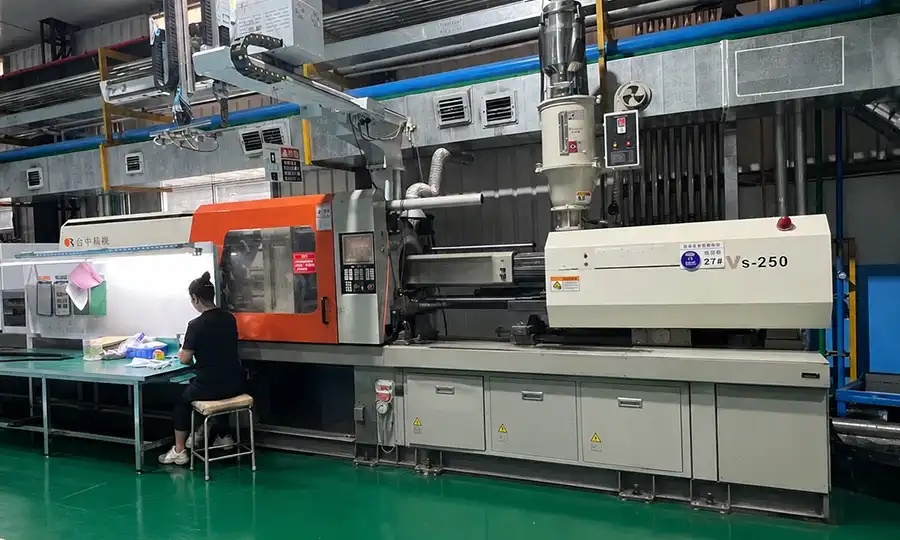
Димуд provides SAN plastic injection molding as part of a vertically integrated manufacturing system — three coordinated plants covering mold development, CNC machining, and electronics assembly — serving customers in Europe, North America, and the Middle East.
| Этап обслуживания | Возможности Dimud | Преимущества для клиентов |
|---|---|---|
| DFM и проверка качества | Grade recommendation (SAN vs GPPS vs PMMA vs PC); corner radius audit; optical spec validation; shrinkage prediction | Eliminate the most common transparent material specification errors |
| Быстрое прототипирование | SLA/SLS optical simulation models + aluminum soft tools in standard or food-grade SAN | Оптические и функциональные образцы — в течение 10–15 рабочих дней |
| Разработка пресс-форм | S136/718H stainless for optical programs; hot-runner valve gate; Moldflow optical simulation; 1–128 cavities | Production-ready transparent SAN tooling; predictable haze and transmittance |
| Производственное литье | 50T–1,600T machines; precision temperature controllers 40–80 °C; clean cells for medical/food-grade SAN | Consistent optical quality from pilot to volume |
| Secondary Operations | UV coating coordination, pad printing, ultrasonic welding, assembly | Готовые оптические и функциональные узлы |
| Документация по качеству | PPAP, CoC, haze/transmittance reports, CMM, RoHS/REACH declarations, resin lot traceability | Audit-ready for consumer electronics, medical, automotive OEMs |
| Цепочка поставок | INEOS Styrolution/Trinseo/Chi Mei resin sourcing; incoming lot verification; DDP logistics | Прослеживаемость смолы от производителя до готовой детали |
Часто задаваемые вопросы
SAN (styrene acrylonitrile) is the rigid, transparent matrix polymer in ABS — acrylonitrile butadiene styrene is produced by incorporating polybutadiene rubber particles into an SAN matrix. Remove the rubber phase, and you have SAN: optically transparent, more rigid, more scratch-resistant, and less impact-resistant than ABS. The practical consequence: where you need a transparent version of ABS-type rigidity and chemical resistance, SAN is the specification. Where you need the same performance in an opaque part that must survive impact or drop loading, ABS is the correct material. Dimud processes both materials and can advise on the selection boundary for specific program requirements.
Yes — food-grade SAN certified to FDA 21 CFR 177.1900 and EU Regulation 10/2011 is commercially available and widely used in food-contact applications including refrigerator interior components, food storage container covers, and kitchen appliance transparent panels. The key requirements are: virgin resin only, compliant additive systems, and residual acrylonitrile monomer below 5 ppm. Dimud provides full material certification documentation for all food-grade SAN programs as a standard deliverable.
SAN plastic's acrylonitrile content provides meaningful chemical resistance improvement over GPPS. GPPS dissolves or crazes rapidly in contact with household cleaning agents containing alcohols, ether-based solvents, and some surfactant systems. SAN resists short-term contact with 70% IPA, dilute detergents, food oils, and mild acids — making it suitable for applications where GPPS fails within weeks of use. SAN is not resistant to concentrated aromatic solvents (toluene, MEK) or strong oxidizing acids — for these environments, PP or PE is the appropriate selection. Dimud's DFM review for transparent applications includes a chemical contact audit to verify SAN's suitability before tooling commitment.
SAN plastic is compatible with ethylene oxide (EO) sterilization and low-dose gamma radiation (up to approximately 15–20 kGy before yellowing becomes visible in standard grades; gamma-stabilized grades extend this range). It is not suitable for steam autoclaving — SAN's heat deflection temperature (85–105 °C for standard grades) is insufficient for 121 °C autoclave conditions. For device components requiring steam sterilization, polysulfone (PSU) or PEEK are the standard alternatives. For EO-sterilized single-use devices and medical packaging, medical-grade SAN is a cost-effective and biocompatible specification.
For standard SAN programs in S136 stainless steel with polished optical cavity: 400 000–600 000 выстрелов with scheduled cavity repolishing at 100,000–150,000 shot intervals. For non-optical structural SAN in P20 pre-hardened steel: 300 000–500 000 выстрелов with standard maintenance. All Dimud SAN tooling contracts include guaranteed minimum shot-life commitments with replaceable gate insert design for high-volume programs, and scheduled cavity maintenance protocols documented in the tool maintenance record.
Заключение
SAN plastic is one of injection molding’s most underutilized materials — not because it lacks the performance to earn its specification, but because it exists in the shadow of its more famous relatives: GPPS on one side, ABS on the other. Engineers who know the material well reach for it consistently in transparent, chemically demanding, and dimensionally precise applications where GPPS fails chemically, ABS fails optically, and PC or PMMA impose cost or processing complexity that the application doesn’t justify.
The performance case is clear: better chemical resistance than GPPS, better optical clarity than ABS, better scratch resistance than PC at lower cost, and food/medical compliance available in certified grades. The engineering challenge is modest: respect the brittleness by designing with adequate corner radii and avoiding impact-critical applications without rubber modification, control moisture before processing, and use appropriate tool steel and gate design for optical programs.
Димуд brings the material knowledge, tooling precision, and process discipline to deliver SAN programs correctly — from DFM review through T1 optical qualification and into volume production — for customers who need transparent, chemically resistant, precision-molded components and cannot afford the rework cycles of a supplier learning curve.