Gas-Assisted Injection Molding Services for Lightweight & High-Strength Parts
Reduce material usage, eliminate sink marks, and improve structural performance with advanced gas assist molding solutions.
- 10+ years experience
- Multi-industry applications
- End-to-end manufacturing

What is Gas-Assisted Injection Molding?
Gas-assisted injection molding (GAIM) is an advanced injection molding process that introduces a high-pressure inert gas (usually nitrogen) into the molten plastic after it is injected into the mold. This creates a hollow structure within the product, achieving weight reduction, eliminating shrinkage, and improving structural strength and appearance.
Unlike traditional injection molding, GAIM does not completely fill the mold cavity. Instead, it uses a “partial filling + gas-assisted propulsion” method, allowing the gas to form a stable gas channel structure within the plastic. This process is particularly suitable for thick-walled parts, long-flow parts, and products with high requirements for appearance and structure.
How Gas-Assisted Injection Molding Works
Short Shot Filling
Molten plastic is injected into the mold cavity, but not completely filled, leaving space for gas passage.
Gas Injection
High-pressure nitrogen is injected into the plastic while it is still in a molten state through a special air needle or air channel system.
Gas Penetration
The gas propels along the path of least resistance, pushing the incompletely filled melt toward the end of the mold cavity, while simultaneously forming a uniform hollow structure inside the product.
Packing & Cooling
The gas is continuously pressurized to compensate for material shrinkage and reduce internal stress and surface defects.
Gas Release & Ejection
After cooling is complete, the gas is released, the product is formed and ejected.
When to choose Gas-Assisted Injection Molding (solution)
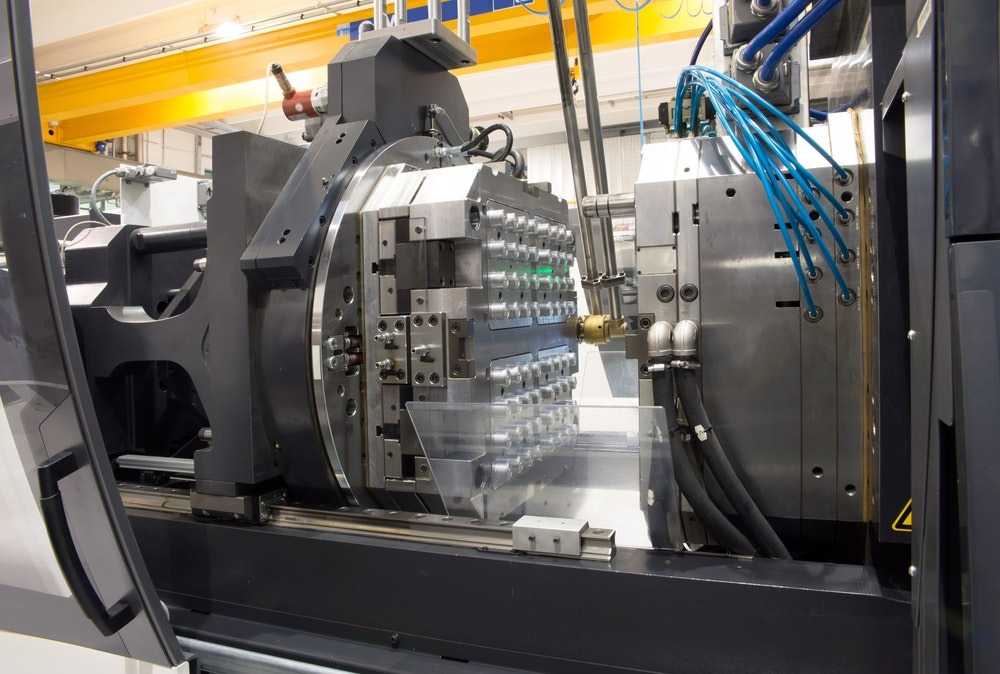
The product has a thick-walled structure, making it prone to shrinkage or dents
When a product has a large local wall thickness (usually exceeding 4mm), traditional injection molding is prone to the following problems:
- Surface shrinkage (sink marks)
- Internal voids
- Uneven cooling leading to deformation
Advantages of air-assisted injection molding: By compensating for material shrinkage through internal air pressure, a hollow structure is formed in thick-walled areas, fundamentally eliminating the shrinkage problem and improving appearance quality.
The design needs to be lightweight while maintaining structural strength
In industries such as automotive, electronics, and robotics, products are increasingly emphasizing:
- Weight reduction
- Increased structural rigidity
Advantages of gas-assisted injection molding: Through hollow cross-section design, while reducing material usage, it can actually increase bending strength, achieving a “lighter but stronger” structural effect.
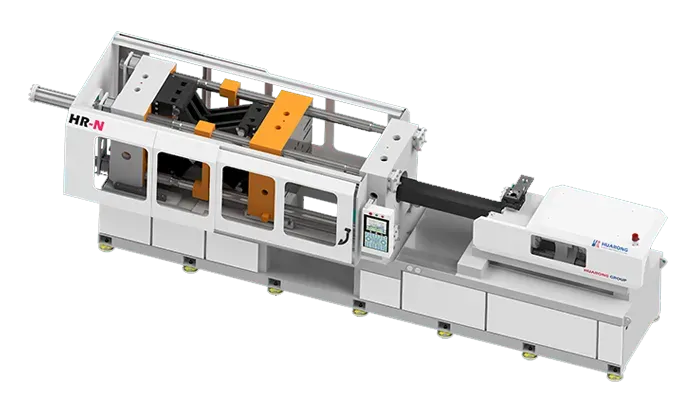
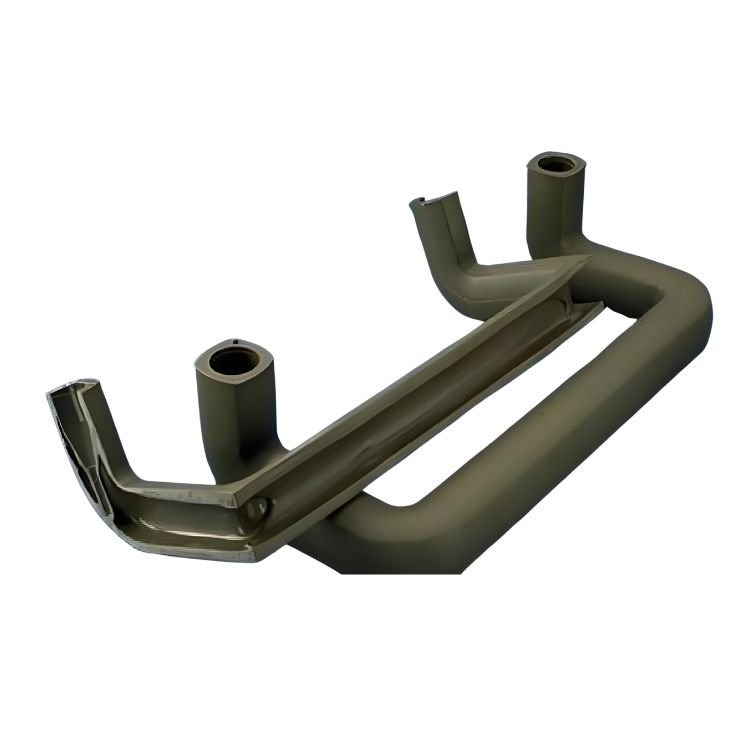
The product is a long-flow or tubular structural component
For example:
- Handles
- Frame structural components
- Tube or ring-shaped products
These structures are prone to the following problems in traditional injection molding:
- Difficulty in filling
- High pressure loss
- High risk of deformation
Advantages of gas-assisted injection molding: Gas can rapidly propel the melt internally, improving flowability, ensuring uniform filling of long flow areas, and reducing injection pressure.
Material costs are high; we hope to optimize material usage
When using engineering plastics (such as PC, ABS, PA, etc.), material costs account for a high proportion.
Advantages of gas-assisted injection molding: By creating a hollow structure, unnecessary solid fillers are reduced, effectively lowering material consumption without affecting functionality, thereby optimizing the overall cost structure.

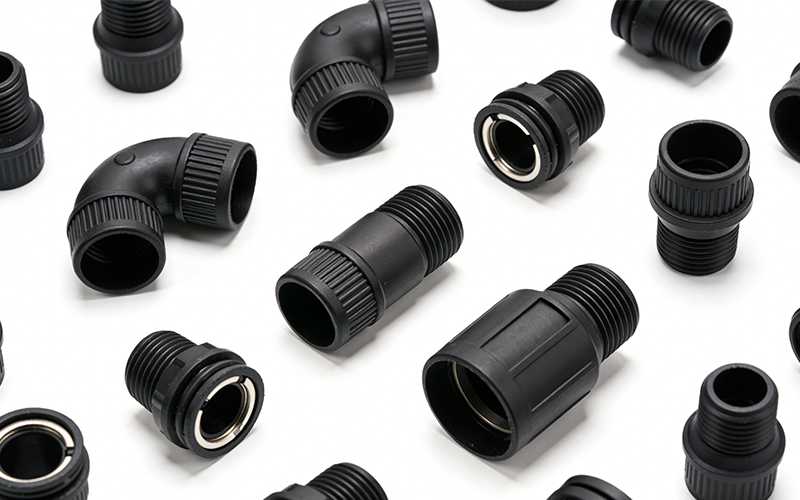
High requirements for appearance quality (no shrinkage, no deformation)
For exterior parts (such as automotive interior parts, electronic housings):
Common problems with traditional injection molding:
Surface depressions, ripples, uneven gloss
Advantages of gas-assisted injection molding: Continuous internal gas pressure results in a smoother surface, significantly improving appearance consistency and product quality.
At Dimud, we don’t simply recommend a particular process; instead, we provide mass-production-oriented engineering decisions based on your product requirements.
For you, this is not just a question of “whether to use gas-assisted manufacturing,” but rather: how to use a more reasonable manufacturing solution to make the product easier to mass-produce successfully.
- DFM analysis support: assesses whether the product is suitable for gas-assisted injection molding and provides structural optimization suggestions.
- Gas duct and mold design optimization: ensuring stable gas path and controllable molding.
- Prototype verification and small-batch trial production: reducing development risks
- One-stop mass production and deployment capability: From design to delivery, ensuring the solution is truly executable.
Our Gas-Assisted Injection Molding Capabilities
In gas-assisted injection molding projects, what truly determines the quality of the final product is not just the equipment itself, but the overall engineering capabilities from design to mass production. Dimud helps you transform complex structures into mass-producible products through a complete mold development and manufacturing system, rather than leaving them at the conceptual stage.
Custom Gas-Assist Mold Design
Based on the product’s structural characteristics, we conduct targeted gas-assisted mold design, including:
- Air channel path planning and optimization
- Air needle/inlet system layout design
- Wall thickness and flow balance control
The key is to ensure that the gas flows “along the designed path” within the mold cavity, rather than diffusing randomly, thus reducing molding risks from the source.
DFM Optimization
Early in the project, we will conduct a manufacturability analysis of your product structure, focusing on:
Whether there are molding defects due to thick walls; whether the gas-assisted process can truly improve structural efficiency; and which areas require structural optimization to meet mass production requirements.
The value of this step is that it helps you avoid repeated modifications and cost waste before mold making.
Precision Mold Manufacturing
Leveraging our own mold factory, we can ensure the following for gas-assisted molds:
- High dimensional precision control
- Stable gas channel consistency
- Long-life mold structure design
For you, this means less fluctuation, more stable product consistency during mass production, and a longer mold lifespan.
Integrated production of injection molding, secondary processing, and assembly.
Gas-assisted injection molding is not just a molding process, but also an integral part of the complete manufacturing chain. We support:
- Gas-assisted injection molding
- Surface treatment and secondary processing
- Component assembly and complete machine integration
You don’t need to coordinate between multiple suppliers; we can help you integrate your entire production process into a stable system.
Gas-Assisted Injection Molding Industry Solutions
Gas-Assisted Injection Molding is more than just a molding process; it’s used across multiple industries to solve engineering challenges that struggle to balance structure, weight, and cost. Based on real-world mass production experience, Dimud applies this process to various industrial scenarios, helping customers optimize product structure and improve manufacturing feasibility.
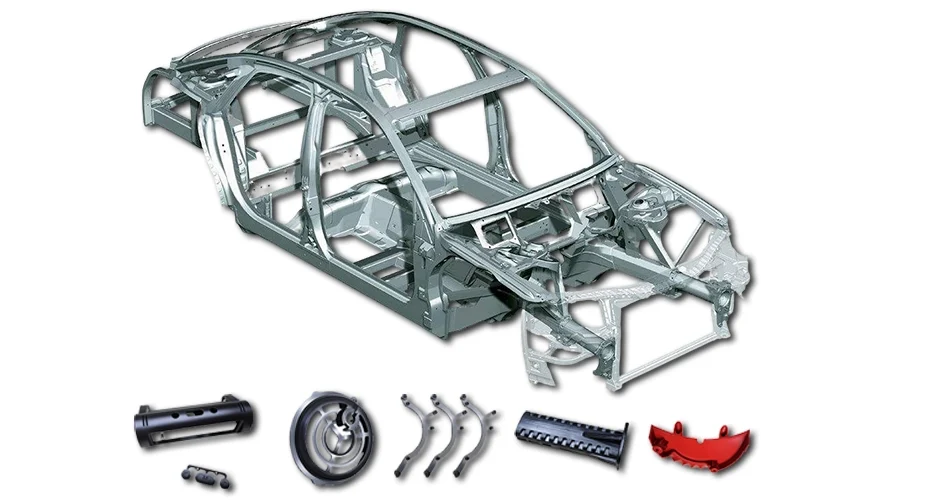
Industry Pain Points:
- Thick walls in interior and structural components are prone to shrinkage and deformation.
- High component weight affects overall vehicle lightweighting goals.
- Unstable molding of long structural components.
Solution Applications: Gas-assisted injection molding is widely used for door handles, dashboard supports, seat structural components, and tubular parts. It achieves lightweighting through hollow structure design while maintaining sufficient structural rigidity and impact resistance.

Industry Pain Points:
- High requirements for surface flatness in casing products
- Complex structures but uneven wall thickness, prone to shrinkage marks
- Difficulty in balancing product lightweighting and strength
Solution Applications: Used in electronic casings, support structures, and connectors. Internal gas forming optimizes wall thickness distribution, improving appearance quality and structural stability without increasing mold complexity.
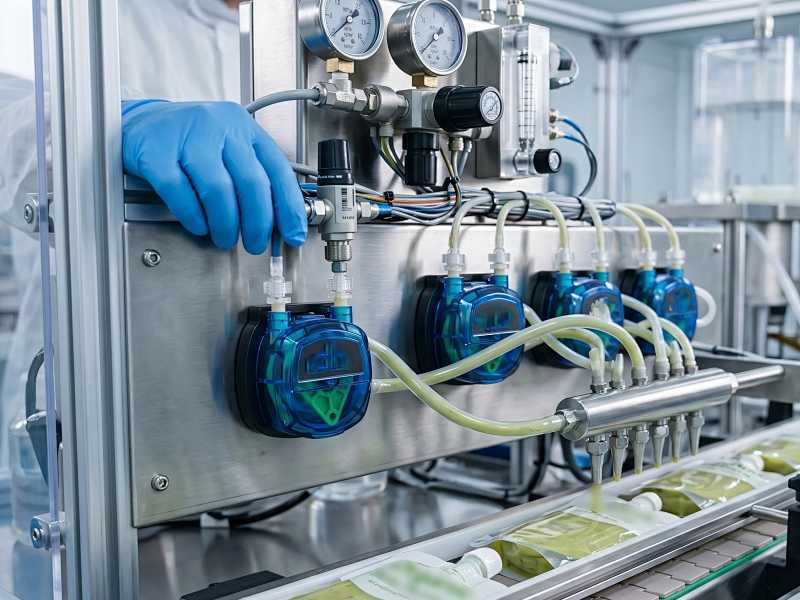
Industry Pain Points:
- Extremely high requirements for dimensional accuracy and consistency.
- Some structural components need to be lightweight while maintaining rigidity.
- The molding process needs to be stable and controllable.
Solution Applications: Applicable to equipment housings, brackets, and functional structural components. Stable gas-assisted molding control reduces internal stress, improves batch consistency, and enhances structural reliability.

Industry Pain Points:
- Structural components are mostly long-process or complex load-bearing structures.
- Products need to balance strength and weight reduction.
- High demand for rapid iteration and small-batch trial production.
Solution Applications: Used in robotic arm structural components, battery casings, and support frames. Achieves lightweight design of complex structures through air-assisted processes, while supporting rapid transition from prototype to mass production.
FAQ – Gas-Assisted Injection Molding
Suitable for products with thick walls, long structures, and hollow designs, such as automotive interior parts, handles, brackets, and frame components, it can effectively improve shrinkage and deformation problems.
No. Hollow structures, while optimizing weight, typically also improve bending stiffness, making the structure more efficient rather than weakening its strength.
Yes. It requires additional design of the air passage system and air intake control structure, thus demanding higher mold engineering capabilities, but it can significantly improve molding quality.
Yes, but it is generally more cost-effective for medium and large batches, while small batches are more often used for structural verification or prototype testing.
Most thermoplastic materials can be used, but the flowability and cooling properties of different materials will affect the gas propulsion effect, requiring process evaluation.
With proper design and process control, shrinkage in thick-walled areas can be significantly reduced or even eliminated, but the effect depends on the structural design.
No. The gas will be completely released after molding and will not remain inside the product.
The single molding cycle does not change much, but the initial mold design and debugging stages will increase slightly. Stable and efficient production can be achieved after mass production.
Yes, it supports secondary processing techniques such as spraying, electroplating, welding, and assembly without affecting subsequent processing procedures.
When a product has a risk of thick walls, excessive weight, or reduced appearance, a DFM assessment is recommended to determine whether it is suitable to use an air-assisted process.